Desert Online General Trading LLC
Dubai, United Arab Emirates
Desert Online General Trading LLC
Dubai, United Arab Emirates

Full description not available
A**R
Review of "Jungle Trees of Central India"
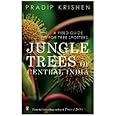
"Jungle Trees of Central India" is an outstanding resource, providing excellent information about the diverse flora of the region. The book excels in its clear and communicative graphics, which effectively complement the text. The information is presented in a way that is both accessible and engaging, making it a valuable guide for anyone interested in the natural history and botany of Central India.
A**R
A must have for tree spotters
I bought this book as another title: "Groves of Beauty and Plenty: An Atlas of Major Flowering Trees of India" is not available anymore. I wanted a field guide to help me identify trees.I must say that I have been delighted by Jungle Trees of Central India. The book has detailed accounts of a large number of trees, superb photographs of flowers, leaves, fruit, etc. for each of them as well as illustrations, and excellent printing.Another great feature is a photographic index of trees by flower colour, leaf type, bark type, etc., which serves as a very useful cross-reference in identification. There is also a detailed explanation of various botanical terms for novices like myself.All in all, a 5 star book. I would encourage anyone who is interested in trees to buy it.
P**H
.
Quality is goodMust read book
G**I
Good investment
This book is a knowledgeable source to anyone gaining plant knowledge.
P**H
Best book on trees of India
Book is worth to read, there are very few books on trees of India, language is also simple, ellutrations are nice
R**A
A true companion
I was privileged to be led on a walk at Delhi Ridge by Mr Pradip Krishen. Someone in our group made a reference about his latest book - Jungle trees of Central India . His first book about trees of Delhi is a classic - and he has retained the same format for Jungle trees of Central India, only increasing the paper size. (Pic1 shows the two books together).It is structured such that, you can open any page and read about a particular tree. It offers all the cues to identify the tree; to a layman, this is the vital step. Each short write-up desribes the life cycle of the tree. Take the example of 'Doodhi' at page no 94 (pic). To the fans of his book on Delhi trees, they will relish the exhaustive chapter, 'the keys', page 46 to 92. It lists the visual cues -Bark (pic 3), flowers (pic 4), fruit(pic 5), leaves(pic 6).After spening delightful hours over this book, I had to visit Madhya Pradesh to see those trees and chose Pachmarhi.During a walking tour at Pachmarhi jungle I referred to my guide, Mr Krishen Lal about the book. Yes, he had his own copy.
A**A
One of the best illustrated book for identification.
One of the best illustrated book for identification.Easy to use, beautiful illustration, lucid description.Has helped me a lot in Jharkhand.
P**I
Very good book
Good book . definitely worth the purchase
Trustpilot
1 month ago
5 days ago