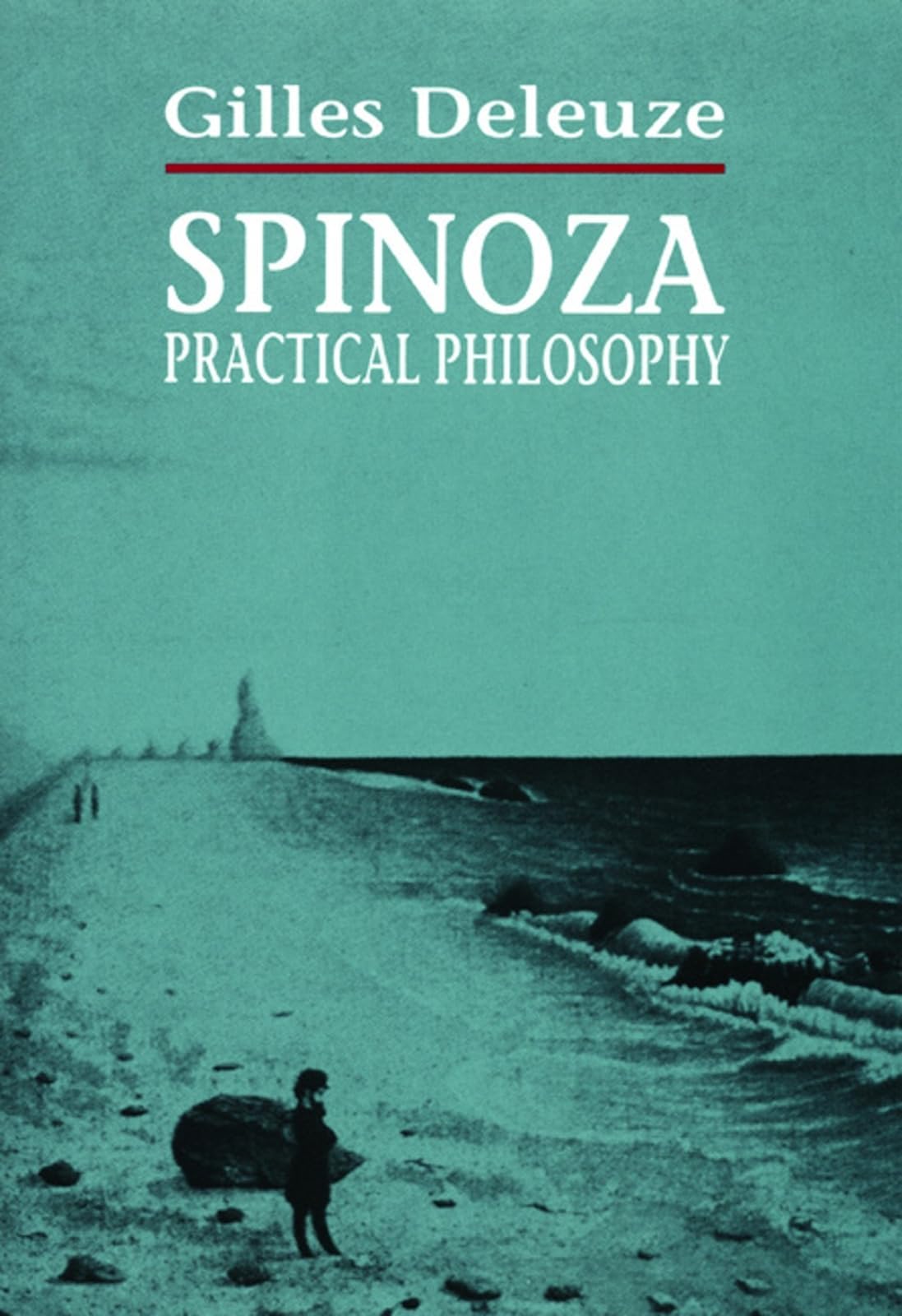

Spinoza: Practical Philosophy [Deleuze, Gilles, Hurley, Robert] on desertcart.com. *FREE* shipping on qualifying offers. Spinoza: Practical Philosophy Review: Useful and interesting, but not a comprehensive summary - I came to this little (130 pp) book, originally published in French in 1970, via Toni Negri's essays on Spinoza. The translation for the 1988 English edition from City Lights is by Robert Hurley. There are five very readable essays by Deleuze, including a very informative biography. But the main text is the "Index of the Main Concepts of the 'Ethics'," and it is less readable as it is a non-systematic summary of Spinoza's great work. The preface suggests reading Deleuze on Spinoza intuitively, like poetry. In that spirit, here are the passages that made the biggest impact on me -- the quotations are from Deleuze, not Spinoza, unless noted as such: *** *** *** ATTRIBUTE "The Spinozan immanence is therefore no less opposed to emanation than to creation" (52). EMINENCE "If a triangle could speak, it would say that God is eminently triangular" -- Spinoza (63). FREEDOM "Freedom is always linked to essence and to what follows from it, not to will and what governs it" (70-71). NECESSARY "...[N]othing is possible in Nature; that is the essences of non-existing modes are not models or possibilities in a divine legislative intellect; there is nothing contingent in Nature" (94). POWER "One of the basic points of the 'Ethics' consists in denying that God has any power (potestas) analogous to a tyrant, or even an enlightened prince. God is not will, not even a will enlightened by a legislative intellect" (97). "...[T]he power of God is two-fold -- a power of existing and producing, and a power of thinking and comprehending..." (103). "The entire 'Ethics' presents itself as a theory of power, in opposition to morality as a theory of obligations" (104). PROPRIA "Ignorance of God's essence, that is, of his nature, has been constant... This is theology's basic error... God is endowed with anthropological and anthropomorphic properties, elevated to the infinite" (105). SIGN "...[T]he most serious error in theology consists precisely in its having disregarded and hidden the difference in nature between obeying and knowing, in having caused us to take principles of obedience for models of knowledge" (106). SPINOZA'S EVOLUTION "...[T]he 'Ethics' demonstrates a substantial identity [of God and Nature] based on the oneness of substance (pantheism)" (110-111). SPINOZA AND US "The important thing is to understand life, each living individuality, not as a form, or a development of form, but as a complex relation between different velocities, between deceleration and acceleration of particles. A composition of speeds and slownesses on a plane of immanence" (123). "Affective capacity, with a maximum threshold and a minimum threshold, is a constant notion in Spinoza" (124). "Spinoza's ethics has nothing to do with a morality; he conceives it as an ethology, that is, as a composition of fast and slow speeds, of capacities for affecting and being affected on this plane of immanence" (125). *** *** *** Deleuze found Spinoza inspirational. Negri finds Spinoza inspirational and continues to promote his philosophy. Through their writings, I find the 17th Century Spinoza inspirational enough to keep exploring. Review: Good introduction to Spinoza - A great book, but a little odd. It has three parts, roughly equal length. 1. A biography of Spinoza 2. A few short essays. These are easy to read and simple, excellent for beginners. If you are more familiar with Spinoza and are looking for a more comprehensive evaluation you're better off seeking Deleuze's full length work on the subject, Spinoza: Expressionism in Philosophy. 3. Glossary of Spinoza's terms. These are summaries written by Deleuze and not just the definitions that Spinoza gives. Some of the entries are quite detailed, taking up multiple pages. They are enjoyable to read, but it may be difficult for beginners to follow along without having the context of them. This part best serves as a refresher while reading along with Spinoza's works.
| Best Sellers Rank | #130,405 in Books ( See Top 100 in Books ) #470 in Philosophy of Ethics & Morality #1,224 in History of Philosophy & Schools of Thought |
| Customer Reviews | 4.6 out of 5 stars 176 Reviews |
A**S
Useful and interesting, but not a comprehensive summary
I came to this little (130 pp) book, originally published in French in 1970, via Toni Negri's essays on Spinoza. The translation for the 1988 English edition from City Lights is by Robert Hurley. There are five very readable essays by Deleuze, including a very informative biography. But the main text is the "Index of the Main Concepts of the 'Ethics'," and it is less readable as it is a non-systematic summary of Spinoza's great work. The preface suggests reading Deleuze on Spinoza intuitively, like poetry. In that spirit, here are the passages that made the biggest impact on me -- the quotations are from Deleuze, not Spinoza, unless noted as such: *** *** *** ATTRIBUTE "The Spinozan immanence is therefore no less opposed to emanation than to creation" (52). EMINENCE "If a triangle could speak, it would say that God is eminently triangular" -- Spinoza (63). FREEDOM "Freedom is always linked to essence and to what follows from it, not to will and what governs it" (70-71). NECESSARY "...[N]othing is possible in Nature; that is the essences of non-existing modes are not models or possibilities in a divine legislative intellect; there is nothing contingent in Nature" (94). POWER "One of the basic points of the 'Ethics' consists in denying that God has any power (potestas) analogous to a tyrant, or even an enlightened prince. God is not will, not even a will enlightened by a legislative intellect" (97). "...[T]he power of God is two-fold -- a power of existing and producing, and a power of thinking and comprehending..." (103). "The entire 'Ethics' presents itself as a theory of power, in opposition to morality as a theory of obligations" (104). PROPRIA "Ignorance of God's essence, that is, of his nature, has been constant... This is theology's basic error... God is endowed with anthropological and anthropomorphic properties, elevated to the infinite" (105). SIGN "...[T]he most serious error in theology consists precisely in its having disregarded and hidden the difference in nature between obeying and knowing, in having caused us to take principles of obedience for models of knowledge" (106). SPINOZA'S EVOLUTION "...[T]he 'Ethics' demonstrates a substantial identity [of God and Nature] based on the oneness of substance (pantheism)" (110-111). SPINOZA AND US "The important thing is to understand life, each living individuality, not as a form, or a development of form, but as a complex relation between different velocities, between deceleration and acceleration of particles. A composition of speeds and slownesses on a plane of immanence" (123). "Affective capacity, with a maximum threshold and a minimum threshold, is a constant notion in Spinoza" (124). "Spinoza's ethics has nothing to do with a morality; he conceives it as an ethology, that is, as a composition of fast and slow speeds, of capacities for affecting and being affected on this plane of immanence" (125). *** *** *** Deleuze found Spinoza inspirational. Negri finds Spinoza inspirational and continues to promote his philosophy. Through their writings, I find the 17th Century Spinoza inspirational enough to keep exploring.
H**R
Good introduction to Spinoza
A great book, but a little odd. It has three parts, roughly equal length. 1. A biography of Spinoza 2. A few short essays. These are easy to read and simple, excellent for beginners. If you are more familiar with Spinoza and are looking for a more comprehensive evaluation you're better off seeking Deleuze's full length work on the subject, Spinoza: Expressionism in Philosophy. 3. Glossary of Spinoza's terms. These are summaries written by Deleuze and not just the definitions that Spinoza gives. Some of the entries are quite detailed, taking up multiple pages. They are enjoyable to read, but it may be difficult for beginners to follow along without having the context of them. This part best serves as a refresher while reading along with Spinoza's works.
A**R
Short and sweet
got it :D arrived on time. Great reference for anyone studying Spinoza, the dictionary form is very helpful.
B**E
good introduction to spinoza
First, Deleuze prose is beautiful. Second, I don't know if I always understand what he is saying though. I need to read Spinoza's ethics & reread this, it will make more sense then. 4/5
S**E
A concise and thoughtful biography of Spinoza paired with an ...
A concise and thoughtful biography of Spinoza paired with an important monograph of Spinoza's ethics. Deleuze brings in Nietzsche as a mediator to elaborate an approach towards ethics which privileges the body. I find this to be some of Deleuze's most engaging writing.
N**R
Must read for anyone interested in Spinoza or Deleuze.
This book has a great way of explaining the underlying ideas inside found in the sometimes dense writings of Spinoza. Additionally, there is an entire chapter dedicated to terms used in Spinoza to help you understand his writings more. Finally, this book helps give insights into the foundation framework Deleuze uses in in later philosophical projects.
J**M
light reading
this book is just one idealists critique of another, light afternoon reading, pairs well with cheap beer.
B**E
pretty good
like it
Trustpilot
3 weeks ago
1 month ago