
DOWNLOAD THE APP


Customer Services
Copyright © 2025 Desertcart Holdings Limited
DOWNLOAD THE APP
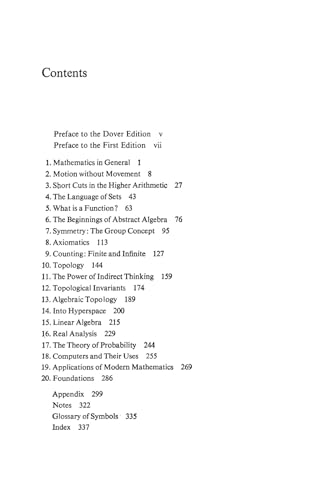
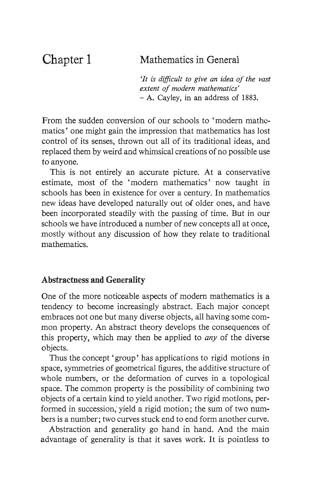
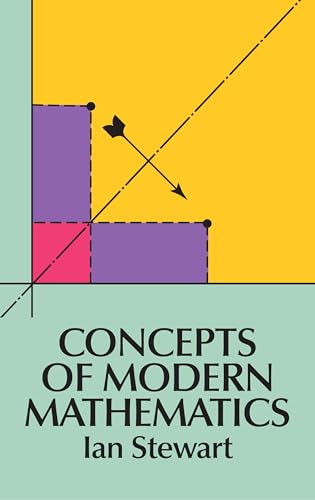
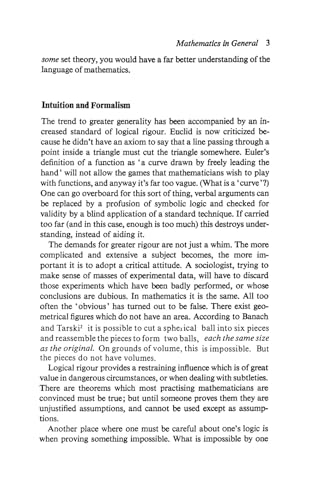
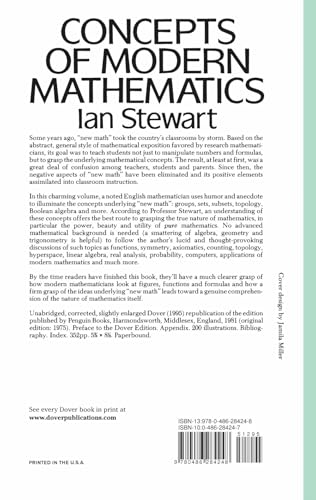
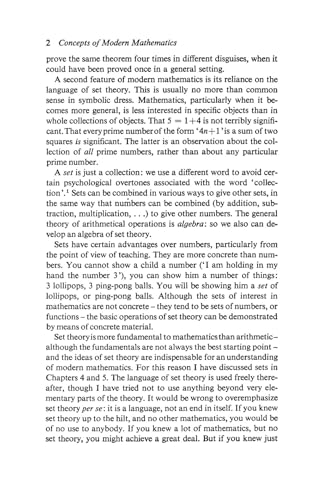
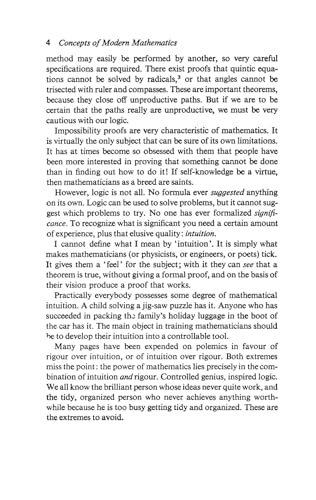
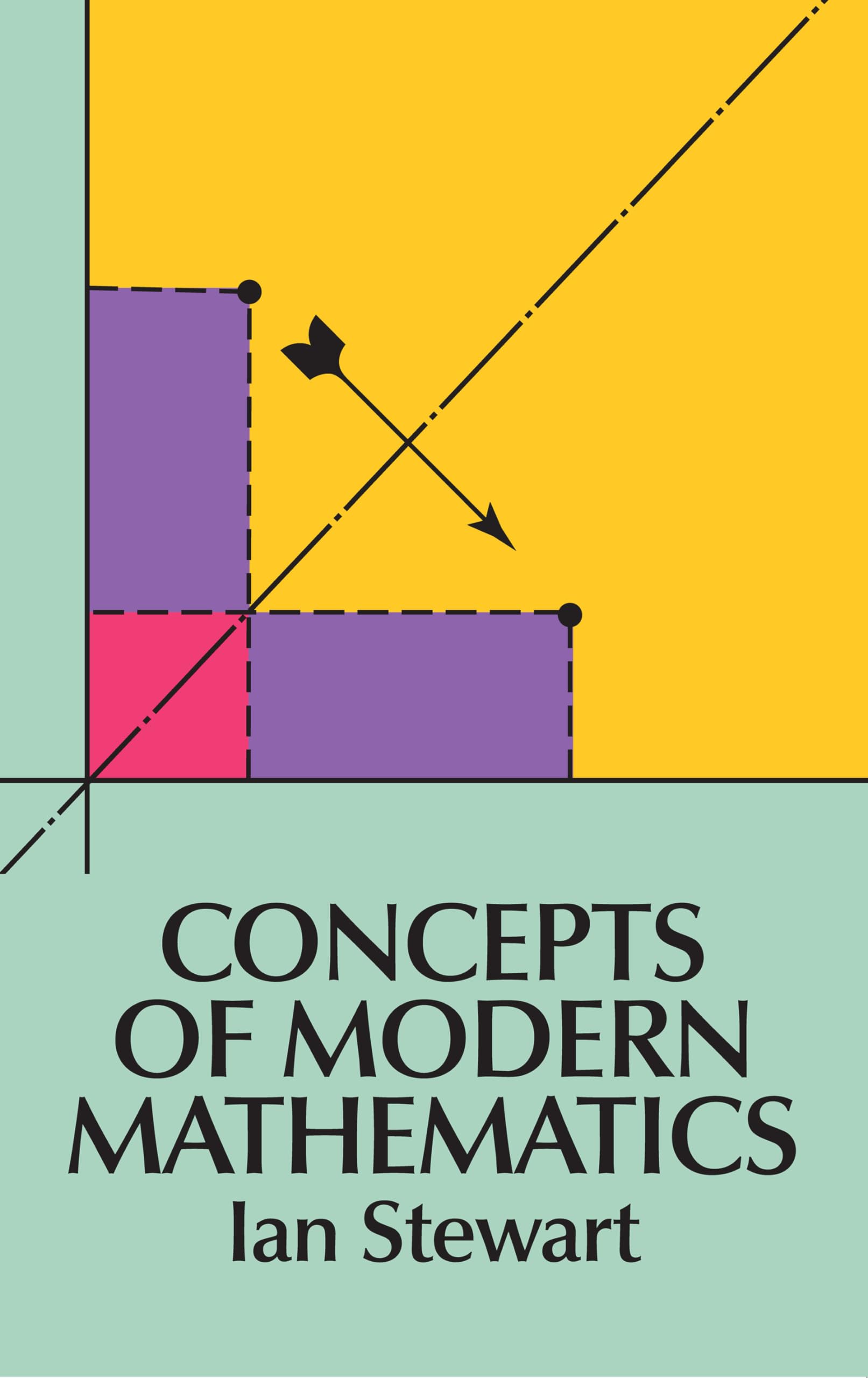
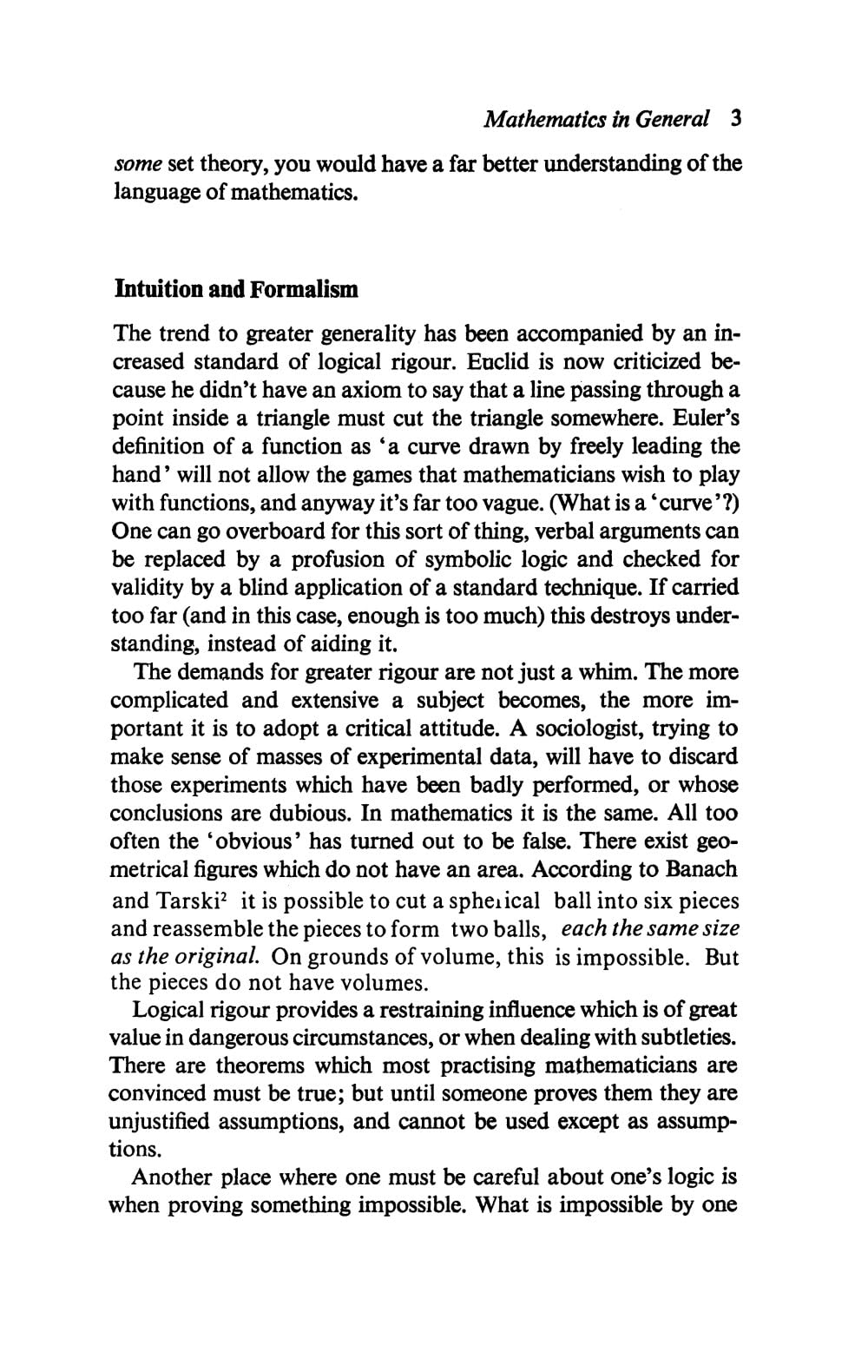
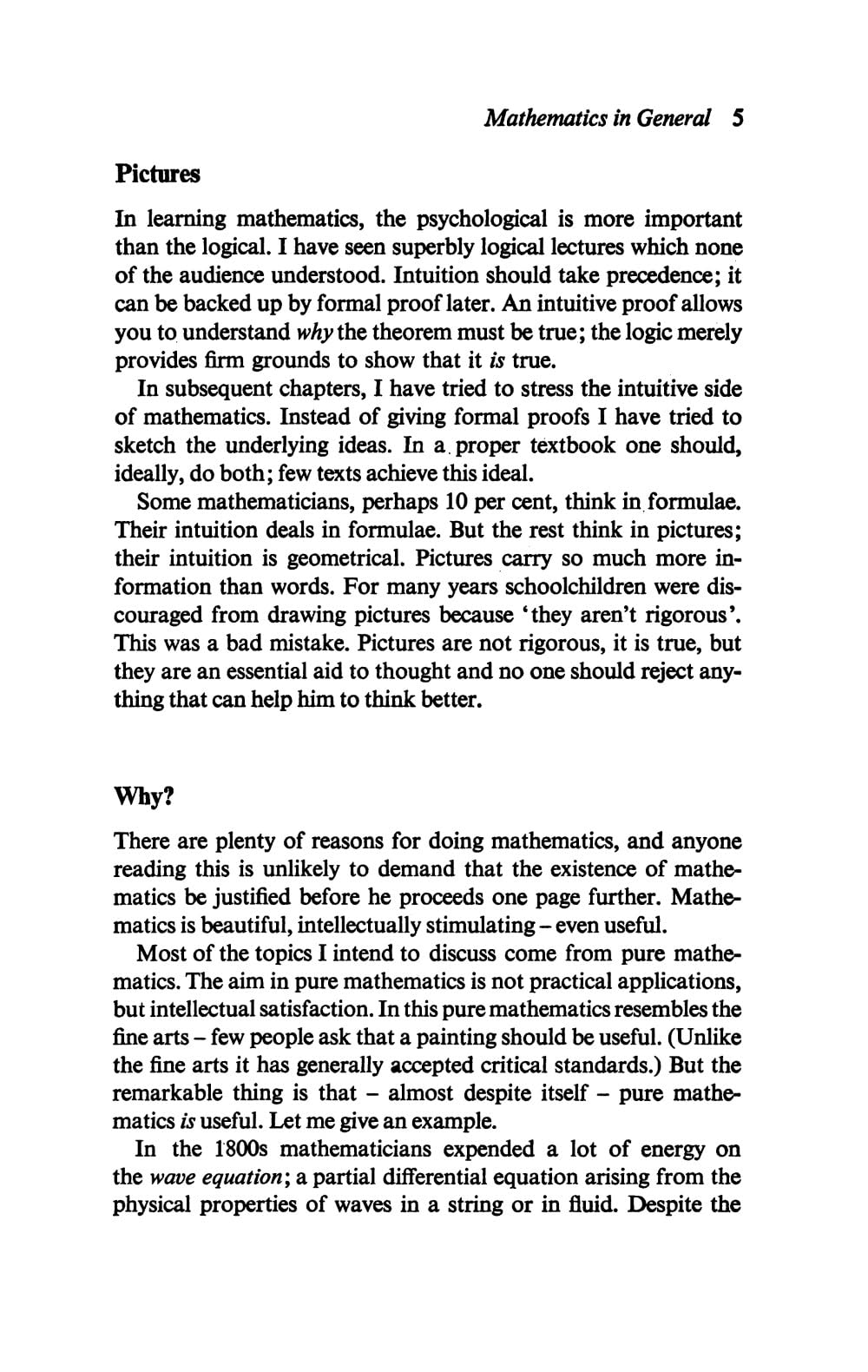

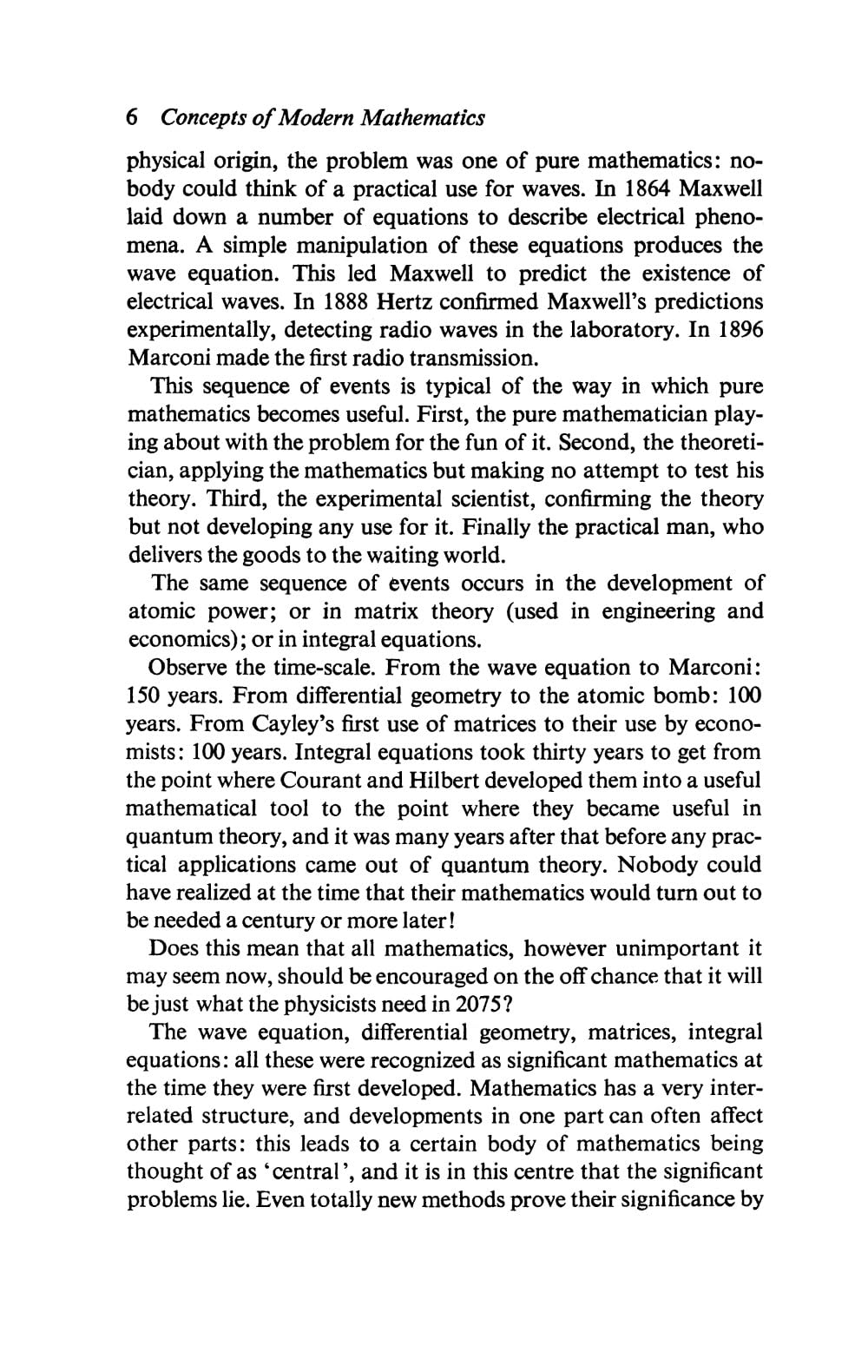
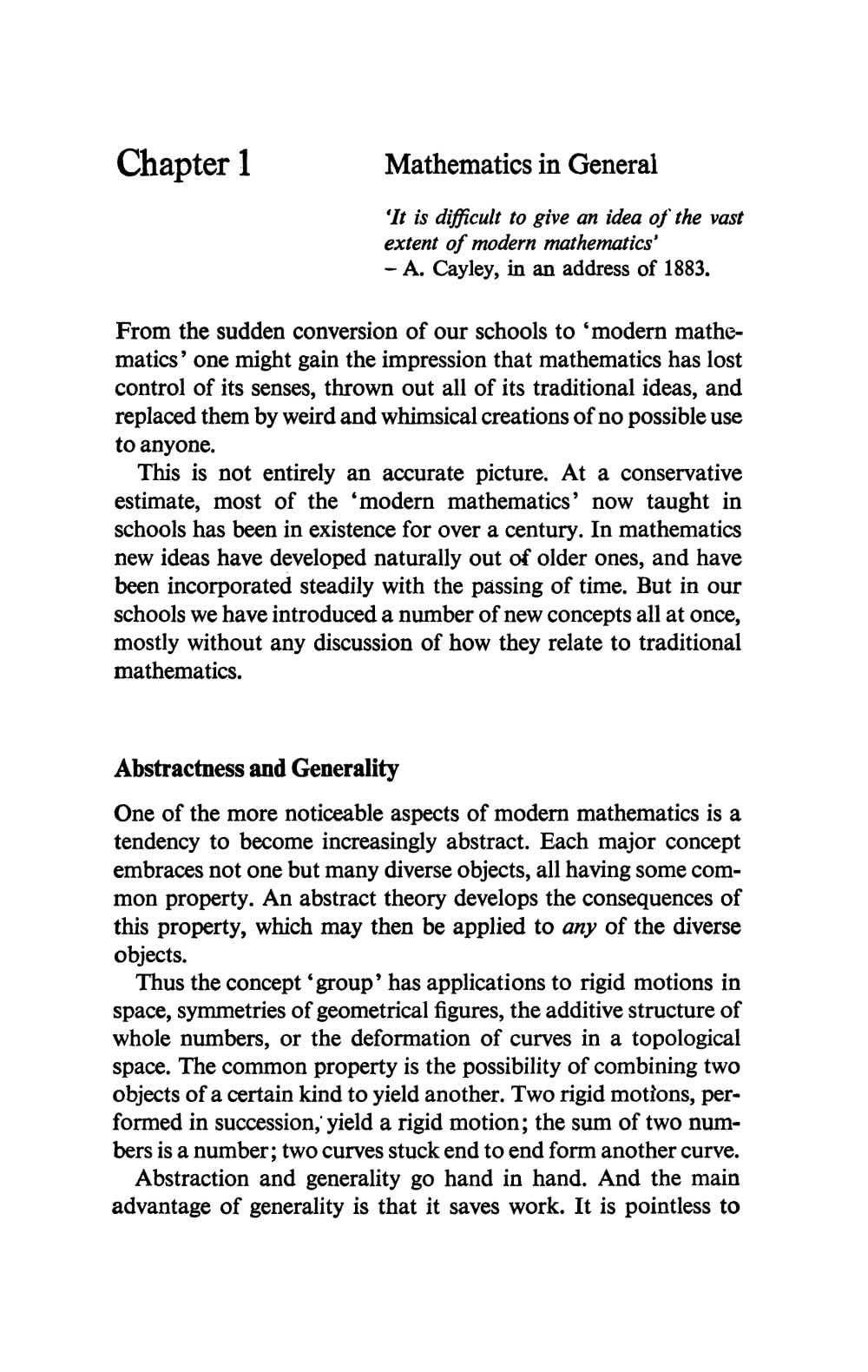
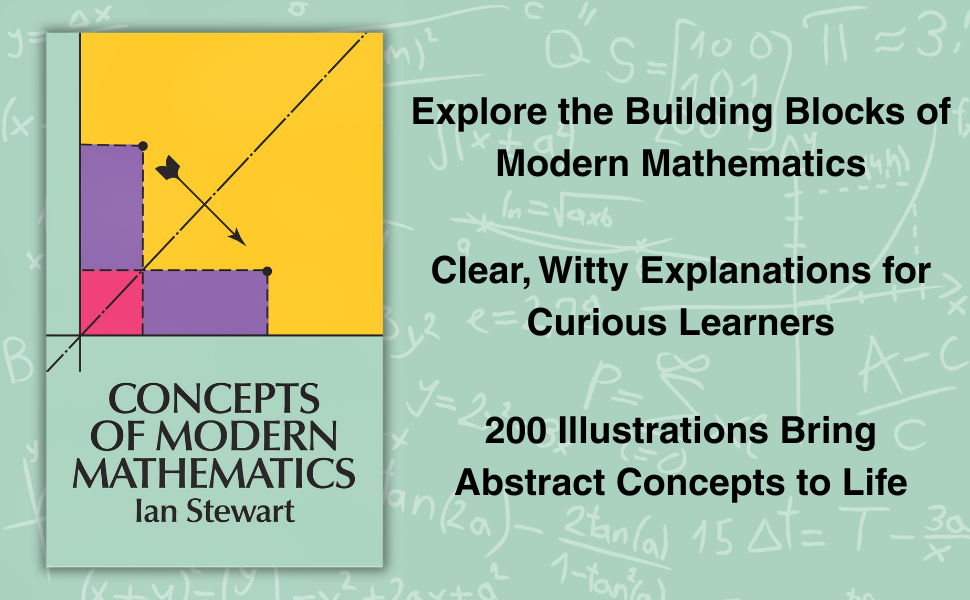
Buy Concepts of Modern Mathematics (Dover Books on Mathematics) on desertcart.com ✓ FREE SHIPPING on qualified orders Review: What did Professor Stewart say? - My review joins the chorus of praise for Dr. Stewart's Concepts of Modern Mathematics ("Concepts"). It has been many years since I put down my slide rule and picked up my math diploma. I wanted a refresher and turned to Concepts for help. Its stated purpose is to spread the concepts underlying the "New Math" to a non-specialized audience. Concepts was the perfect choice. Concepts is organized into twenty short chapters. Dr. Stewart's writing style is informal, enthusiastic, and conversational with a spot of humor. He stresses the primacy of intuition, the role of experimentation in proving utility and the need for rigor when complexity multiplies. In mixing these factors, Dr. Stewart reveals glimpses of how a mathematician works. Abstract algebra, topology and analysis are the "cornerstones" of modern mathematics. The first nine chapters are devoted to an introduction and to teaching axiomatic set-theory at the heart of the "New Math". As Dr. Stewart quips, to study French literature, one must know the French language. Topology is covered in four chapters, real analysis in only one, and applications in five. Dr. Stewart employs his "toolkit" of "...aims, methods, problems and applications..." to illuminate an imposing intellectual structure. For example, complex numbers and infinite sets can cloud the brightest minds. Wielding his tools skillfully, Dr. Stewart demystifies complex numbers by recasting as modular arithmetic and makes cardinals plausible using bijections with natural numbers. Sadly, "Foundations", the final chapter, casts doubt on the reliability of modern mathematics. Dr. Stewart visualizes mathematics as an inverted pyramid balancing precariously on only a few assumptions that cannot be confirmed. The chapter includes outlines of Godels famous theorems and Dr. Stewart's opinion that "...it proves the impossibility of an arithmetical proof of the consistency of arithmetic". The remedy, says Dr. Stewart, is to trust theorems that should be true and to hope for logic that someday fulfills its promise. Finally, Concepts is just the beginning of a "hard technical grind" for the serious student. Review: Excellent and interesting overview of modern mathematics - Ian Stewart's "Concepts of Modern Mathematics" is the best general book that I have read about mathematics. The writing is interesting and clear and reading the book is a pleasure. Stewart walks the reader through the major breakthroughs of mathematics in the last two hundred years by explaining things from a fundamental viewpoint. Ideas are developed with examples, then made general by abstraction, and finally used to prove interesting ideas about the topic. For example, in the section on axiomatics, he starts with Euclid's axioms and the question "Is Euclid's sixth axiom really necessary?". Then he explains what consistency means in the case of axioms, and finally builds an explanation to show that Euclid was right after all. If all of this sounds complicated, esoteric, or technical, you should know that it's not. Stewart goes through each idea slowly and with plenty of explanation so that the reader understands ideas as they come. As a math major in college, a lot of the ideas I already knew, but it was still interesting to go over them again and see things I never covered before, like algebraic topology and graph theory. I would recommend this book to anyone who is interested in mathematics or science.
| ASIN | 0486284247 |
| Best Sellers Rank | #595,753 in Books ( See Top 100 in Books ) #115 in Counting & Numeration #237 in Mathematics History #404 in Math Games |
| Customer Reviews | 4.5 4.5 out of 5 stars (249) |
| Dimensions | 5 x 0.75 x 8.75 inches |
| Edition | Revised ed. |
| ISBN-10 | 9780486284248 |
| ISBN-13 | 978-0486284248 |
| Item Weight | 2.31 pounds |
| Language | English |
| Print length | 368 pages |
| Publication date | February 1, 1995 |
| Publisher | Dover Publications |
C**N
What did Professor Stewart say?
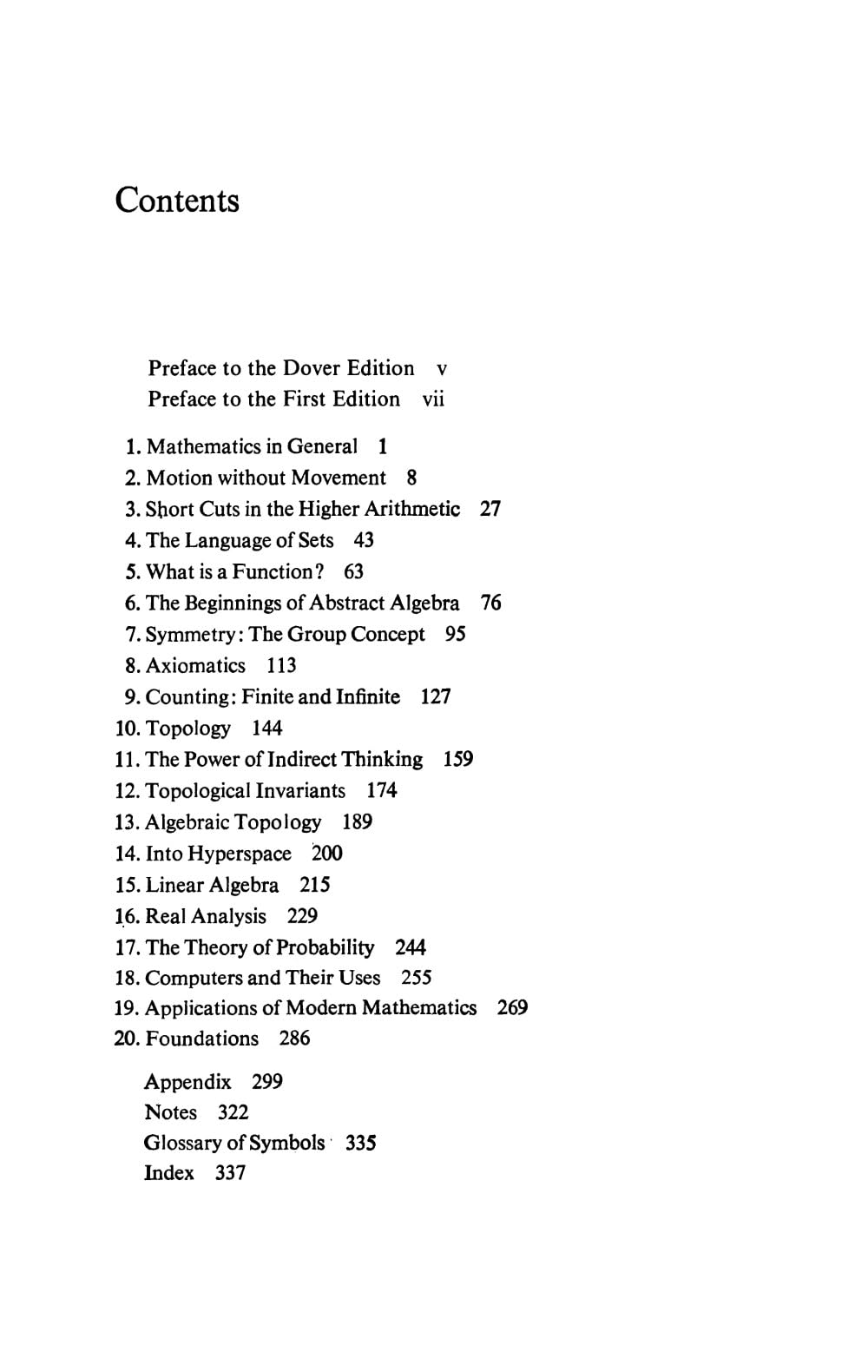
My review joins the chorus of praise for Dr. Stewart's Concepts of Modern Mathematics ("Concepts"). It has been many years since I put down my slide rule and picked up my math diploma. I wanted a refresher and turned to Concepts for help. Its stated purpose is to spread the concepts underlying the "New Math" to a non-specialized audience. Concepts was the perfect choice. Concepts is organized into twenty short chapters. Dr. Stewart's writing style is informal, enthusiastic, and conversational with a spot of humor. He stresses the primacy of intuition, the role of experimentation in proving utility and the need for rigor when complexity multiplies. In mixing these factors, Dr. Stewart reveals glimpses of how a mathematician works. Abstract algebra, topology and analysis are the "cornerstones" of modern mathematics. The first nine chapters are devoted to an introduction and to teaching axiomatic set-theory at the heart of the "New Math". As Dr. Stewart quips, to study French literature, one must know the French language. Topology is covered in four chapters, real analysis in only one, and applications in five. Dr. Stewart employs his "toolkit" of "...aims, methods, problems and applications..." to illuminate an imposing intellectual structure. For example, complex numbers and infinite sets can cloud the brightest minds. Wielding his tools skillfully, Dr. Stewart demystifies complex numbers by recasting as modular arithmetic and makes cardinals plausible using bijections with natural numbers. Sadly, "Foundations", the final chapter, casts doubt on the reliability of modern mathematics. Dr. Stewart visualizes mathematics as an inverted pyramid balancing precariously on only a few assumptions that cannot be confirmed. The chapter includes outlines of Godels famous theorems and Dr. Stewart's opinion that "...it proves the impossibility of an arithmetical proof of the consistency of arithmetic". The remedy, says Dr. Stewart, is to trust theorems that should be true and to hope for logic that someday fulfills its promise. Finally, Concepts is just the beginning of a "hard technical grind" for the serious student.
A**A
Excellent and interesting overview of modern mathematics
Ian Stewart's "Concepts of Modern Mathematics" is the best general book that I have read about mathematics. The writing is interesting and clear and reading the book is a pleasure. Stewart walks the reader through the major breakthroughs of mathematics in the last two hundred years by explaining things from a fundamental viewpoint. Ideas are developed with examples, then made general by abstraction, and finally used to prove interesting ideas about the topic. For example, in the section on axiomatics, he starts with Euclid's axioms and the question "Is Euclid's sixth axiom really necessary?". Then he explains what consistency means in the case of axioms, and finally builds an explanation to show that Euclid was right after all. If all of this sounds complicated, esoteric, or technical, you should know that it's not. Stewart goes through each idea slowly and with plenty of explanation so that the reader understands ideas as they come. As a math major in college, a lot of the ideas I already knew, but it was still interesting to go over them again and see things I never covered before, like algebraic topology and graph theory. I would recommend this book to anyone who is interested in mathematics or science.
V**R
A layman's guide to the basic branches of mathematics
What is mathematics about? We all learn math in grade school and high school, but that's just arithmetic and very basic algebra, with a dash of set theory, logic, geometry and trigonometry. In this book, Ian Stewart goes over the main branches of mathematics and these go far beyond what we learn in school. He touches on topics such as abstract algebra, real analysis, topology, logic, axiomatics, and geometry. He explains what groups, rings, and fields are; he explains what continuity is, what functions are, and what counting is. My favorite section of the book comes at the end of the chapter introducing abstract algebra where Stewart presents a proof that a game of solitaire, where the goal is to eliminate pegs from a board until you are left with one in the center, has only a certain number of possible solutions. Here, Stewart does an excellent job of explaining enough of the topic to allow us to follow through a simple and convincing proof of something pretty interesting. Apart from that, it's not a bad book by any means but it should have been better. For instance, in the opening paragraph of this review, I wrote "just arithmetic and very basic algebra". Just arithmetic. Think about it: it's amazing that today, everyone can count, can add and multiply, can divide. We all understand percentages, we can all do very basic algebra in our heads. (What's x in 4+x=5?) Shouldn't we feel a sense of wonder at this? In general Stewart's bird's eye view of mathematics today left me... I'm at a loss for words here, so I'll just say it left me. Vincent Poirier, Tokyo
C**I
Just what I was l looking for
I was not looking for a book on math when I bumped into this volume, I was looking for a book about math. What I really had in mind was a book on tales and curiosities. Dr. Ian Stewart's text is nothing of the kind but was nevertheless delightful to read. His style is clear and elegant yet impressively precise. And the topics are covered just to the right extent. But be aware it is definitely no book for the layman. Some parts are quite involved and even with some mathematical background you may find yourself flipping back and forth trying to grasp some beautiful or strange new mathematical concept. I strongly recommend it to all non-mathematician scientists.
A**N
A must read for all math undergrads!
Beautiful written. Professor Ian Stewart makes the difficult easy to absorb and comprehend. His humor and engaging style makes reading mathematics delightful. I truly could not put the book down!
A**C
This book is a 'Dover' paperback which, if your have not bought from this publisher before, they tend to re-publish math books previously sold from around the world. Their budget-priced books tend to be in b&w and graphs in grayscale. First Impressions What stands out the most is the VERY attractive, organised exploration of linked math topics from the earliest chapters and throughout the book. Its clear the author encourages some theoretical issues before 'labouring' with calculations. For example, i am attracted at the quick and early linking between 'Sets', 'Functions', 'Group Theory' and (MOD), and 'axiom' mathematics.The reason being if you are up to understanding these connections with the first three areas, then the way the axiom stuff is handled gives a VERY clear way in answering many math problems that are a model for throughout your future studies! The other linear algebraic stuff is (i.m.h.o) less attractive - compaired to other authors - but still well-worth the effort to digest it. Harder topics To me, the areas that seemed rather difficult and laboured being the 'Topology' aress. But i can say that the many graphs give a 'gut-feeling' of the topic. The graphs did help and i read the whole book over a long week-end. Summary This book has a very pleasent and stimulating style in its explanations, that will be of use for whatever math studies you may continue to follow.
A**R
If you want to get the maximum the bedroom is not the right place to enjoy this one. Its in between a popular science and a text book. If you consider yourself too poor in math I wouldn't recommend this for you. That said its a great work and got me curious to explore more serious stuff.
N**S
Ian Stewart é um verdadeiro gênio quando se trada da comunicação de idéias e conceitos matemáticos. Neste livro o autor pincela os varias conceitos que fundamentam a matemática moderna, desde as mais fundamentais como conjuntos, números e funções até as mais complexas como topologia e hiperespaços. O autor consegue ainda introduzir um toque de elegância e sofisticação que tornam a leitura satisfatória e compreensiva,até para alguém que já tenha tido contato com a matemática mais avançada que a ginasial. É importante ressaltar que este livro cumpre um papel análogo à livros de divulgação cientifica, isto é, ele apenas apresenta os conceitos e trabalha os conceitos da matemática moderna de forma ilustrativa e simples, sem utilizar o rigor dos livros que buscam instruir de forma mais profunda sobre os assuntos abordados.
C**S
Clearly written so it is easy to read. You should have some familiarity with Maths if you want to read this and get the most out of it.
C**Y
一般向けの数学書を多く読んできた読者には、内容は多少古く感じられるかもしれない。原著の発行は37年前、改訂版が30年前、そして内容が「現代数学の概念」であり、当時の「学校教育に出てこない数学」というテーマのためにある程度は仕方がないのであろう。翻訳書もちくま学芸文庫と古典扱いだ。とはいえ、現時点でも十分読む価値はあるし、20世紀数学の先端部門のテーマごとにしっかりとした論理的な基礎を説明しているので、この本の論理を追いかけていくことは数学を趣味とする人には十分楽しい。整数論、集合論、解析学、確率論、トポロジー、そしてコンピュータとGodelに至る。まずは20世紀になって発展した数学を網羅している。そういう意味では30数年前に読んだ人がうらやましい。最近ではこの種の本がたくさんあり、私もほかの本で読んだことのある部分が多かったが、当時の人たちにはかなり新しい知識であったと思う。「現代数学という表題の古典」であるというのも形容矛盾ではあるが、この表現が一番ぴったりくる。 著者の考え方が一番明確に書かれているのは、Appendixの最後の部分Real Mathematicsという部分とそのNote注11であろう。300ページあまりを費やして言いたかったことのエッセンスをここに書いている。著者のこの部分の主張を私なりに要約すれば、 「極めて難解、複雑な素粒子物理学や分子生物学を一般の科学雑誌は紹介することを躊躇していない(Popular science magazines do not shy away from the abstruse complexity of elementary particle physics or molecular biology.)。数学も同じであってよい。専門家でない人たちといえども、科学の中心にある考え方を理解する能力は一般に考えられているよりもはるかに高い。とはいえ、表面的なわかりやすさを狙い、直観的な理解ができるように表現すると、一見馬鹿げた、それがどうした、というものに見える。全体に長い毛の生えているボール(Hairy ball)はスムーズに梳(と)くことはできない、とか、ドーナツの穴とかの話になる。しかし、こうしたものも現実の科学に極めて重要な価値があり、専門的な努力があってこそ(Technical grind is an essential part of the process. )、19世紀の伝統的数学の抱えた矛盾を克服して現代数学ができたのであって、決して別のものではなく両者一体のものである。直観的な概念と専門的論理性の両面の関係という視野を見失ってしまうと、「易しい科学教育」のような弊害を生み、科学の発展は停滞する。「ほんの少し難しいからといって避けて通る」というような態度を克服すれば、我々は本当の進歩を成し遂げることができるだろう。」著者はこのように主張する。 ポピュラーサイエンス、特に数学の分野の一般書を多く著しているIan Stewartという人の考えが強く出ているのではなかろうか。だからこそこの著者の本は読み終わった後の充実感があるのだろう。
Trustpilot
1 day ago
1 month ago