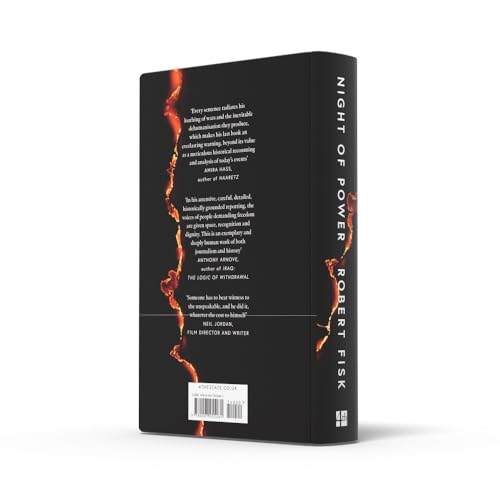
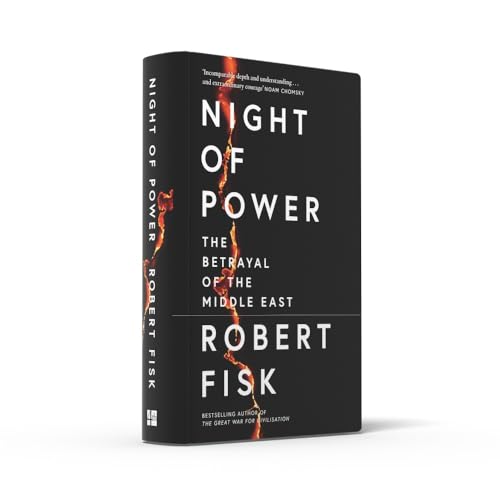
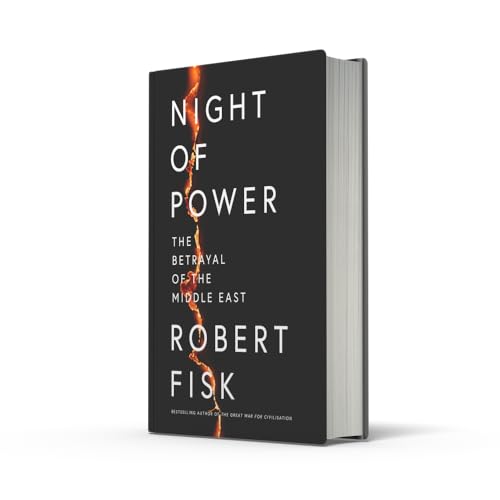

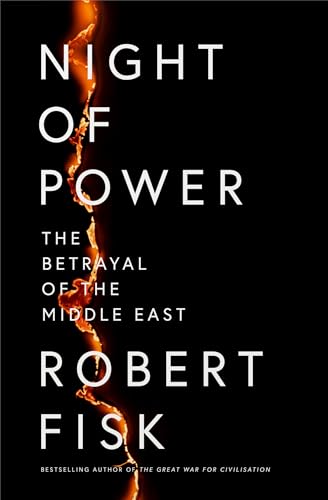
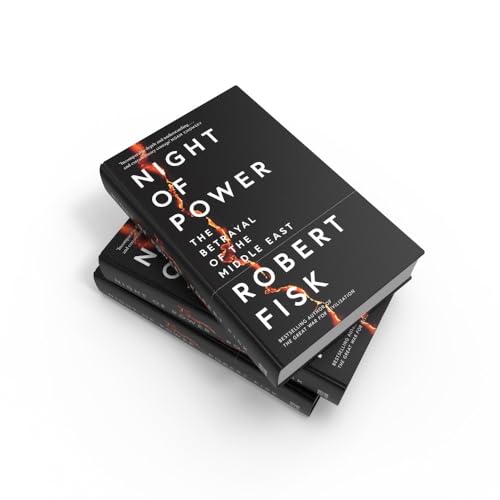
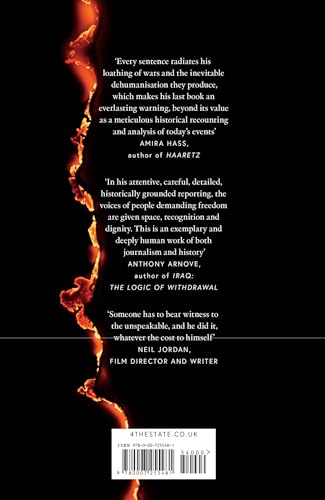

Buy Fourth Estate Night of Power: The Betrayal of the Middle East by Fisk, Robert online on desertcart.ae at best prices. ✓ Fast and free shipping ✓ free returns ✓ cash on delivery available on eligible purchase. Review: I’ve just put down Night of Power, the Betrayal of the Middle East, the epic final volume by veteran Middle East reporter Robert Fisk. Largely completed before his death in October 2020, Fisk’s widow and fellow journalist, Nelofer Pazira-Fisk, saw the book through to publication in 2024. And we owe her a debt of gratitude. The book provides a broad picture of the past 50 years of Western interference in the Middle East, and digs specifically into the past twenty years. Picking up where his last book, The Great War for Civilisation, ended, Night of Power is made up of contemporary accounts of the aftermath of the invasion of Iraq, the Arab Spring, war in Syria, Israel’s colonial expansionist projects, and the brutality of the region’s dictatorships. It is a necessary primer providing context and understanding to the period we are in, told not only from the lofty vantage point of rulers and war lords – but most importantly, he tells the stories of the perspective of the people who live – and die – in these wars. What is unique about Fisk’s reporting is not only his ability to cut through the BS – he isn’t worried about crossing the official Western lines about conflict that we read about in most publications. Nor is he pre-occupied with toting anyone else’s ideological positionings. The first time I met Robert Fisk, in the early 2000s, at an event organized with Carleton University’s Middle East Discussion Group – a group I volunteered for as a student - he gave the example of his coverage of Bahrain that earned him a vilified cartoon in the country’s media… Every side, on the stories he covered in the Middle East, had a gripe with him because he toed no one’s line – and this he suggested, is what journalism is about – reporting on the facts on the ground as he knew them. I always felt I could trust Robert Fisk was doing his utmost best to do real journalism: to report on the facts, and to tell the stories of the people affected. Not to “balance a story” – what has become a trite he said/she said formula that I think has destroyed contemporary journalism (a discussion for another day). This may be the most important book I’ve read in 2024, and deserves to be on your 2025 must reads, as in many ways it helps fill the void I’ve felt acutely since October 7 2023, in coverage and analysis of the Middle East. I’ll give you an example: like so many of us, I’ve watched in dismay as Israel commits genocide in Gaza, throwing to wind international human rights law. Canada, largely following the lead of the US, ignores the very instruments it helped establish to ensure large-scale state-sponsored murder and war crimes never happen again. As Canadian John Humphrey, one of the drafters of the Universal Declaration of Human Rights wrote in 1949, and explained to me as a young journalist when I met him in the early 1990s “The experience of the second world war and the events which gave rise to it, as well as the history of the post-war years, have convinced the great majority of thinking men and women that persistent violations of human rights and fundamental freedoms in one part of the world jeopardize the rights of people in other countries and will inevitably result in a situation that will eventually threaten the peace of nations.” [1] While these human rights instruments and their application have always been controversial, they continued to guide an understanding of human rights and dignity and drive international solidarity work. However, what we’ve witnessed the past year and half has brought all of this history into question, it seems. Those who pay attention to Israel have seen how it regularly gets away with violating all tenants of human rights. Activists and academics, like Ilan Pappe, have warned of Israel’s ethnic cleansing for years, however no one I’ve spoken with anticipated the full on genocide we are witnessing, and the utter lack of willingness our government has to condemn it. Yet Fisk reminds me of how quickly we forget history, as in his first pages, he addresses the erosion of international human rights instruments: “…the Israelis attacked bridges and motorways and power stations and entire villages and mobile phone transmitters and Red Cross offices and ambulances, just as they later attacked roads and medical centres and UN facilities in Gaza. Once the precedent had been set, this new atrocity became a start-line for the next killings.” This was in 2006! Fisk goes on to write: “The fact that the Geneva Conventions specifically forbid the kind of attacks which the Americans and British and Israelis launched meant nothing. Were we not all engaged in a new form of conflict against 'world terror'? And if the Americans could bomb a hospital in Serbia or a civilian housing estate in Baghdad, who were the hypocritical West to object when the Israeli army slaughtered the innocents of Lebanon and Gaza in identical ways?” While the ongoing genocide in Gaza may not have been predicted, the foundations for it have been clear. And more, Fisk reminds us that alignments of international powers and proxies in the Middle East over oil, water and resources, and shipping ways trump everything else. Outrage at the lack of response by governments and media is nothing new. Fisk continues, “This, then, is another theme of this book; the 'normalisation' of this latest warfare, which deletes the protection of civilians enshrined in international law in favour of a new and cruel morality: 11 September 2001 really did change the world forever, and the new world that emerged made the traditional laws of war as outdated as they were irrelevant.” In a recent review in The New York Times reporter Robert F. Worth asks “It isn’t clear what Fisk thought his reporting would achieve. Much of what he has to say — about Iraq especially — is now grindingly familiar to an audience that has grown numb after a quarter-century of lurid Middle Eastern violence.”[2] That Worth cannot understand the point of Fisk’s journalism speaks volumes to what is wrong with journalism. Worth cannot understand, it seems, why the stories of the people who are really at the heart of it all are important to know – the shop-keepers, drivers, commuters, mothers, fathers, children, grandparents, maimed, tortured and murdered by state and non state actors; by dictators too often supported by our own governments, armed with US made weapons. The purpose of Fisk’s work seems clear to me in this example, from one of his missives from Iraq: “I watch as they pull corpses from the rubble of the Zeir family home while hundreds of angry men scream at American troops to let them rescue the wounded. The children's bodies are more or less intact; the adults come out in parts. The Zeirs - a Christian family, for this street of the city is a small Christian enclave - were all watching a football match on television, but they were also receiving visitors to one of their female relatives who was ill. Officers of the new Iraqi police force, fire brigade personnel and even some of the wounded are clawing with their hands at the bricks and muck in an effort to find survivors. The suicide bombing will be claimed later, by al-Qaeda… The US authorities announced that American citizens had been wounded in the bombing, a statement that only further enraged the men trying to reach their loved ones. 'We are suffering and they don't care,' a woman in a black abaya gown screams at me. 'Why is it only you people who are so precious? It is us who are dying’.” Review: Brillant, comme d'habitude. Le journalisme et l'histoire se nourrissent mutuellement de leur profondeur et de leur sens.
| Best Sellers Rank | #168,184 in Books ( See Top 100 in Books ) #148 in History of the Middle East #310 in Cultural & Ethnic Studies #443 in Religious History |
| Customer reviews | 4.7 4.7 out of 5 stars (40) |
| Dimensions | 15.9 x 4.6 x 24 cm |
| ISBN-10 | 0007255489 |
| ISBN-13 | 978-0007255481 |
| Item weight | 1.05 Kilograms |
| Language | English |
| Print length | 672 pages |
| Publication date | 8 October 2024 |
| Publisher | Fourth Estate |
K**T
I’ve just put down Night of Power, the Betrayal of the Middle East, the epic final volume by veteran Middle East reporter Robert Fisk. Largely completed before his death in October 2020, Fisk’s widow and fellow journalist, Nelofer Pazira-Fisk, saw the book through to publication in 2024. And we owe her a debt of gratitude. The book provides a broad picture of the past 50 years of Western interference in the Middle East, and digs specifically into the past twenty years. Picking up where his last book, The Great War for Civilisation, ended, Night of Power is made up of contemporary accounts of the aftermath of the invasion of Iraq, the Arab Spring, war in Syria, Israel’s colonial expansionist projects, and the brutality of the region’s dictatorships. It is a necessary primer providing context and understanding to the period we are in, told not only from the lofty vantage point of rulers and war lords – but most importantly, he tells the stories of the perspective of the people who live – and die – in these wars. What is unique about Fisk’s reporting is not only his ability to cut through the BS – he isn’t worried about crossing the official Western lines about conflict that we read about in most publications. Nor is he pre-occupied with toting anyone else’s ideological positionings. The first time I met Robert Fisk, in the early 2000s, at an event organized with Carleton University’s Middle East Discussion Group – a group I volunteered for as a student - he gave the example of his coverage of Bahrain that earned him a vilified cartoon in the country’s media… Every side, on the stories he covered in the Middle East, had a gripe with him because he toed no one’s line – and this he suggested, is what journalism is about – reporting on the facts on the ground as he knew them. I always felt I could trust Robert Fisk was doing his utmost best to do real journalism: to report on the facts, and to tell the stories of the people affected. Not to “balance a story” – what has become a trite he said/she said formula that I think has destroyed contemporary journalism (a discussion for another day). This may be the most important book I’ve read in 2024, and deserves to be on your 2025 must reads, as in many ways it helps fill the void I’ve felt acutely since October 7 2023, in coverage and analysis of the Middle East. I’ll give you an example: like so many of us, I’ve watched in dismay as Israel commits genocide in Gaza, throwing to wind international human rights law. Canada, largely following the lead of the US, ignores the very instruments it helped establish to ensure large-scale state-sponsored murder and war crimes never happen again. As Canadian John Humphrey, one of the drafters of the Universal Declaration of Human Rights wrote in 1949, and explained to me as a young journalist when I met him in the early 1990s “The experience of the second world war and the events which gave rise to it, as well as the history of the post-war years, have convinced the great majority of thinking men and women that persistent violations of human rights and fundamental freedoms in one part of the world jeopardize the rights of people in other countries and will inevitably result in a situation that will eventually threaten the peace of nations.” [1] While these human rights instruments and their application have always been controversial, they continued to guide an understanding of human rights and dignity and drive international solidarity work. However, what we’ve witnessed the past year and half has brought all of this history into question, it seems. Those who pay attention to Israel have seen how it regularly gets away with violating all tenants of human rights. Activists and academics, like Ilan Pappe, have warned of Israel’s ethnic cleansing for years, however no one I’ve spoken with anticipated the full on genocide we are witnessing, and the utter lack of willingness our government has to condemn it. Yet Fisk reminds me of how quickly we forget history, as in his first pages, he addresses the erosion of international human rights instruments: “…the Israelis attacked bridges and motorways and power stations and entire villages and mobile phone transmitters and Red Cross offices and ambulances, just as they later attacked roads and medical centres and UN facilities in Gaza. Once the precedent had been set, this new atrocity became a start-line for the next killings.” This was in 2006! Fisk goes on to write: “The fact that the Geneva Conventions specifically forbid the kind of attacks which the Americans and British and Israelis launched meant nothing. Were we not all engaged in a new form of conflict against 'world terror'? And if the Americans could bomb a hospital in Serbia or a civilian housing estate in Baghdad, who were the hypocritical West to object when the Israeli army slaughtered the innocents of Lebanon and Gaza in identical ways?” While the ongoing genocide in Gaza may not have been predicted, the foundations for it have been clear. And more, Fisk reminds us that alignments of international powers and proxies in the Middle East over oil, water and resources, and shipping ways trump everything else. Outrage at the lack of response by governments and media is nothing new. Fisk continues, “This, then, is another theme of this book; the 'normalisation' of this latest warfare, which deletes the protection of civilians enshrined in international law in favour of a new and cruel morality: 11 September 2001 really did change the world forever, and the new world that emerged made the traditional laws of war as outdated as they were irrelevant.” In a recent review in The New York Times reporter Robert F. Worth asks “It isn’t clear what Fisk thought his reporting would achieve. Much of what he has to say — about Iraq especially — is now grindingly familiar to an audience that has grown numb after a quarter-century of lurid Middle Eastern violence.”[2] That Worth cannot understand the point of Fisk’s journalism speaks volumes to what is wrong with journalism. Worth cannot understand, it seems, why the stories of the people who are really at the heart of it all are important to know – the shop-keepers, drivers, commuters, mothers, fathers, children, grandparents, maimed, tortured and murdered by state and non state actors; by dictators too often supported by our own governments, armed with US made weapons. The purpose of Fisk’s work seems clear to me in this example, from one of his missives from Iraq: “I watch as they pull corpses from the rubble of the Zeir family home while hundreds of angry men scream at American troops to let them rescue the wounded. The children's bodies are more or less intact; the adults come out in parts. The Zeirs - a Christian family, for this street of the city is a small Christian enclave - were all watching a football match on television, but they were also receiving visitors to one of their female relatives who was ill. Officers of the new Iraqi police force, fire brigade personnel and even some of the wounded are clawing with their hands at the bricks and muck in an effort to find survivors. The suicide bombing will be claimed later, by al-Qaeda… The US authorities announced that American citizens had been wounded in the bombing, a statement that only further enraged the men trying to reach their loved ones. 'We are suffering and they don't care,' a woman in a black abaya gown screams at me. 'Why is it only you people who are so precious? It is us who are dying’.”
E**A
Brillant, comme d'habitude. Le journalisme et l'histoire se nourrissent mutuellement de leur profondeur et de leur sens.
M**L
Another excellent work from Fisk. Top notch reporting. I am so sad he is no longer around and immensely grateful for all he did and risked.
D**D
A posthumous classic
K**D
It’s the truth, according to Robert Fisk and I , for one, believe him.
Trustpilot
1 month ago
1 month ago