🚀 Elevate Your Projects with Edge AI Magic!
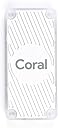
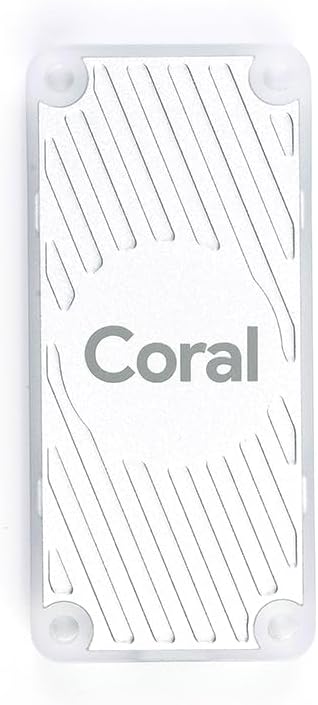
The Coral USB Accelerator is a compact coprocessor designed for high-speed machine learning inferencing, compatible with various platforms including Raspberry Pi and major operating systems. It supports TensorFlow Lite and AutoML Vision Edge, allowing users to build and deploy custom models efficiently. Weighing just 3.52 ounces and measuring 1.97 x 1.97 x 3.94 inches, it offers a powerful solution for edge computing applications.


| ASIN | B0CDGT75SH |
| Best Sellers Rank | #180 in Single Board Computers (Computers & Accessories) |
| Brand | seeed studio |
| Customer Reviews | 3.8 3.8 out of 5 stars (190) |
| Date First Available | August 2, 2023 |
| Item Dimensions LxWxH | 5.47 x 3.98 x 1.3 inches |
| Item Weight | 3.17 ounces |
| Item model number | 114991790-FA |
| Manufacturer | seeed studio |
| Number of Processors | 1 |
| Operating System | Debian Linux, macOS, Windows 10 |
| Processor Brand | ARM |
| Product Dimensions | 5.47 x 3.98 x 1.3 inches |
| Series | Coral USB Accelerator |
R**N
Love this for AI Cameras
I am thoroughly impressed with the Coral USB Accelerator—it's truly a game-changer for AI camera systems! As a developer working extensively with AI applications for surveillance and monitoring, this device has exceeded all my expectations. Firstly, the setup was incredibly straightforward. I simply plugged the Coral USB Accelerator into my existing camera system and connected it to my development environment. Within minutes, I was up and running, ready to integrate powerful AI capabilities into my cameras. The performance is exceptional. The Coral USB Accelerator significantly boosts the processing power of my cameras, allowing for real-time object detection, classification, and tracking. Even with multiple cameras running simultaneously, the Coral USB Accelerator handles the workload effortlessly, ensuring smooth and accurate AI inference. What I appreciate most is the versatility of this device. It supports various AI models, allowing me to choose the best one for my specific application. Whether I'm detecting intruders, monitoring traffic patterns, or identifying wildlife, the Coral USB Accelerator adapts seamlessly to different use cases. The compact size of the Coral USB Accelerator is also a big plus. It's portable and doesn't take up much space, making it ideal for both indoor and outdoor installations. The low power consumption is another bonus, ensuring that my camera systems remain energy-efficient. Overall, the Coral USB Accelerator has revolutionized the way I approach AI camera systems. It has enhanced the intelligence and responsiveness of my cameras, enabling more sophisticated and effective surveillance solutions. If you're looking to integrate AI into your camera network, I highly recommend the Coral USB Accelerator—it's a must-have for AI developers and security professionals alike.
D**J
Dead on arrival. Defective product.
I ordered this Coral accelerator because it was $12USD less than the official Google product. After installing the drivers, it was not recognized by the USB hub. There was no power light when plugged in. I sent it back and ordered one directly from Google. It works fine. Amazon needs to deep 6 whatever seeed studio is. I'll never purchase from them again.
B**G
Works as expected
Plug and play into my Beelink mini pc. Doing GPU acceleration for Frigate and has reduced the load on my CPU significantly.
D**M
Working Great!
The Coral is working just as expected! I have it currently running on a Frigate Docker instance to detect objects and its doing a great job of that. Initial testing using various models and images show that the Coral is very versatile and is easily hidden behind some other items. It does not draw too much power to overtax a Raspberry Pi power supply and is well within tolerance for all the different USB ports I've tried on different computers. I'm well pleased and will be ordering another in the coming weeks to add to another project as it looks like it'll fit into several other projects I have in mind.
F**Y
Add the Coral to your Frigate NVR and cameras...it is just crazy good.
Using this with Frigate NVR and it is a friggin awesome little device! Camera detections are off the chart in quality--1 false identification (tagged my dog as a horse, but still an alert). I am using a TrueNAS server, plugged this in and used to help with the docker config. I also have a Nvidia P1000 running 8 cameras. The CPU utilization is about 2%, as is the GPU and the Coral TPU. Rain is no problem, squirrels are ignored and detections are just so good. Highly recommended for this application. Dropped this to 4 stars because my first device was DOA, returned it, re-ordered it and the second one is fine. Minor delay and easy to correct with Amazon returns.
E**N
Turn a small "slow" PC into an image processor
This think works great. It's expensive, but it does what I need it to do. Using this with a mini-PC, running Frigate under Ubuntu for video security cameras. It found the device, and offloads the image detection to this, and takes a massive load off the PC. The processing is very quick, so I can get real-time detection and push alerts to my phone within seconds.
R**L
Coral Accelerator: Great at Machine Learning, Terrible at Being a Machine!
Subject: DOA Coral USB Accelerator + Absurd Return Process = Consumer Hostility I’m writing to express my deep frustration at receiving a dead-on-arrival Coral USB Accelerator, only to be met with a return process that seems more like a test of consumer endurance than a genuine support experience. Let’s be clear: this isn’t about "user error." I’ve tested the device across multiple USB 3.0 ports, swapped in verified data-capable cables, and even plugged it into a second machine. It doesn’t register — no LED activity, no kernel acknowledgment, nothing in lsusb. The device is a brick. I’ve debugged systems long enough to know when the problem is hardware, not human. And yet, instead of a simple replacement or refund, I’m being treated like someone trying to con their way into a second-rate dev board. The hoops I’m asked to jump through — proof-of-purchase uploads, repeated device re-testing, form after form — amount to one message: we don’t trust our customers. Not even when they’re the ones building edge AI systems on their own time and budget. This isn’t just bad CX. It’s insulting. I’m not here to scam a $60 component. I’m here trying to build. And right now, the message I’m getting from Coral’s return process is that my time, effort, and technical skill mean less than your paranoia about reverse logistics fraud. I expect better from a company building for developers. Refund the purchase. Replace the unit. I was hoping you wouldn’t make me dance to prove what you should have validated in QA. Sincerely, A very tired engineer.
R**K
Dos unidades he pedido, las dos vienen muertas, ni se enciende el led al conectarlo al usb ni lo reconoce ninguno de los 3 pcs en los que he probado, tanto windows como Linux. No se cual es el problema porque ambos venian precintados pero no funcionan. Devueltos.
M**A
Produto excelente. Usando o Frigate em meu MiniPC i5, antes do Coral ficava com 85% de consumo de CPU. Com o Coral, caiu para 25~30% de consumo. Recomendo bastante aos que usam Frigate.
P**T
Le Google Coral n'est pas reconnu sur Aucun de mes OS, j'ai changé de cable, même combat.
A**T
Works with frigate
L**O
Il Google Coral USB non è solo un acceleratore AI, è il componente che rende Frigate una piattaforma di videosorveglianza realmente scalabile. Dopo le inevitabili difficoltà iniziali di integrazione, i risultati ottenuti sul campo sono netti. Su Windows con Docker non sono riuscito ad ottenere una configurazione stabile. Tra driver, pass-through USB e container, il tempo perso supera ampiamente i benefici. La scelta di Ubuntu si è rivelata decisiva, riconoscimento immediato del dispositivo, driver solidi e integrazione pulita con Docker e Frigate. La mossa vincente è stata riciclare un vecchio PC inutilizzato, trasformandolo in un nodo dedicato alla videosorveglianza. Hardware che prima non serviva a nulla e prendeva polvere è tornato a vivere, e lo fa lavorando in modo efficiente. Una volta operativo, il Coral ha preso in carico tutta la parte di object detection, liberando la CPU generale. Velocità di inferenza: ~9.2 ms Utilizzo CPU del Coral: ~2.7% Utilizzo memoria del Coral: ~2.3% Valori sotto soglia. L’inferenza è rapida, costante e senza jitter. Non ci sono rallentamenti, non c’è accumulo di latenza. Con 8 telecamere attive, suddivise tra stream principali e sub stream per la detection, il carico rimane basso: FFmpeg per camera: tra 3% e 7% CPU Processo recording: ~6.3% CPU go2rtc: ~3.7% CPU Prima del Coral, lo stesso sistema arrivava al 90% di CPU con appena 2 telecamere. Ora siamo intorno al 30% totale con 8 telecamere, detection attiva, snapshot, zone, maschere e tracking multiplo. Con una configurazione fatta con criterio — maschere disegnate bene, zone sensate, FPS bilanciati e soglie realistiche il risultato è una detection veloce, coerente e affidabile. Interfacciato con homeassistant tramite mqtt i falsi positivi sono diventati un ricordo, al punto che le notifiche tornano ad avere valore. Quando il sistema segnala qualcosa, ha ragione. E questo per me era fondamentale. In conclusione: il Coral non è per chi vuole tutto pronto. Serve tempo, serve capire come Frigate gestisce i flussi, i modelli, il rapporto tra sub stream e risoluzione del modello, ma è ciò che trasforma Frigate da “funziona” a funziona bene sotto carico. Su Windows è una battaglia inutile. Su Ubuntu, anche su un PC riciclato, diventa una soluzione veloce, stabile, efficiente e affidabile, richiede tempo e pazienza ma i risultati sono semplicemente impagabili.
Trustpilot
2 weeks ago
1 month ago