![Criterion Collection: Wild Strawberries [Blu-ray] [1957] [US Import]](https://m.media-amazon.com/images/I/8179gRBZqEL.jpg)


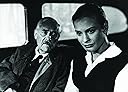
Traveling to accept an honorary degree, Professor Isak Borg—masterfully played by veteran director Victor Sjöström (The Phantom Carriage)—is forced to face his past, come to terms with his faults, and make peace with the inevitability of his approaching death. Through flashbacks and fantasies, dreams and nightmares, Wild Strawberries dramatizes one man’s remarkable voyage of self-discovery. This richly humane masterpiece, full of iconic imagery, is a treasure from the golden age of art-house cinema and one of the films that catapulted Ingmar Bergman (The Seventh Seal) to international acclaim.
J**T
Emissary of love
I first saw Wild Strawberries on Saturday night TV when I was about 15. I watched it with my father. Where everybody else was that night I don't remember. We watched it alone in silence. Bergman, black-and-white images, Nordic landscapes, the sing-song cadences of the incomprehensible language, blonde Swedish beauty (Ingrid Thulin, Bibi Andersson) — visual information beamed into our California home from the dark side of the moon.The film ended. My dad got up and went to bed silently. Whatever the film said or didn't say to him I never heard, the secret locked away in the vault of his heart.What did it say to me? I can't remember exactly. What can 15 years on this planet teach you about anything? But it must have taught me something. It must have suggested my little world was not the only one. There are different ways of seeing and feeling, different textures in what we call the fabric of life. I remember sensing this, though there wasn't any way I could have put it into words. I remember how foreign Sweden looked and how its foreignness did not frighten me. If any thing, it thrilled me.As time passed the beauty of Ingrid haunted me. How does a woman become that beautiful and why doesn't her husband (played by Gunnar Bjornstand) love her for that beauty?She carried his baby. Good news, surely. No, not for Gunnar. He frowned and became surly and sulky when she told him. The child would be miserable, he said, just as he had been. Man hands on misery to man, said Philip Larkin, and there are times when we know this to be true.The elderly father/professor (played movingly by Victor Sjostrom) has lived selfishly. His career has been important, which means his standing in the academic/intellectual community. His accomplishments have been noticed, feted, honoured. He travels now with Ingrid by car from Stockholm to Lund to receive another award. But on the way he is sidetracked by all manner of things: summer daydreams of his carefree youth, scraps of conversation from his past, nightmares filled with Freudian symbolism, hitchhikers, a feuding couple they give a lift to after the couple's minor car wreck. Sauntering along the road to Canterbury, he becomes a whimsical Chaucerian character.What does it all mean? By the end we understand, and so does Victor. His long life has been lived, but not lived wisely, perceptively. He has chased the wrong things, the things he thought were important but weren't, while the things that were he neglected. How can he be forgiven for this? Why should he be?Ingrid, as it happens, becomes his angel, a loving emissary of sorts between heaven and hell. She carries, despite everything, love in her heart for him and for Gunnar, and it is this — this love — that will transform everything around her.
K**M
Life’s Regrets…
Ingmar Bergman’s 1957 masterpiece really is one of the most exquisite pieces of cinema – perceptive, finely constructed, consummately acted, beautiful to look at, endlessly rewatchable … and leaving the viewer with haunting, thought-provoking memories. Particularly remarkable for a film running to less than 90 minutes is how Bergman’s tale of Victor Sjöström’s elderly doctor, Isak Borg, reflecting back on his life memories, manages to ‘pack in’ such thematic complexity around the human condition as to leave films twice the length (or, in some cases, entire film-maker oeuvres!) trailing in its wake. The thematic complexity inherent in Bergman’s writing is realised (and enhanced) on-screen, by the film’s 'technical’ qualities – the seamless transition between (indeed, often, the 'overlapping’ of) dreams and reality, Gunnar Fischer’s sharp, evocative black-and-white cinematography predating Bergman’s long-lasting collaboration with Sven Nykvist (but being equally impressive) and the sparse, but beautiful, score by Erik Nordgren (which recurs at key moments in the drama).Veteran (78-year old) film-maker and actor Sjöström’s complex central performance is both subtle and majestic, convincingly depicting a man who has seemingly been living (obliviously) in an emotional vacuum for nigh on eight decades. The film’s key theme of man’s (and here the focus is most definitely on the male of the species) ability to live a pedantic, work-dominated existence, whilst remaining distant from those theoretically closest (parents, children, spouse, etc), is a universal issue (and one that, in reality, is arguably even more prevalent 60 years on from Bergman’s film). Isak’s gradual realisation is (largely sympathetically) depicted by Bergman via the doctor’s series of (often random, sometimes dream-based) human encounters as he embarks on a long car journey to receive an ‘honorary doctorate’. Jullan Kindahl’s feisty, formal maid, Agda, brings one of the film’s comic threads, whilst Ingrid Thulin’s poised, steely-faced daughter-in-law, Marianne, accompanying Isak on the trip, seemingly sits in judgement over Isak and the goings-on. Isak’s fond recollections of the titular fruit at his childhood holiday retreat are compromised by his dream encounter with his long-lost love Bibi Andersson’s bubbly, impetuous Sara, whose namesake (actress and character) is seemingly reincarnated (mirroring Isak’s troubled recollections) at the centre of a trio of hitchhikers that Isak and Marianne pick up. Whether in reality or dreams Bergman defies Isak’s struggles to find solace – the pairing of Gunnel Broström’s cruel misogynist Alman and put-upon wife reminding the doctor of his own failed marriage and then Broström reappearing as the disturbing Examiner, whose undermining judgements on Isak’s professional and personal ethics are starkly portrayed.Bergman’s multifarious themes recur and intertwine throughout. Particularly prominent is that of heredity – dispassion seemingly flowing from Isak’s mother through him to his son (and Marianne’s husband), Gunnar Björnstrand’s dour Evald – whilst religion is unlikely to provide any comfort to Isak, if the heated debates of hitchhiker Sara’s ‘boyfriends’ are anything to go by. The increasingly portentous significance of fate, time and memory are also memorably evoked and blurred via the film’s imagery and symbolism – ticking and faceless clocks, a tolling bell and Isak’s seemingly distorted recollections (even his voiceover appears to be 'timeless’). Acting-wise, Bergman’s evolving troupe excel uniformly. Despite a reputed initial reluctance to play the role, Sjöström is exemplary, Thulin mesmerising, Andersson infectiously bubbly, Kindahl ironically officious and each of Broström and Björnstrand suitably grave.In the end, for me, it is the film’s fundamental message around the need for humanity to demonstrate openness, tolerance and decency that is its defining feature – values that begin to seep through the surface in Sjöström’s touching portrayal of Isak at the film’s poignant conclusion.
R**R
As good as film history says it is
A wry, touching, strange road movie in which an old Swedish professor drives from Stockholm to Lund for an academic ceremony and his entire life flashes before our eyes and his. Beautiful, profound and exquisitely odd.
A**D
Frank Capra-esque
Goodbye Mr Chips meets It's a Wonderful Life, with the usual Bergman philosophical thread through the whole film.Any film featuring the gem of a line 'This life disgusts me to the point of vomiting' deserves a watch.
S**B
A heartbreaking masterpiece.
Bergman is one of my favourite movie directors. If i have to choose one it is definitively Bergman. It is all about people and their daily concerns. It is about life itself or lives which have been lived but of which the leading person wished he could have lived it otherwise. Victor Sjöström is acting on a high level here. Ingrid Thulin as well. She shines. It is a very emotional film. The dream sequences are very beautiful and heartbreaking. Bibi Andersson is so sweet and she brings joy to the movie with her two male comrades on their way to Italy. The closure of the movie left me breathless and deeply impressed. This is a true heartbreaking Bergman masterpiece.
D**R
It has grey all
It is just as moving as it was all those years ago when we were young.
M**L
I liked it EXCELLENT EXCELLENT BEST EVER
D**N
Five Stars
A seminal work - ofyen imitated unsuccessfully
Trustpilot
1 month ago
3 weeks ago