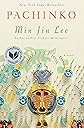


desertcart.com: Pachinko (National Book Award Finalist): 9781455563937: Lee, Min Jin: Books Review: An excellent page-turner - This book was hard to put down. One more reason to quit my day job! There are a lot of interesting multi-generational family sagas out there. However, Pachinko is at the top of the pile due to excellent writing and a unique story line. Pachinko spans the time period from 1910-1989 and follows a Korean family as they move from Korea to Japan. The story begins with Hoonie, a man born with physical deformities who is loved and nurtured by his parents. The family owns a boardinghouse. Japan has annexed Korea and times are tough. Because of difficult financial times, Hoonie is able to find a bride. Yangjin and Hoonie have a happy but hard life and are blessed with a daughter named Sunja. As a young girl, Sunja meets Koh Hansu. He is wealthy and handsome, but he is also not as he seems. They have an affair and she becomes pregnant. She makes the difficult choice to leave Korea for Japan, as the wife of one of her mother's boarders, Isak. He is a minister from Osaka who has been ill all of his life with tuberculosis. Isak and Sunja go to Japan and he raises her son, Noa, as his own. They later have a son together named Mozasu. In Japan they live with Isak's older brother and his wife. The brothers are very different. Noa is intellectual while Mozasu struggles in school. The family scrimps and saves to make sure that Noa can attend school. Mozasu is clever and ends up working in a pachinko parlor. Throughout Sunja's life, Koh Hansu is never far away and gives unwelcome interference in an effort to give his son a good life. Noa eventually discovers the truth of his birth with devastating results. Mozasu prospers, as does his family. Much much more happens in the book, but I do not want to ruin the twists and turns. Pachinko is set against the backdrop of WWI, WWII, and the Korean War. Koreans were treated as second class citizens in Japan. They had to change their names. Some Koreans were able to pass as Japanese. Those that could got better jobs and better treatment, so they guarded that secret from bosses, friends, and even spouses. After the wars, going back to Korea was often not an option. Pachinko parlors also play a major role in the book. A parlor may be shady and mob connected. Pachinko is a type of gambling game, like vertical pinball. Parlors still exist today. I Googled it! In addition to highlighting Korean history (about which I knew next to nothing), the story is very compelling. I cared about the characters, even the unlikeable ones. The book is full of tragedy, loyalty and betrayal, suffering, and triumph. But this is no fluffy beach read. The writing is lovely without being too flowery. I am still thinking about this book, though I finished it two weeks ago. I highly recommend this book and I plan to read Ms. Lee's other book, Free Food for Millionaires. Review: but the readers on Litsy were so unanimous in their love for this book - I'm not a huge fan of the family novel, but the readers on Litsy were so unanimous in their love for this book, and because I had wanted to expand my reading this year, and mainly because I got it for $1.99 during one of those one-day sales on desertcart, I took the chance. I'm so happy I did. The game of Pachinko is used as a metaphor for how we live our lives, taking gambles which sometimes pay off, and sometimes don't. It can be colorful and exciting, and it's certainly something about which many of us obsess. In this story, people gamble all the time, some are fortunate, like Sunja, who is rescued from infamy by a young man whose life she helped save. And in fact, as hard as Sunja's life has been, there have always been people there for her, there have always been opportunities, often unlooked for, like the random bounce of a Pachinko ball as it spins through its maze of pins. Sunja and her family are Koreans living in Japan before, during, and after WWII. They are perennial outsiders in what is a highly insulated society, yet manage to make their way through hard work and determination. Some of her family slip away, some cling to life and make it work for them, and its not always who we might expect in either case. Some make their mark, looking past their social position to the status that success can bring. Pachinko is very much about the expectations people have of themselves and of each other, and yes, it's very much about family. But for once I wasn't put off by the formulaic treatment inherent in a family story. Even the family members I didn't like I liked, if that makes any sense. And in the end, the story was satisfying which is all I really ask of a novel.


| Best Sellers Rank | #14,926 in Books ( See Top 100 in Books ) #4 in Cultural Heritage Fiction #5 in Asian American & Pacific Islander Literature (Books) #121 in Literary Fiction (Books) |
| Customer Reviews | 4.5 4.5 out of 5 stars (83,235) |
| Dimensions | 6.45 x 1.9 x 9.3 inches |
| Edition | First Edition |
| ISBN-10 | 1455563935 |
| ISBN-13 | 978-1455563937 |
| Item Weight | 2.31 pounds |
| Language | English |
| Print length | 496 pages |
| Publication date | February 7, 2017 |
| Publisher | Grand Central Publishing |
S**S
An excellent page-turner
This book was hard to put down. One more reason to quit my day job! There are a lot of interesting multi-generational family sagas out there. However, Pachinko is at the top of the pile due to excellent writing and a unique story line. Pachinko spans the time period from 1910-1989 and follows a Korean family as they move from Korea to Japan. The story begins with Hoonie, a man born with physical deformities who is loved and nurtured by his parents. The family owns a boardinghouse. Japan has annexed Korea and times are tough. Because of difficult financial times, Hoonie is able to find a bride. Yangjin and Hoonie have a happy but hard life and are blessed with a daughter named Sunja. As a young girl, Sunja meets Koh Hansu. He is wealthy and handsome, but he is also not as he seems. They have an affair and she becomes pregnant. She makes the difficult choice to leave Korea for Japan, as the wife of one of her mother's boarders, Isak. He is a minister from Osaka who has been ill all of his life with tuberculosis. Isak and Sunja go to Japan and he raises her son, Noa, as his own. They later have a son together named Mozasu. In Japan they live with Isak's older brother and his wife. The brothers are very different. Noa is intellectual while Mozasu struggles in school. The family scrimps and saves to make sure that Noa can attend school. Mozasu is clever and ends up working in a pachinko parlor. Throughout Sunja's life, Koh Hansu is never far away and gives unwelcome interference in an effort to give his son a good life. Noa eventually discovers the truth of his birth with devastating results. Mozasu prospers, as does his family. Much much more happens in the book, but I do not want to ruin the twists and turns. Pachinko is set against the backdrop of WWI, WWII, and the Korean War. Koreans were treated as second class citizens in Japan. They had to change their names. Some Koreans were able to pass as Japanese. Those that could got better jobs and better treatment, so they guarded that secret from bosses, friends, and even spouses. After the wars, going back to Korea was often not an option. Pachinko parlors also play a major role in the book. A parlor may be shady and mob connected. Pachinko is a type of gambling game, like vertical pinball. Parlors still exist today. I Googled it! In addition to highlighting Korean history (about which I knew next to nothing), the story is very compelling. I cared about the characters, even the unlikeable ones. The book is full of tragedy, loyalty and betrayal, suffering, and triumph. But this is no fluffy beach read. The writing is lovely without being too flowery. I am still thinking about this book, though I finished it two weeks ago. I highly recommend this book and I plan to read Ms. Lee's other book, Free Food for Millionaires.
M**S
but the readers on Litsy were so unanimous in their love for this book
I'm not a huge fan of the family novel, but the readers on Litsy were so unanimous in their love for this book, and because I had wanted to expand my reading this year, and mainly because I got it for $1.99 during one of those one-day sales on Amazon, I took the chance. I'm so happy I did. The game of Pachinko is used as a metaphor for how we live our lives, taking gambles which sometimes pay off, and sometimes don't. It can be colorful and exciting, and it's certainly something about which many of us obsess. In this story, people gamble all the time, some are fortunate, like Sunja, who is rescued from infamy by a young man whose life she helped save. And in fact, as hard as Sunja's life has been, there have always been people there for her, there have always been opportunities, often unlooked for, like the random bounce of a Pachinko ball as it spins through its maze of pins. Sunja and her family are Koreans living in Japan before, during, and after WWII. They are perennial outsiders in what is a highly insulated society, yet manage to make their way through hard work and determination. Some of her family slip away, some cling to life and make it work for them, and its not always who we might expect in either case. Some make their mark, looking past their social position to the status that success can bring. Pachinko is very much about the expectations people have of themselves and of each other, and yes, it's very much about family. But for once I wasn't put off by the formulaic treatment inherent in a family story. Even the family members I didn't like I liked, if that makes any sense. And in the end, the story was satisfying which is all I really ask of a novel.
B**N
Absolutely fantastic
Pachinko by Min Jin Lee is a family saga about a four generations of a Korean family that is set in Korea and Japan. It’s a National Book Award finalist, and, in what may be an even greater honor than that, it made my Favorite Books list. I have found that it is easier to explain why I don’t like a particular book or to point out a book’s flaws than it is to explain why I absolutely loved one. It’s like explaining why a rainbow is beautiful. I can talk about how the colors are pretty or how it made me feel, but there is something about rainbows, sunsets, and the best works of art that transcends easy explanation. You just have to experience them. Read Pachinko. The format of the book is straightforward. It proceeds chronologically from about 1900-ish to 1989 and follows various characters that belong to one family. It never sprawls out of control – there aren’t 37 second-cousins that you will have to keep track of – and there aren’t flash-backs and flash-forwards that could potentially cause confusion. There are occasional Japanese or Korean words sprinkled around, but their meaning is apparent from the context. I don’t speak a lick of those languages, and I followed everything without ever having to consult a dictionary. The prose is simple and straightforward, generally consisting of short, direct sentences. There’s not a lot of fluff. Therefore, the book reads quickly, despite being an almost 500 page family saga about sexism, fate, hard work, destiny, chance, war, poverty, racism, familial obligations, identity, immigration, citizenship, language, education, opportunity, community, and faith. The main characters are diverse, interesting, flawed, and generally fundamentally good people. The characters are not very Dynamic (at least in an obvious way), but they weren’t really intended to be. This isn’t a story populated with characters that have grand, clear character arcs. This made them feel more realistic to me. How many people do you know that are on a Hero’s Journey? Most people I know just try to keep their heads down, work to put food on the table, and hope for good opportunities for their children. I’ve said before that I am a fan of history, and I was generally ignorant of Korean culture in Japan. Pachinko is not some dry history lesson, though. It’s as entertaining as a soap opera. You should read it.
D**L
Entrega rápida, buenas condiciones a pesar de no traer celofán protector. En cuanto a la trama del libro: 4/5☆ Muy buena historia y narrativa, atención a detalles y su redacción permite al lector comprender aspectos específicos del país y su historia. Los personajes aparecen y desaparecen causando un poco de confusión en cuanto a qué pasa con ellos; sin embargo, una vez procesada la historia, así es la vida. Personas entran y salen sin un final de nuestras vidas y la escritora lo plasma de una manera muy sutil. Conforme avanzas en el libro la historia se vuelve algo lenta, pero vale la pena continuar con la lectura.
D**E
I rate it as a 9/10 In the early 1900s, Sunja, a young Korean lady, works with her mother at a boarding house in Yeongdo after the passing of her loving father Hoonie. When she was around 16, she falls in love with a mysterious man who saved her from being assaulted, and when she tells him she is pregnant, he confesses to be married and to having a family in Japan, but still would like her to be his mistress in Korea. Feeling betrayed and ashamed, Sunja does not accept it and ends the relationship with him, keeping the child but never revealing its father’s identity to anyone. At the boarding house, a Christian minister learns what happened, and since he believes to be dying from tuberculosis, he decides to marry Sunja, give the child his name, and also in search of giving meaning to his own life. All is then set, and they move to Osaka, where the story unfolds. Pachinko is a patchwork of stories, having as the background the Japanese occupation in Korea and the hardships Sunja and her family (representing most Koreans from that time) endured while trying to simply survive. It is a combination of suffering, pain, shame, violence in all its forms, but also unconditional love, sacrifice, bonds, and determination. It is raw and blunt, touching nerves you didn’t know that were there, and it makes us realize how fortunate some people are for not ever having to go through any kind of prejudice nor hardship because of your nationality, or how you look. Sunja’s story is no different from many other families’ stories around the world, and the way Min Jin Lee describes it makes us feel like we are there, living it all first-hand, and therefore impossible to finish it with dry eyes.
H**8
I couldn't stop reading this book until I had finished the entire book. The Author Min Jin Lee has written a beautiful fiction with deep character development, excellent research, and an incredible narrative. I believe this book is genuinely one of my favorite books of all time. With every great book, I always get so sad to finish the book - as I will miss being taken away into my imagination whilst reading each chapter - literally feeling like I'm being brought into the world of the book - because it's so well-written & a pure joy to read.
B**M
Pachinko is the epic story of people like you and me. Through 4 generations, we learn of the struggle of ordinary koreans that had to immigrate to Japan. It's a tale of hardship, love and family. From the very beginning, it's easy to feel connected to the characters. But most of all, it's a story about emotional connections. No matter how capable or intelligent you are, without love and support, it's hard to make it in the world. Pachinko shows that with incredible clarity. The value of human understanding is shown many times throughout the story. I reccomend this book to everyone who enjoys learning new cultures and sensitive, rich storytelling.
ち**ー
I was raised up in Osaka. When I was an elementary school student, I used to commute to coaching school in Tsuruhashi. Although I noticed that there were a lot of yakiniku restaurants, I wasn't interested in Korean stuff so I was completely ignorant of the history until I read this book. The discrimination of being Zainichi tyousenjin in Japan is depicted in this book, I think it still persists more or less even in this era. I remembered that my dad said that he hates tyousenjin. They were cunning and dirty. I suppose we unconsciously need someone whose position is extremely low and mocked badly by others like the hierarchical system in India. It shows us that things go well thanks to it. I was impressed by the author's deep insight of human psychology and well research and understanding. I think Noa's weakness represents Japanese character. Japanese are very sensitive and serious(not all though). I couldn't dislike Hansu throughout the stories. He was Yakuza. But his devotion to Sunja seemed true. If I were Sunja, I might be a Hansu's second wife haha.
Trustpilot
1 month ago
3 weeks ago