



K-180WLA Loop Antenna
Product ID: 350087595
Details
- AntennaRadio
- BrandDmgicPro
- ColorK-180WLA
- Impedance50 ohm
- ManufacturerDmgicPro
- Maximum Range55 centimeters
📶20dBi gain peak
🔋Built-in 3.7V lithium battery
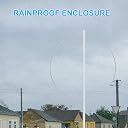
🌧️Fully waterproof preamp box
Desertcart purchases this item on your behalf and handles shipping, customs, and support to Brazil.
📡 Elevate your SDR game with the antenna that’s always charged and weather-ready!
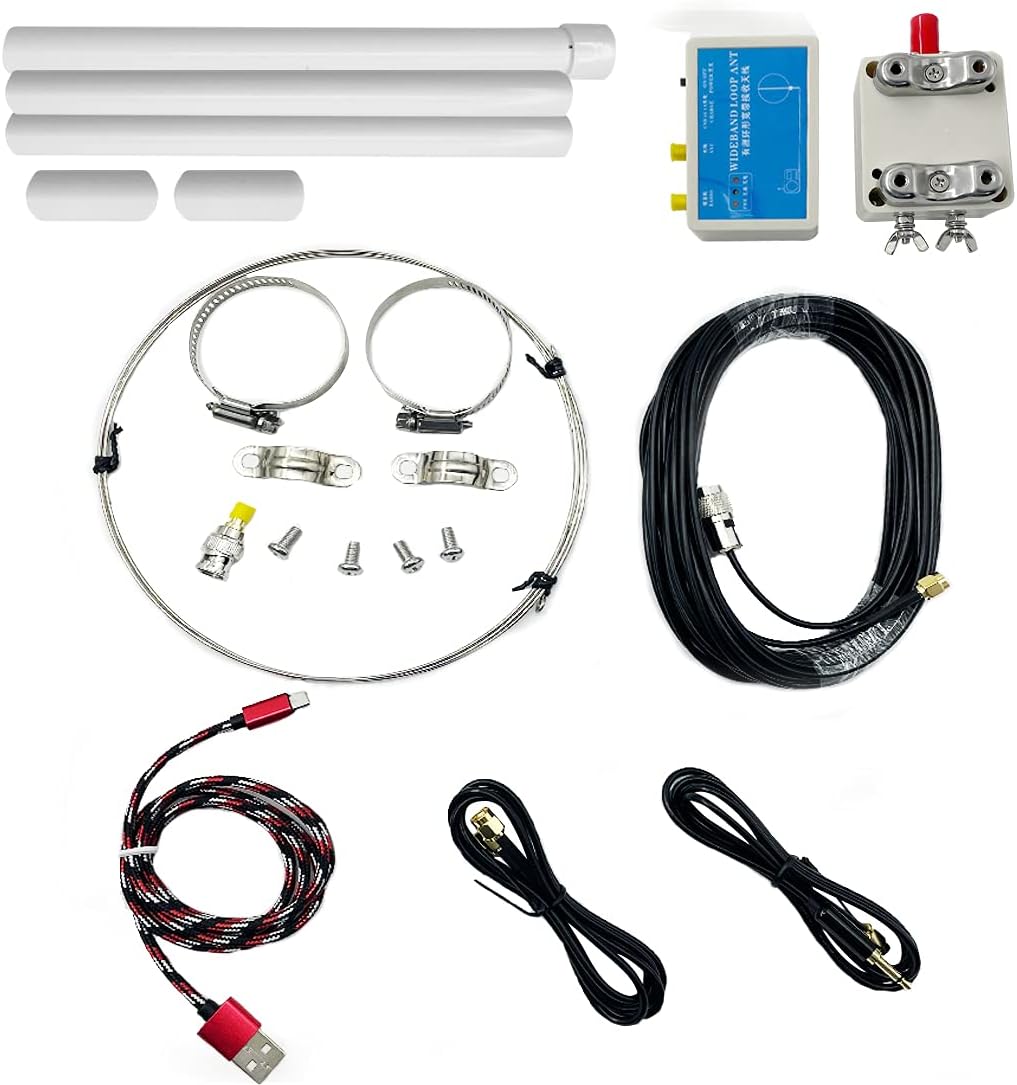
The K-180WLA Active Loop Broadband Receiving Antenna is a high-gain (20dBi) compact antenna designed for SDR radios, covering a broad frequency range from 100kHz to 180MHz. Featuring a built-in rechargeable lithium battery with USB charging, a fully waterproof preamplifier box, and durable 304 stainless steel hardware, it offers reliable outdoor use and flexible installation. Its selectable preamp switch allows tailored reception for FM or HF signals, making it ideal for professionals seeking superior signal clarity in limited spaces.


| ASIN | B092VYVQMY |
| Antenna | Radio |
| AntennaDescription | Radio |
| Best Sellers Rank | #313 in Radio Antennas |
| Brand | DmgicPro |
| Color | K-180WLA |
| Customer Reviews | 4.4 out of 5 stars 92 Reviews |
| Impedance | 50 ohm |
| Manufacturer | DmgicPro |
| Maximum Range | 55 centimeters |
| Mfr Part Number | K-180WLA |
| Model Number | K-180WLA |
| Number of Channels | 1 |
| Number of Items | 1 |
| Number of Packs | 1 |
| Unit Count | 1 Count |
| Warranty Description | 1 YEAR |
M**S
Great antenna. Odd sized PVC pipe might need to be replaced.
This works great and is not easily overloaded. Very wide band reception.
M**A
Chinese to English Instructions Need Some Help
The Chinese to English manual definitely needs some love and is the only thing I find fault with. I am really enjoying the antenna and have it hooked up to a RWL-SDR dongle. Works very well. It did take a couple of days to figure it all out, so I thought my lessons learned tips might help fill in the gap with the supplied manual. There's no need for glue, just put the pvc pipes together and friction should hold it all together since the antenna doesn't weigh much. I did add a layer of tape on the top pipe to ensure the cap fits tighter to prevent it from coming apart if I hung it up by a string. If you don't glue it then you can take the whole thing apart in 30 sec. Pretty obvious how it goes together, just make sure the loop is a round circle and not an oval and at least 22 inches top to bottom. The antenna receives RF directionally, not omni. The antenna is a donut; turn the hole of the donut to face where you want to receive VHF/UHF signals or turn the edge of the donut towards where you want HF signals. Try turning the antenna a bit to tune in a weaker signal that might not be perfectly aligned. The antenna and yellow preamp box are weatherproof. Make sure to put some sag or a loop in the cable so that water drips off the cable and doesn't travel into the house. There's a yellow preamp box where the metal loop is attached that contains a selectable switch. If you primarily want to search and receive long distance FM stations then don't touch it. If you're close to powerful FM radio stations and getting overpowered or want to search and receive clearer 80m/40m/20m/etc HF signals then you'll need to open the preamp and move the switch from FMDX to HF. If you don't need FM radio stations there's a $16 Broadcast FM Block Filter (88-108 MHz Block) that you can purchase to shut out FM radio signals. https://www.amazon.com/gp/product/B01LE9LRPM/ref=ppx_yo_dt_b_asin_title_o01_s00?ie=UTF8&psc=1 Mount or hang the antenna 3ft from any walls and windows before you power it up. Put it where the kiddies/pets can't touch it while it's in use. You'll have to mount it outside if you want decent reception. There is a SDR# software setting to turn on the reception of AM and HF signals below 28MHz. Here's how: In SDR# stop the program. Then select "Sampling Mode" > "Direct sampling (Q branch)". Now hit play. If the "Sampling Mode" is greyed out it means you didn't stop the program. To resume going back to listening to VHF/UHF then hit stop again, select "Sampling Mode" > Quadrature sampling". Hooking up the SMA cables to the blue cable box (not waterproof) is fairly obvious. Long antenna cable goes to the ANT connector. Short SDR dongle cable goes to the RADIO connector. Don't power on the antenna unless everything is connected first. On the blue antenna cable box there is a power switch to turn on the antenna. What's not clear is the LED lights. Here's my findings: 1) Far right LED shows red while you're charging the lithium battery. **NOTE do not charge the battery while the antenna is powered on. Supposedly the battery lasts around 40 hours between charging so it's not something that needs to be done all the time. 2) Middle LED shows green when the lithium battery is fully charged. Make sure to pull out the USB charging cable before powering on the antenna. 3) Far left LED light shows red when you have the antenna powered on and active. A quick test to see if the antenna is working below 28MHz is to power it up and tune to the AM stations (540 - 1600 kHz). Make sure you first select "Sampling Mode" > "Direct sampling (Q branch)". Got AM, then everything is probably working fine. See if you can find the Ft Collins, CO UTC Signal at 10Mhz. You'll hear seconds ding off then a distinct signal at the minute mark. It'll also announce the UTC time in English. Pretty cool. Good luck!
S**Y
Perfect receive-only antenna for ham and shortwave listening (SWL) that actually works!
The amplifier module has a rechargeable battery, which is really nice for use in the backyard or while camping. Not "hard" to set up, but takes a bit of manual dexterity to mount the loop to the antenna box, as the washers and wing nuts like to "fly off" due to the steel loop's "memory" of being squashed in the bag/box. Once you get the loop on the mounts, it stays firmly attached. LOVE the ease-of-use. Turn it on, and tune your receiver to whatever HF frequencies you want! (I used mine exclusively for <30 MHz, so can only comment on this range.) Since a loop antenna is inherently directional, you can turn it to enhance the reception of a desired signal, or null out a remote noise source. (I used this capability to map out the noise sources in a park, and identify the best places to raise an HF vertical antenna, to avoid them!) I also used this receive-only loop antenna with my RTL-SDR (and other) software defined radios, and it works exceptionally well for its size. I would buy another one of these in a heartbeat!
M**E
Performs beyond expectations!
I've been using this for several days and it is exceeding expectations. I am using it indoors. I live in a very high noise, city environment. This is now allowing me to receive stations I could not hear before. It has brought back joy to shortwave and mediumwave listening for me. I cannot recommend this antenna enough, especially for extremely noisy environments.
H**S
Great first SDR wideband antenna
Best overall antenna for SDR 300 khz - 165 MHz in terms of cost vs. performance. Mounts easily on mic/light stand or other stable vertical support.
M**T
Pulls in more than I expected!
What a great antenna! It pulls in a lot with less noise. It comes complete with everything you need to get the antenna up and running. It's a good deal at this price point! Before this, I was running a long wire for DXing. With this antenna, I'm pulling in Madagascar, New Zealand, China, Italy, Cuba, Canada and others! It's great! It's not that big and can be assembled or taken apart in less than a minute. Highly recommended!
B**.
Works as advertised
Works as advertised, though make sure you're far enough away from stuff like buildings and that kind of thing because if you're not, all you're going to hear is interference.
A**R
Do Not Buy!
Missing loop. Even if there was a loop theres no pvc to mount it to like it shows in the picture. No hardware to mount it as well. No instructions or diagram at all. Worthless. Do not buy!!!!!
Trustpilot
1 month ago
1 week ago