
DOWNLOAD THE APP


Customer Services
Copyright © 2025 Desertcart Holdings Limited
DOWNLOAD THE APP

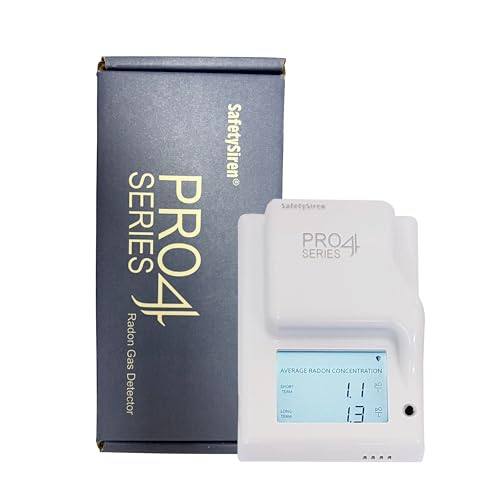
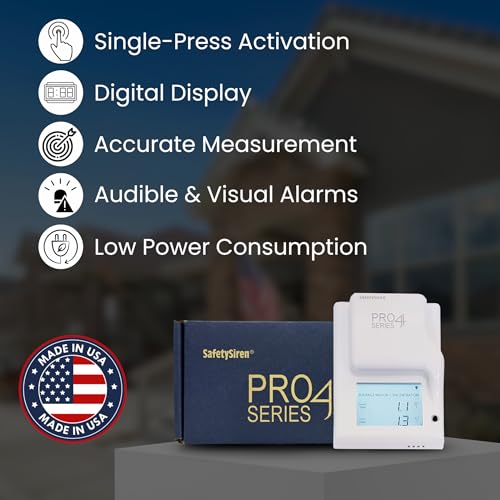
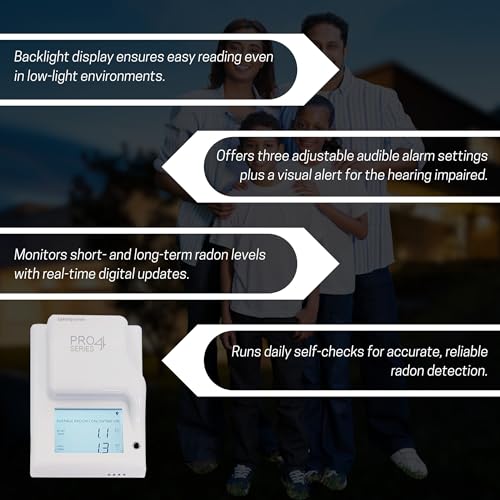




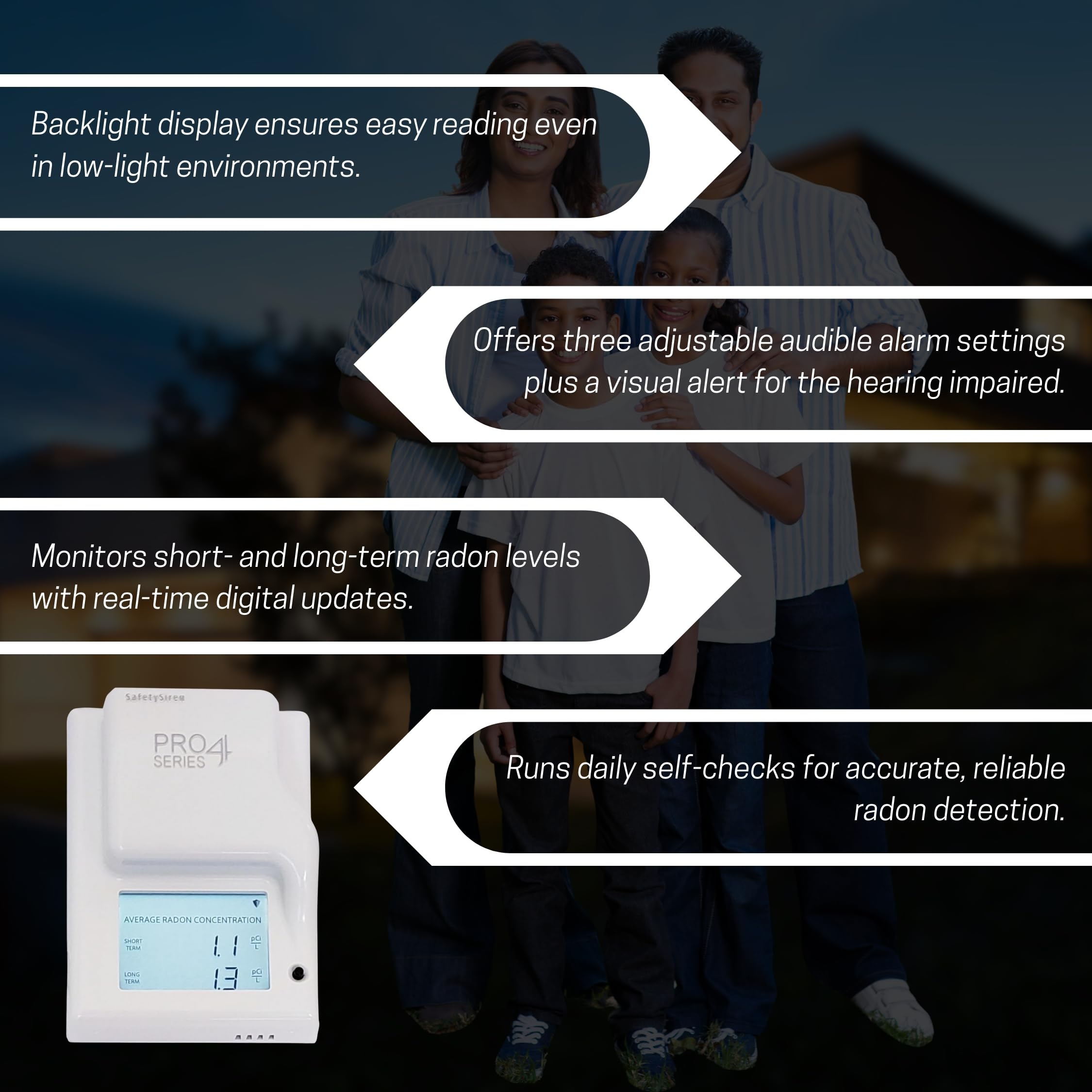
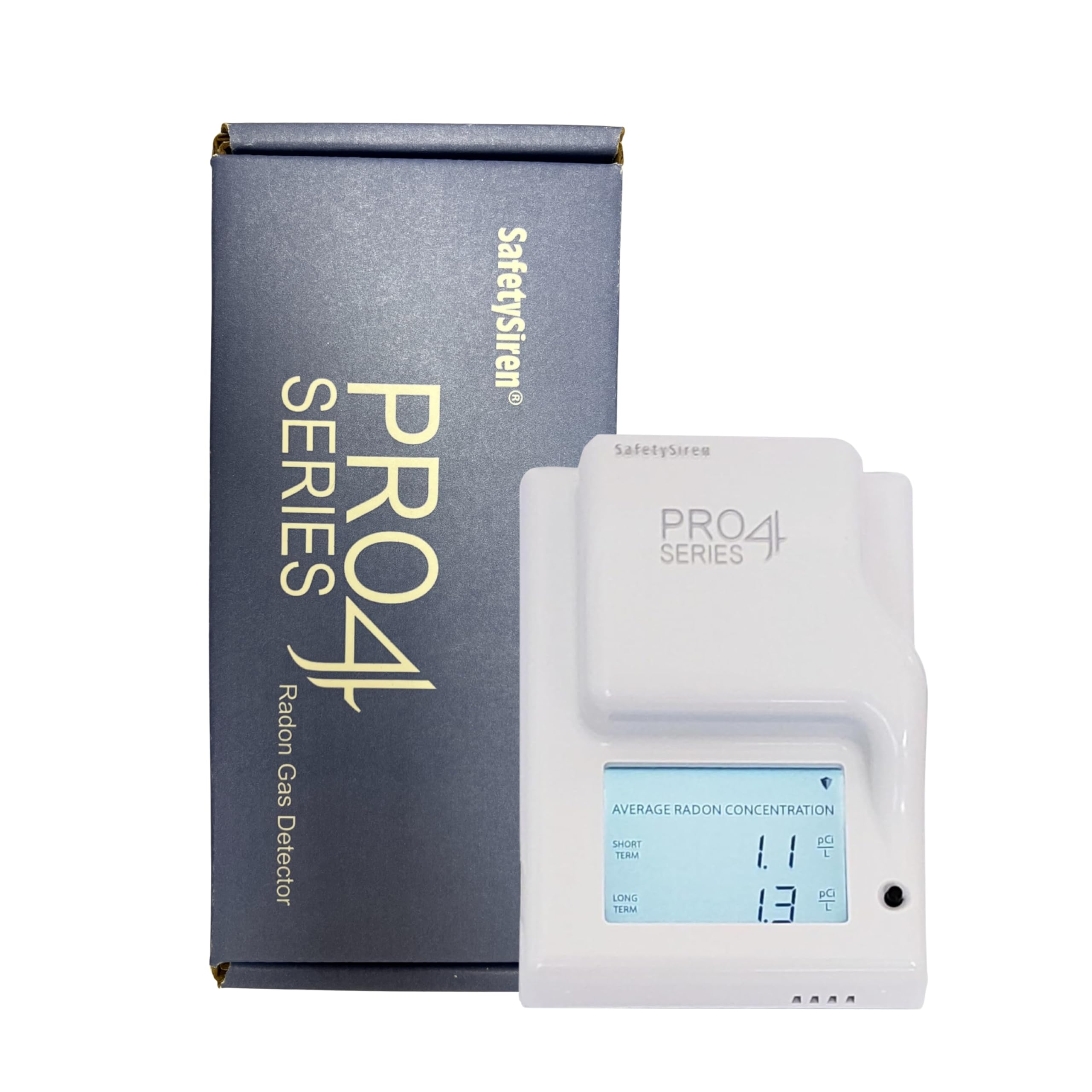
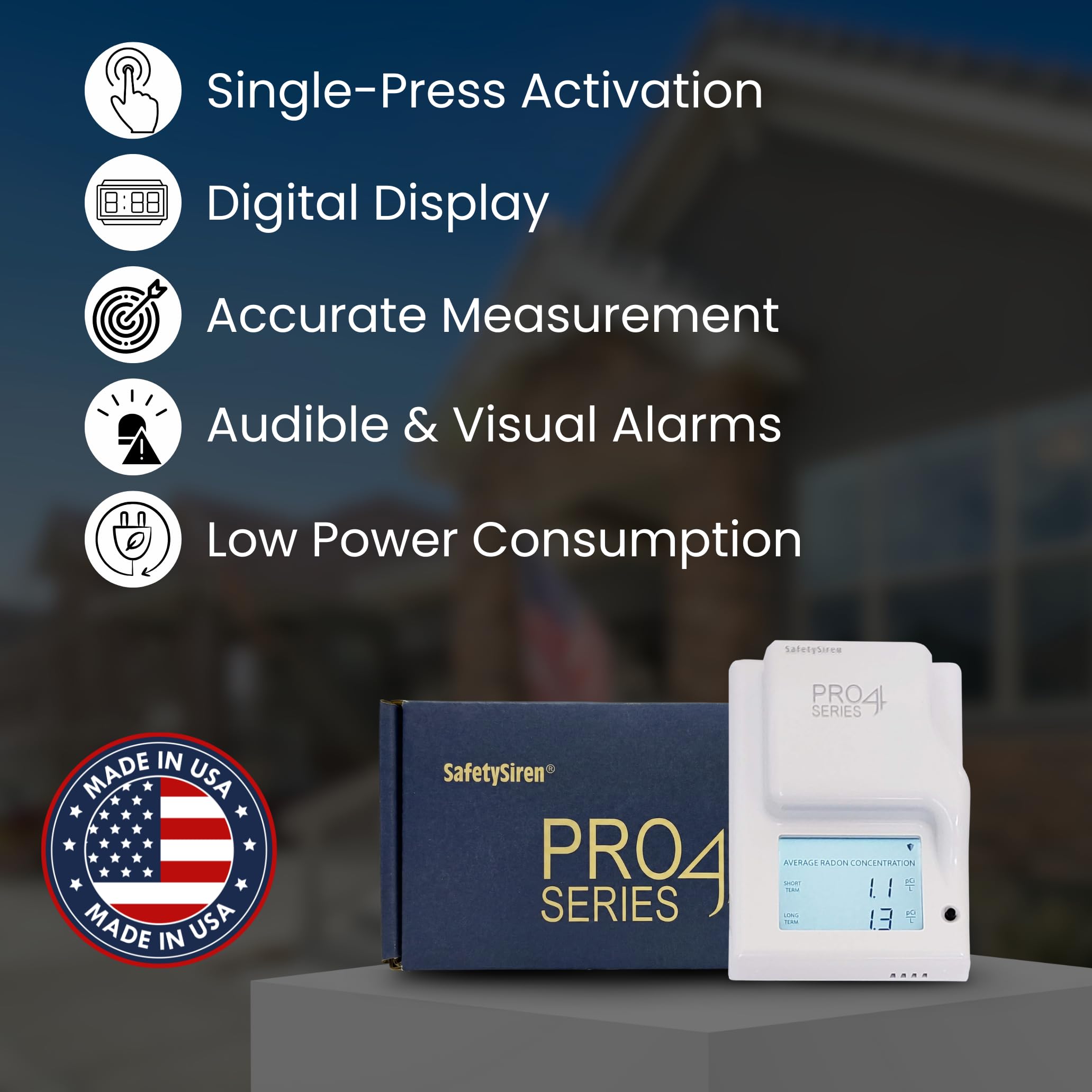



🚨 Stay Ahead of Radon Risks — Because Your Health Can't Wait!
The Safety Siren Pro4 Plug-in Radon Detector is a US-made, continuously operating device that delivers real-time radon gas monitoring with audible and visual alarms. It provides both short-term and long-term radon level averages on a clear backlit display, ensuring early detection of hazardous radon exposure in homes and offices. With automatic daily self-tests and multiple alarm modes, it offers reliable, user-friendly protection against this invisible health threat.


| ASIN | B085GLQ9F8 |
| Alarm | Audible |
| Batteries Included? | No |
| Batteries Required? | No |
| Best Sellers Rank | #95,774 in Tools & Home Improvement ( See Top 100 in Tools & Home Improvement ) #112 in Gas Detectors & Alarms |
| Brand | SafetySiren |
| Color | Cream |
| Customer Reviews | 4.5 4.5 out of 5 stars (494) |
| Date First Available | March 4, 2020 |
| Included Components | A/C wall adaptor |
| Item Package Quantity | 1 |
| Item Weight | 8 ounces |
| Item model number | P4SU1 |
| Manufacturer | Family Safety Products, Inc. |
| Material | ABS |
| Number of Items | 1 |
| Operating Humidity | 95 percent |
| Part Number | P4SU1 |
| Power Source | Corded Electric |
| Product Dimensions | 1.5"D x 3.5"W x 4.5"H |
| Sensor Type | Photoelectric |
| Shape | Rectangular |
| Size | 3 3/8 W x 4 5/8 L x 2 H |
| Sound Level | 85 Decibels |
| Style | Modern |
| Type of Bulb | LED |
| UPC | 758773420203 |
| Upper Temperature Rating | 104 Degrees Fahrenheit |
| Usage | indoor use only |
R**B
Radon Detection Device Works Well
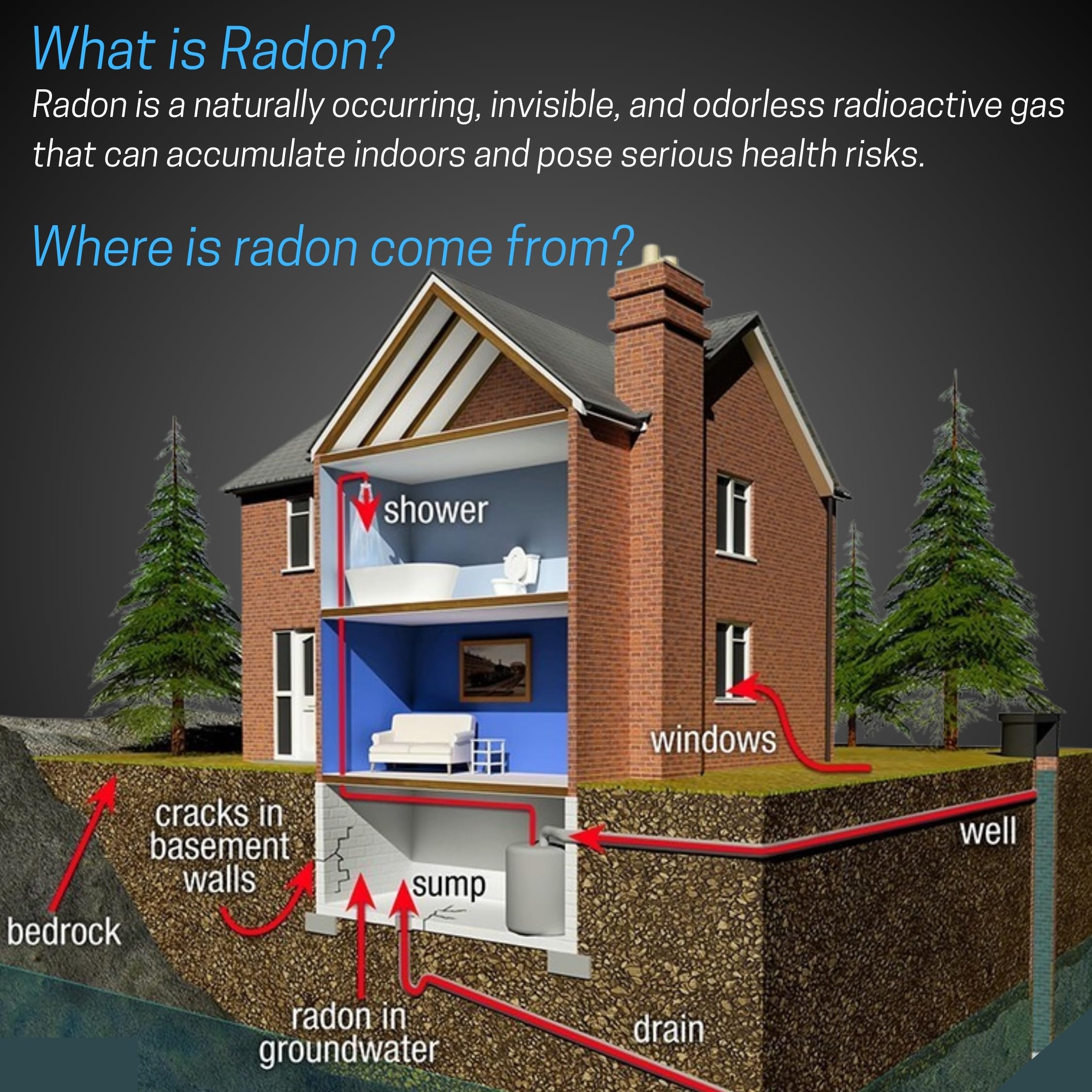
The radon detector was received in the time expected and in a bubble envelope. It is winter and the unit was allowed to warm to room temperature. Next, it was plugged into the wall outlet. An error message appeared upon initialization. Per instructions, electric power to the unit was cycled. This time the unit came up with the correct response - beeps, flashing CAL, then dashed lines for short term and long term readings in pCi/L. Per instructions, readings appeared in place of the dashed lines in 48 hours. I had placed the device in a bedroom of the house on the second floor. The initial readings were 1.8 pCi/L. This is close to one-half of the EPA action limit of 4.0 pCi/L or 148 Bq/m^3. (Each 1 pCi/L is equal to 37 Bq/m^3.) The WHO states that 2.7 pCi/L or 100 Bq/m^3 is the action level. The WHO also states that lung cancer risk will increase by 16% for every 100 Bq/m^3 of long term exposure. It is also important to remember that cancer risk is based on long-term exposure. It does not matter if the exposure was continuous or intermittent. Exposure to radon adds up over time. If you have moved from one house to another, each new exposure adds to long-term exposure. After 7 days of monitoring the radon reading fell to 1.7 pCi/L. We fully expected that the readings in our house would increase when we moved the sensor to the first floor and then to the basement. After 6 days of monitoring of the first floor near the kitchen and laundry the reading was 1.9 pCi/L. A week later the reading had fallen to 1.0 pCi/L. Thinking that there might be something wrong, we continued to monitor the reading for another week, and it steadily climbed to a maximum value of 2.5 pCi/L. That reading persisted for 3 days, and it is steadily falling again. These results show why long term monitoring is important. It is winter and the ground is beginning to freeze, although there is no snow cover. This makes the ground more, not less, permeable to radon gas. If it rains or snows, the ground becomes less permeable to radon and the gas may be less apt to dissipate into the outside air and more apt to enter the basement. The most common point of entry is the basement, but radon can also enter through windows and doors. The water content of the soil around the house, how well the basement windows are sealed, how well the basement concrete cracks and seams are sealed and concrete porosity all contribute to basement radon levels. Radon levels (if you have well water) will usually increase in the winter in a closed house where water vapor releases radon gas from laundry, dishwasher and bathing. The contribution due to evaporation of radon laden well water is added to the contribution entering the home from the basement to get the radon total. That is what is being read on the first and second floors of our home. Readings in the basement will be due to infiltration of radon through cracks in the foundation and basement slab as well as the porosity of the concrete, itself. Our well water contains nearly 4,000 pCi/L of dissolved radon. That is less than half the EPA actionable level of 10,000 pCi/L. Every 10,000 pCi/L of dissolved radon is expected to add 1.0 pCi/L to the air in the house due to dish washing, laundering and showering. We have no direct way of knowing if an additional 0.4 pCi/L has been added due to water vapor. We can assume, however that part of the dissolved radon in our well water is removed by the charcoal filter on our domestic well water supply. There is one additional note that might be added. There is no battery backup power to the unit. However, when the detector is moved to a new location, the data from the previous location will be held until the reset command is asserted with the push button on the face of the device. We have been very happy with the functionality of this device and will use it to guide us in radon mitigation decision making in the spring. If interested, the instruction manual with specifications can be found online. The manual provides sensor accuracy specifications for short and long term measurements. This is not a professional, periodically calibrated instrument. However, the accuracy should be more than adequate for determining when to call a professional. Added note, it is spring and the ground has thawed and heaved. The ground floor radon readings for the last two weeks have been between 2.2 and 2.7 pCi/L. We also have 135 days of data for our ground floor living space and the average is 2.0 pCi/L. Currently, the sensor is monitoring the basement so that a radon fan can be sized in cubic feet per minute (CFM). The bigger the fan, the more electricity it will use on a continuous basis. Most fans use between 50 and 100W. In this locale electric power is $0.20 per kW-hour. The annual operating cost would be between $88 and $175. Update: After this review was written, we installed a radon fan in our passive radon stack. Then, we caulked all of the basement slab cracks, expansion joints and basement floor-wall joints with a high quality radon caulk to improve the vacuum under the basement slab and to reduce heat loss. We also caulked around all of the basement bottom plates because there are anchors in the bottom plates that penetrate the concrete. (If you don't caulk, the radon fan will pull conditioned air right out of the house and send it up the radon stack, so please do it.) The radon level, year-round, has dropped to 1 pCi/l or less at the point in the basement room that is farthest from the radon suction point in the basement slab. In order to increase the confidence level of the measurement, we placed an Airthings Corentium Home battery operated unit near the Pro4. Although they employ different sensors and algorithms, there is good correlation between the two, and that increases our confidence level in the measurements. We purchased largest, adjustable speed Fantech radon fan that we could find, and we run it at very slow RPM. It is capable of moving a huge volume of air when turning slowly. It employs a massive Pabst fan with excellent bearings. The fan draws barely 250 mA on 115 VAC as measured with a clip-on current probe. That's 28.75 Watts. It is hardly noticeable in our monthly electric bill, maybe $3.50.
A**N
Accurate and Life Saving
Very accurate and cross checked its accuracy. Put it in my parents basement where my mother kept getting headaches. It read high. To check its accuracy, I put it in my basement of my brand new house with a radon pump and it read no radon. To say the least, it is accurate when you follow instructions in the package and I feel like it helped mitigate health issues for my family.
A**.
Testing all the houses
I had the radon tested when I bought the house 20 years ago, and it was low. Since then, it has been turned into a rental, but never retested. My renters got this tester, and discovered that the long term radon levels were 2.5x above the action level. I paid for a professional test, and it returned the same result. Installed radon mitigation, and this meter showed a drop to less than 10% of the previous value. Mitigation company did their own test, and again, identical results. Bought one of my own to test my house and all the other houses. This should be an essential piece of kit for homeowners, landlords, and realtors in high radon areas. Just plug it in, and it works. Keep it away from humid environments. Wait a week for accurate results. Super easy. If you have questions, the product instructions are in perfect English.
B**Y
Easy set up
I like that the set up was very easy, and (hopefully) it’s giving us an accurate reading. The reason I took off one star is because it doesn’t plug directly into an outlet. It has a cord (wire) instead, so, you have to have it on a table or other platform unless you want to put it on the floor.
R**J
As Accurate As The Professionals! Peace of Mind in a Compact Device.
We had the professional 72-hour radon test done in our home (the expensive one), and we used this monitor at the same time. The results were almost identical, usually within 0.1 to 0.3 of the pro-grade equipment. That alone made this device worth it. I’ve moved it around the house (basement, bedrooms, living room) and it works reliably everywhere. We even used it before and after installing a radon mitigation system, and the readings matched the professional’s results both times. Is radon really dangerous? There’s a debate all over the internet. But with a dog in the house, I’d rather be safe than sorry. This gives me peace of mind and helps me keep an eye on air quality long-term. Simple to use, easy to read display, made in the USA, and accurate. Highly recommend.
M**E
Great product to protect your lung health
Great product, customer support is good, if needed. Everyone in a radon susceptible area should own one to protect your families lung health.
B**N
Super easy to use for anyone.
I don't know why this product isn't getting more exposure on reviews. Of all the more "popular" models, user feedback on this one seemed to be the most consistent as far as accuracy and overall satisfaction. I bought two units and am very happy with the purchase and am very confident in the accuracy. It lacks smartphone integration and and also takes 48 hours for the first reading - and I consider these a plus. I want to know if I have a problem or not and waiting 48 hours for an accurate reading is a no-brainer. Highly recommend.
H**E
Use it for a secondary residence where there is a radon problem.
B**N
Easy set up. Don't know how accurate it is but its seems ok.
M**L
How can you measure the accuracy on the product? It seems ok. You would need a device to measure accuracy. I don't have one. Am I satisfied with blind trust, well yeah. I had an older model and got years of use out of it. Like this one no installation, just plug it into the wall. The only thing I am not fond of in the c connector that plugs into the device from the wall socket. The old unit had a round plug in to the device which seemed a little more sturdy. Overall have got good results from the device and reading are similar to the old unit I had.
R**3
I haven’t even had the unit for a week yet but after 2-4 days I got my first readings which were 1.4.
G**Y
fonctionne très bien et très efficace
Trustpilot
1 month ago
2 days ago