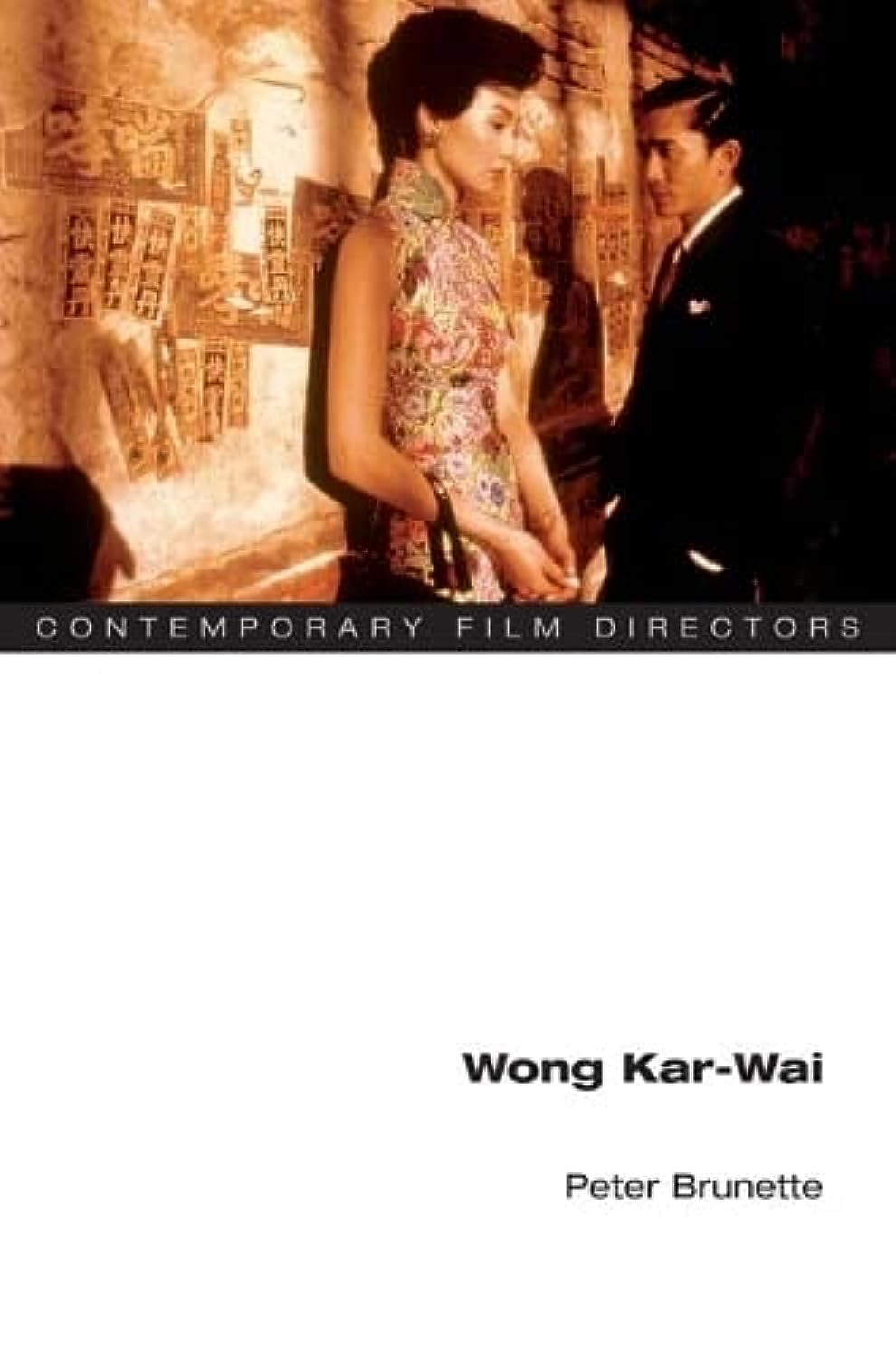
Wong Kar-wai (Contemporary Film Directors)
L**N
A Cinema Genius...
Wong Kar-wai is one of the most interesting and innovative directors since the French New Wave, and this collection of nearly all of his pre-"In The Mood For Love" films is well worth owning. These are all movies whose artistic and philosophic dimensions never seem to exhaust themselves...a rare thing in contemporary cinema...and a great reason to own this set...
N**E
A valuable look at an imaginative voice in cinema - that helps clarify the continuity and development within Wong Kar-Wai's work
Peter Brunette's brief guide to the work of Wong Kar-Wai is valuable especially for its insight into the continuity and development of Wong Kar-Wai's style and thematics. The book manages to balance careful analysis with scholarly engagement, and to make it personal without becoming precious. Occasionally his claims about style and substance in the work of Wong Kar Wai sound a bit obscure, and are hard to connect back to specifics in the films, but for the most part what Brunette does is trace a set of themes and stylistic elements through each one of the films - at least up through 2046 and the BMW ad that appeared around the same time, since this was written before the appearance of My Blueberry Nights , and while the collaboration with Stephen Soderbergh and Antonioni on Eros was still in development. He engages with other Wong Kar Wai criticism, but mostly in order to clarify and show what questions can be considered in relation to these films - for example, he examines claims that Wong Kar Wai's work is highly political and concerned mostly with issues such as the reunification of Hong Kong with mainland China, and he argues that while such interpretations are not without merit the thrust of the films is to connect such issues with the more dominant concerns in his work such as the impact of memory and the flow of time and the inevitability of loss. The book doesn't ever get bogged down in scholarship, and is an easy read for those familiar with Wong Kar-Wai's films. He helped me to see a number of things in the films that hadn't clicked for me before - especially that Wong Kar Wai is interested in the idea of personal identity as something constructed, an image. I like that Brunette both speaks broadly about Wong Kar Wai's films, and also that there is a section devoted to each film that helps tie the broader claims to specific reflections on the circumstances under which the film was made, the look and approach of each film, the highly important and unique use of music and sound in his works, and the storylines, replete with conflicts and struggles that recur throughout his work, but with important variations. Also valuable is his defense of the value of Wong Kar-Wai's work against charges that it is all style without substance - and at the same time his recognition that there are imperfections in the work, that there are missteps and mistakes, and that some of the criticisms raised against Wong Kar-Wai have merit and deserve consideration. Highly recommended for lovers of great cinema and especially for Wong Kar Wai fans.
B**N
Sometimes informative but overshadowed by shoving politics into films that are apolitical
About every chapter for each of Wong's has at least half if not two-third's of it consisting of foisting politics onto films that are always humanisitic. I recommend Teo's book which has more insight and much less politics unless you need to read every word ever written about Wong or hear every word from him since there are two interviews at the end, which again has politics shoved in. To make matters worse, even the basis for adding in the political analysis seems to stem from the author's own lack of analysis of Wong's films and resultant collection and republication of other's criticisms
I**O
Good collection of essays
Thought provoking essays on most of his films up to this point
P**R
Informative Study
Honestly written. Unpretentious yet intelligent. Brunette does not reach for dazzling overstatements, but instead keeps his claims conservative and convincing. Of particular interest is his discussion of Wong's recycling of and departure from genre conventions.
Trustpilot
2 months ago
1 month ago