

Desert Online General Trading LLC
Dubai, United Arab Emirates
Desert Online General Trading LLC
Dubai, United Arab Emirates
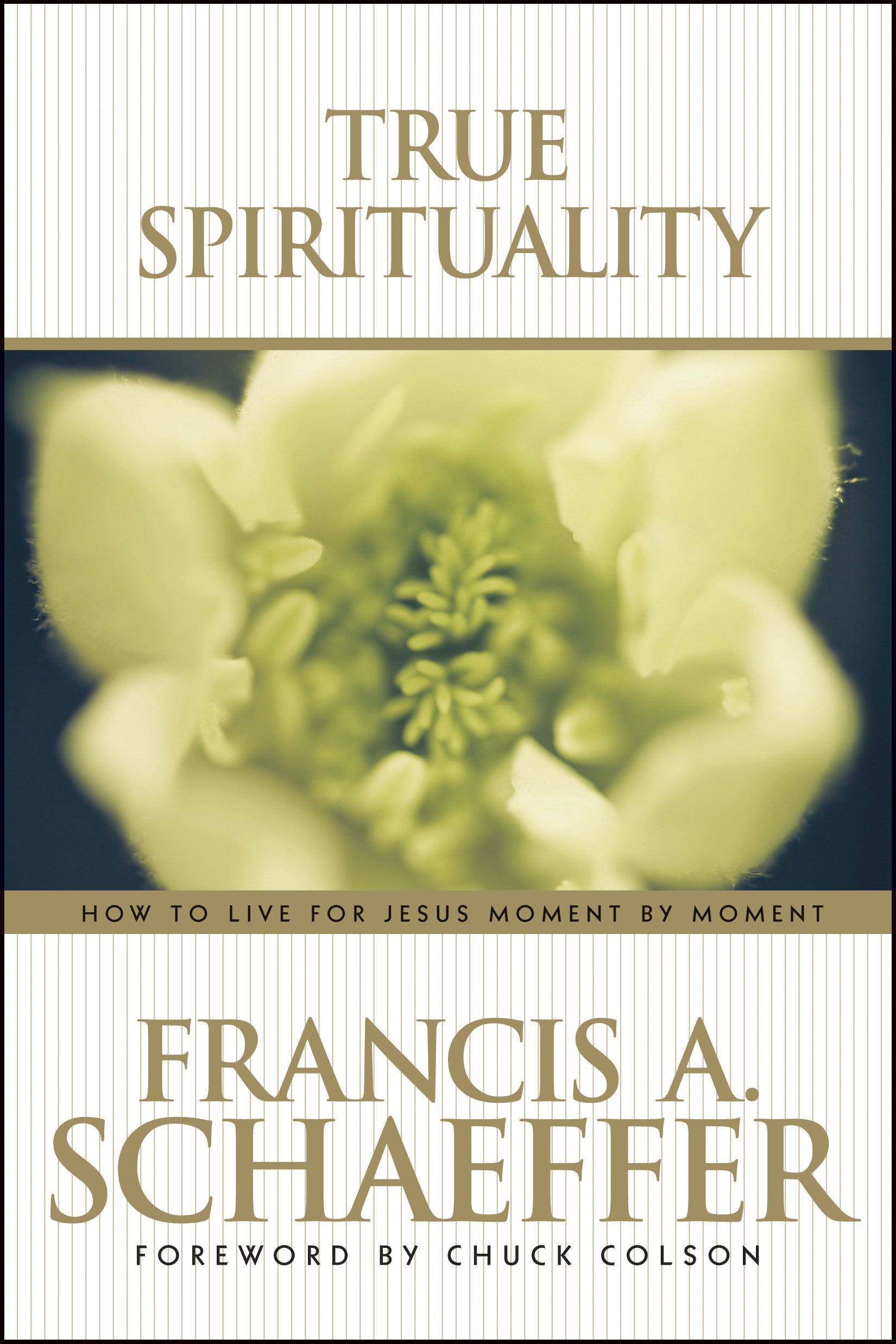

True Spirituality
D**G
Spirituality for The Real World
In the introduction to this book on sanctification (how to live the Christian life) Francis Schaeffer says that it should have been his first book. In most of his books he is primarily concerned with engaging the mind, but this is a book that is primarily concerned with engaging the heart. He didn’t write this book until 1971, but wrestled with its contents mainly in 1953 and 1954 while on furlough from his ministry in Switzerland. Much of the material in this book came from Schaeffer’s wrestling with the reality of Christianity. He was wrestling with whether or not Christianity was true, and whether or not this truth in application really worked in the real world.Here’s what Schaeffer discovered as God brought him out of his crises of faith:(1) He found a solid foundation for how own faith and life. He became convinced again that the Bible answers the most basic questions that all humans can ask. This gave him delight in the biblical message as the source of the only true explanation of our existence.(2) He developed a confidence in the Scriptures as the authoritative and inerrant Word of God. This confidence in the Scriptures would in God’s providence, be of enormous help to him in the work the Lord was preparing for him to accomplish.(3) In the same way, he was being prepared to deal with the great barrage of questions, doubts, and hurts that would come at him from Christians who were struggling with their faith, for in the years to come many of these people would come to his home at L’Abri for answers.(4) Prayer became more real to him and the supernatural realities of God’s working in his life and the lives of those he ministered to became paramount to the success of L’Abri. He would often say, “How many churches and ministries would not even notice and would carry on in exactly the same manner as usual, even though every reference to dependence on the Holy Spirit and to prayer were suddenly to disappear from the pages of the New Testament!”5) He discovered that the central, unfolding theme of God’s revelation is the love shown by God to us, and the trusting and dependent love that we are called to show Him in return.Early in the book Schaeffer distinguishes the difference of justification by faith (the beginning of the Christian’s life) and sanctification by faith (the rest of the Christian’s life). He says, “The important thing after being born spiritually is to live. There is new birth, and then there is the Christian life to be lived. This is the area of sanctification, from the time of the new birth through this present life, until Jesus comes or until we die.”In thirteen chapters Schaeffer does a masterful job of showing that that Christian life involves the head, heart, and hands and biblically, theologically, and practically develops the following four themes:(1) The true Christian life, true spirituality, does not just mean that we have been born again. It must begin there, but it means much more than that. It does not mean only that we are going to be in heaven. It does mean that, but it means much more than that. The true Christian life, true spirituality in the present life, means more than being justified and knowing that I am going to heaven.(2) It is not just a desire to get rid of taboos in order to live an easier and a looser life. Our desire must be for a deeper life. And when I begin to think about this, the Bible presents to me the whole of the Ten Commandments and the whole of the Law of Love.(3) True spirituality, the true Christian life, is not just outward, but it is inward–it is not to covet against God and mankind.(4) The Christian life is positive–positive in inward reality, and then positive in outward results. The inward thing is to be positive and not just negative, and then sweeping out of the inward positive reality, there is to be a positive manifestation externally. It is not just that we are dead to certain things, but we are to love God, we are to be alive to Him, we are to be in communion with Him, in this present moment of history. And we are to love men, to be alive to men as men, and to be in communication on a true personal level with men, in this present moment of history.Schaeffer does a wonderful job of addressing the world, the flesh, and the devil; as well as helping you find freedom from the bondage of sin. He also shows the antithesis of Christian living in comparing the reality of Christianity with the unreality of other religions and world-views. I highly recommend this book in helping you understand the wonderful and exhilierating doctrine of sanctification.
D**R
The Christian Life and How Its Lived
How do we live the life the Bible says we are able to live? How can we love God completely, love our neighbors as ourselves, rejoice with joy unspeakable, know the love of Christ that surpasses knowledge, have peace that passes understanding, and be filled up with all the fullness of God? That is the question Francis Schaeffer answers in this book.Schaeffer describes the Christian life as Jesus Christ bearing fruit in us through the agency of the Holy Spirit by faith. Everything promised to us in the Bible has its source in Jesus Christ, and every promise is realized in us through the Holy Spirit and by faith. To live the Christian life then, one must first be a Christian! God the Father has given the Holy Spirit to all who believe in the Son. The indwelling Spirit and faith in Jesus Christ are essential to the Christian life.In one sense the Christian life is a moment by moment reckoning with death, and Schaeffer devotes an early chapter to the centrality of death. The presence of the Holy Spirit in one's heart initiates an inward conflict as the Spirit sets its desire against the flesh and the flesh against the Spirit. The only power we have against the flesh is the cross of Christ. The Christian life could not be lived without the actual historical crucifixion of Jesus Christ. Because of the fact that our old man (the flesh) was crucified with Him, we can by faith reckon ourselves dead to sin and be set free from the law of sin and death by the law of the Spirit of life in Christ. But as Schaeffer reminds us this is a moment by moment reckoning and a life-time process of sanctification, not a once-for-all decision.From Death to Resurrection is the title of the next chapter. The Christian life is animated by the actual historical resurrection of Jesus Christ. By the Holy Spirit, Jesus truly lives in the Christian and He has promised to bring forth fruit in the Christian's life. At this point in the book Schaeffer endorses a true Christian mysticism. He also contrasts this to the "contentless experience" of non-Christian mysticism that is so prevalent nowadays and promoted as authentic spirituality. There is no denial of reason or loss of personality in true Christian mysticism. Schaeffer writes, "the glory of the experiential reality of the Christian, as opposed to the bare existential experience, or the religious experiences of the East, is that we can do it with all the intellectual doors and windows wide open."True Christian mysticism is a deeper mysticism that is based on the historic space-time reality of the death and resurrection of Jesus Christ and on God's Scriptural promises to believers that the crucified and risen Lord abides in them and reproduces His life in theirs. What the Christian experiences is what the Scriptures promise. Actual experience and propositional Biblical truth are mutually dependent. Doctrine without experience is arid rationalism while experience without doctrine is empty mysticism or, as Schaeffer writes elsewhere, a "mysticism with no one there."So how do we make the promises of Scripture the reality of our lives? Again Schaeffer says: "The fact that Christ as the bridegroom brings forth fruit through me as the bride, through the agency of the indwelling Holy Spirit by faith, opens the way for me as a Christian to begin to know in the present life the reality of the supernatural. This is where the Christian is to live." We live this life moment by moment with constant acts of faith, and Schaeffer offers this simple prayer as an expression of that faith: "Upon the basis of your promises I am looking for you to fulfill them, O my Jesus; bring forth your fruit through me into this poor world." And another even simpler - Mary's profession - "Be it unto me according to Thy word." Amen!
Trustpilot
4 days ago
1 month ago
1 day ago
1 week ago