Desert Online General Trading LLC
Dubai, United Arab Emirates
Desert Online General Trading LLC
Dubai, United Arab Emirates

Full description not available
R**N
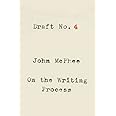
If you wish to write...please read the Draft
It has certainly motivated me to work harder.Gather a lot more relevant information to do even a small piece of factual writing.It amazed and inspired me to read how much time and effort great magazines like Time and The New Yorker invest in checking the facts before a piece is allowed to be published.
I**S
Interesting but not for me
I heard about John McPhee from Cal Newport's latest book. McPhee is a legendary writer. Some amazing BTS stories from the 60s and 70s, but a little out dated for me.
M**S
A great read
What to say and what not to say? (That will make more sense if you read this book.) A very readable insight into a lifetime of writing.
R**S
Learning from a Lifetime
Tell and show - McPhee's experience on display on every page. Just the Burton and Eisenhower anecdotes are worth the entry fee.
M**E
how to write
outstanding review of a successful lifetime's work at writing non-fiction. Well worth a careful read
R**S
"Actually, the essence of the process is revision."
I have read many of John McPhee's previously published books and consider him to be among the finest writers of non-fiction. You can thus understand my excitement when warning about and then reading his latest, Draft No. 4. It was not what I expected, Rather than a narrative of linear explanation with lists of dos and don'ts , it is multi-dimensional as is the writing process itself. Every human life is a process, best viewed as a journey of personal growth. McPhee shares much of his.Of special interest to me is what McPhee has to say about the importance of structure. He observes, "Readers are not supposed to notice the structure. It is meant to be as visible as someone's bones. And I hope this structure illustrates what I take to be a basic criterion for all structures: they should not be imposed on the material. They should arise from within it."Yes, a writer needs the skills and perspective of an architect but there are other stages of the process that must first be completed. The initial question to be addressed is "What will I write about?," then others: "What interests me?," "What information do I need?," and "How and where can can I obtain it?""Actually, the essence of the process is revision." This book no doubt is the result of rigorous and at time frustrating drafts, as do all other works of art. Consider this observation McPhee shares, expressed by Michelangelo: "I'm just taking away what doesn't belong there."Since my childhood, books have been "magic carpets" that have transported to me to people, places, and events throughout human history. To the plains of Troy, for example, and to Christmas in Charles Dickens' London. I have also followed Alice down a rabbit hole, wished I had a seat belt when riding along with Mr. Toad, and wept when Charlotte died.That's why another of the several other dozen passages that caught my eye:"I once made a list of all the pieces I had written in maybe twenty or thirty years, and then put a check mark beside each one whose subject related to things I had been interested in before I went to college. I had checked more than ninety percent."Curious, I made a list of what has been of greatest interest to me during the years since childhood and I have been able to think of only a few that cannot be traced back to the years before I enrolled in college. That said, my memory is not what it once was so John McPhee's 90% probably applies to me, also.This book really is about the writing process...and just about everything else worth caring about.
J**Y
mostly too specific to McPhee's own style to be really useful, and bits of autobiography (which were fine
Very disappointing collection of reprints, most of which I had read before. I was hoping for a more sustained discussion of the craft of creative non-fiction (of which McPhee is an absolute master), but this was rather bitty "hints and tips", mostly too specific to McPhee's own style to be really useful, and bits of autobiography (which were fine, but I'd read them before).
A**R
Three Stars
I cannot review this as it was a gift for someone else
T**K
an excellent book about writing
a great work for the writers and editors among us
D**H
Interesting but not exactly practical
This book is more about McPhee's life as a writer than it is a book of advice on writing. Not exactly practical, but – like everything McPhee writes – interesting reading.
Y**I
Gut
Sehr gut Einleitung zu schreiben
E**R
I have a new favorite book about writing
Shortly after I started my first editorial job (as opposed to writing only), my boss gave me a copy of Blundell's _The Art and Craft of Feature Writing_. (I'm still grateful, Peter.) Ever since, Blundell's book has been on my short list of most-useful books for writers because of its practicality and encouragement. As Blundell pointed out, a good feature writer can make ANY subject interesting -- even, say, oranges, about which (Blundell pointed out) John McPhee wrote an entire book.Now, Blundell's #1 spot on my writer's bookshelf has been replaced by McPhee's own book about the writing process. (Though really, get both.)McPhee is a brilliant writer -- as evidenced by his ability to keep a reader's attention all the way through a 60,000-word New Yorker article, and to make those readers keep turning pages on any number of non-fiction books. He also is a superb instructor. The book covers such topics as structure, progression (in what order you present events), dealing with editors, elicitation (such as how to take notes while the source is staring at you; "display your notebook as if it were a fishing license," he suggests), frames of reference, and fact checking. Nobody taught me these things; I had to learn all of them from experience. Now you don't have to.Oh my, that sounds like a college course (and I guess it is, since McPhee has a long professorship at Princeton). But this is fun, engaging, full of "oh wow that's a good idea" practicalities.I wish I had a buck for every time I said, "McPhee captured that idea so much better than I ever could." Case in point: "The lead -- like the title -- should be a flashlight that shines down into the story. A lead is a promise." Or the advice that, when you can't find the end of a piece, look back upstream. "Run your eye up the page and the page before that. You may see that your best ending is somewhere in there, that you were finished before you thought you were." (As an editor with nearly 20 years of experience, now, I call affirm that some authors keep writing well after they're done. Fortunately they have me and my red pen.)McPhee has plenty of praise for the editors who guided him and anecdotes that made me smile. Shawn breaking in new writers, "but not exactly like a horse, more like a baseball mitt." The idea that "editors are counselors and can do a good deal more for writers in the first-draft stage than at the end of the publishing process." The copy editor and fact checker in the urgency of an issue closing including McPhee's article about geology, leading to him commenting, "so many rocks were flying around in my head that I would have believed Sara if she had told me that limestone is the pit of a fruit." I said aloud to the book: I want to be the kind of editor who is worthy of this kind of admiration and appreciation. (I have a long way to go.)Can you tell I love this book? I really do.
T**N
McPhee's "creative nonfiction" enlightens the writer on how to make the most of what they have.
John McPhee has arguably questioned my belief in the genre I've chosen, and my work couldn't be better. His "creative nonfiction" tells us that what might be best is not by making something up but by making the most of what we have.How was I introduced to this?Required reading for a Stanford's Continuing Studies programme I'm currently taking, called "Writing the Globe: Crafting the Personal Travel Essay", led by the talented Peter Fish. Fish chose Draft No. 4 as the main text for the course, but we are also reading selections from The Best American Travel Writing 2020 and other writers like Rahawa Haile, whose short story "Sidra" can be found in the collection The Good Immigrant: 26 Writers Reflect on America.Others I bought were:I purchased The Best American Travel Writing 2020 guest edited by Robert Macfarlane, which reviews weren't as good as other editions, so I picked up the first edition of the Best American Travel Writing series as well, guest edited by Bill Bryson, the man who wrote A Walk in The Woods and then felt like I had enough supplementary text to take this giant leap into nonfiction. I should have bought some work from John McPhee himself, but he does a good job providing excepts of it throughout the book; you won't be disappointed.If I were you and you were hard-picked on buying a John McPhee book, I'd pick Oranges as an additional text to Draft No. 4. He brings it up a lot throughout, and I'd say if you really wanted to dive deep, then this would be just the one to do it with."The sex life of citrus is spectacular. Plant a lime seed and up comes a kumquat, or, with equal odds, a Seville orange, not to mention a rough lemon or a tangerine." - OrangesI wonder if McPhee has ever tried durian?Essential information:Published in 2017, the book is 192 pages long and was written by the American writer John Angus McPhee, considered one of the pioneers of creative nonfiction. A term I was only recently introduced to, it differs from other nonfiction in that, although also rooted in fact, its prose is meant to entertain. McPhee won the Pulitzer Prize in 1999 for Annals of the Former World, a book about North America's geological history, which was researched and written over two decades beginning in 1978. If you haven't realised it already, this guy is hardcore.McPhee is known for having had a long career at The New Yorker, and he tells many interesting stories throughout Draft No. 4 about his tenure there. I liked the story of Eleanor Gould and her "Gould Proof" the most: "Eleanor Gould, who, in 1925, bought a copy of the brand-new New Yorker, read, and then reread it with a blue pencil in her hand. When she finished, the magazine was a mottled blue on every page - a circled embarrassment of dangling modifiers, conflicting pronouns, absent commas, and over-all grammatical hash. She mailed the marked-up copy to Harold Ross, the founding editor, and Ross was said to have bellowed. What he bellowed was "Find this bitch and hire her!""What's interesting about that quote is that she was only nine. You must read the book to learn more about her and the "Gould Proof."McPhee, 91, currently still has a post at The New Yorker, and according to his Wiki profile, since 1974, has been a Ferris Professor of Journalism at Princeton University.What's it about?Draft No. 4 evolves from different essays on the writing process that have appeared in The New Yorker and are composed here in eight chapters that outline as a whole the process of writing a finished piece for publication.ProgressionStructureEditors & PublisherElicitationFrame of ReferenceCheckpointsDraft No. 4Omission"Progression" deals with the subject, primarily the person or people you will write about and how you will construct the piece around them. He perfectly uses his 1969 double profile "Levels of the Game" as an example, and I only wish he included more of it. Ten years later, Levels of the Game became a book of his, which it seems is a pattern, in that his New Yorker pieces usually are seeds for larger endeavours like Oranges was."Structure" starts with many paragraphs on how "your last piece is never going to write your next one for you. Square 1 does not become Square 2, just Square 1 squared and cubed." However, it is mainly about the chronology and theme of the piece and the tension between them, noting that chronology usually wins. But McPhee throws in a hell of a lot of information on how not to make a piece chronological and gives examples of his work in graph form. He gets precise!My favourite quote about structure of his is this: "Readers are not supposed to notice the structure. It is meant to be about as visible as someone's bones. And I hope this structure illustrates what I take to be a basic criterion for all structures: they should not be imposed upon the material. They should arise from within it."And that last line sums up what the chapter "Structure" strives for, how to find the format of your story within your data. It's technical and dense, but you will be all the better for reading it."Editors & Publisher" gives you a gist of the business process that I knew not much about, and McPhee makes it an exciting read. I like a quote that he takes from English dramatist Ben Jonson: "Though a man be more prone and able for one kind of writing than another, yet he must exercise all." This a quote I myself should take heed to."Elicitation" is about the interview itself, and you will learn a lot from it and may read things you might not want to hear. For how "Whatever you do, don't rely on memory." I want to be someone to live in the moment and not have a notepad and paper, but I guess this is impossible according to McPhee, and he agrees that "In the way that a documentary-film crew can, by very presence, alter a scene it is filming, a voice recorder can affect the milieu of an interview." But tough luck. I myself need to learn this, and over time, I will. McPhee reminds you to remember your role and that you can't have it both ways. Overall, "Elicitation" offers some great examples from McPhee's illustrious career interviewing people, and you will be rewarded by hearing about his story of Richard Burton, among others."Frame of Reference" is a chapter on the things and people in writing you choose to infer to in order to advance its relatability. This chapter is where the book picks up speed and where it went from, in my opinion, a 3 airplane book to a 4 airplane book, my rating system on my blog. I found it fascinating how common points of reference dwindle over time and the difficulty it is for a writer to find something that can withstand the ages.I also liked this one fact I learned about the etymology of the word "posh": "The most expensive staterooms were on the port side, away from the debilitating sun. When they [the English people who went to India during the Raj] sailed westward home, the most expensive staterooms were on the starboard side, for the same reason... starboard out, starboard home."Port out starboard home.Draft No. 4 is filled with tiny facts like this, and although I probably heard this one before in my travels, it was nice to be reminded of it. Although I did google it and its origin can be debated.McPhee also critiques other writers in this chapter, such as Maureen Dowd and Frank Bruni, the latter talking of our "collective vocabulary." This starts the climax I think of Draft No. 4, and I began not to put it down."Checkpoints" is all about fact-checking, and "If a writer writes that Santa Clause went down a chimney wearing a green suit, the color will be challenged, and the checker will try to learn Santa's waist measurements and the chimney's interior dimensions." McPhee brings up some interesting stories of his own run-ins with fact-checkers at The New Yorker, and you will be delighted to hear about the one that revolves around the air sac of an American eel.Chapter "Draft No. 4" is relatively simple because it's about revisions and drafts. That's all I'll say, but McPhee makes some great points about using dictionaries and thesauruses: "The value of the thesaurus is in the assistance it can give you in finding the best possible word for the mission that the word is supposed to fulfill." He then goes on to tell of his mistakes, which are most illuminating, especially the one about the arctic."Omission", the final chapter, is short but sweet. But it stresses that writing is all about selection, which is something that this writer must learn when writing book reviews. I liked a quote that he attributes to George Plimpton, "Anything you know you can eliminate and it only strengthens your iceberg."My praise and critique:McPhee tells us that what might be best is not by making something up but by making the most of what we have, and I've been pondering those words since I read them. Although it took a while to get into and started off with some graphs/diagrams that I was not expecting, I treasured it. And after writing a third of this review, I realise now how valuable the information was. I'm excited to take what I learned and apply it in the course I'm taking. I've been a fiction writer up till now, but that fiction, surprisingly, has all been based on fact. Why have I found the need to add in the superfluous? Is it superfluous, or is it needed, or can I find a balance where my imagination still reigns free? I don't know. But what I do know is that McPhee paints the process of writing a finished piece for publication well, and that's what Draft No. 4 is all about.My critique would only be on the first few chapters and my not understanding them well enough. THIS COULD BE ENTIRELY ME. But I felt the diagrams in the "Structure" chapter were still confusing, and I felt like a math student trying to understand an equation. I'm terrible at math, but I did understand something, so I'm giving McPhee some credit. Let's just say they take a second reading.I'm giving it (4 airplanes) in that this book had everything I was looking for and then some. I didn't know what to expect, so I was pleasantly surprised. If I compared it to champagne, it isn't Dom, but it's definitely better than Veuve. The writing is superb and has a unique creative style; I would reread it. Like I said, in some sections, you might actually need to reread to get the whole meaning of it, and that's ok.Would I recommend it?Buy this and be a better writer for it. It is not something you read once, and it's priceless information for any writer, whether a poet or a creative fiction writer like myself. Put it on your bookshelf or Kindle and refer to it time and again when thinking about structure and, above all, omission.Who is it for?If you've stumbled this far into this review, this book is obviously for you. It's easier to say who the book isn't for. It's not for the lazy writer. It is not for someone who doesn't understand that writing is one of the most challenging professions. It's not for someone not willing to do the work, and luckily, in Draft No. 4, John McPhee helps us in more ways than one to make our job as writers a little bit easier. Thank you, Mr McPhee.What I listened to while reading it:Jako Diaz
Trustpilot
3 weeks ago
3 weeks ago
2 months ago
2 weeks ago