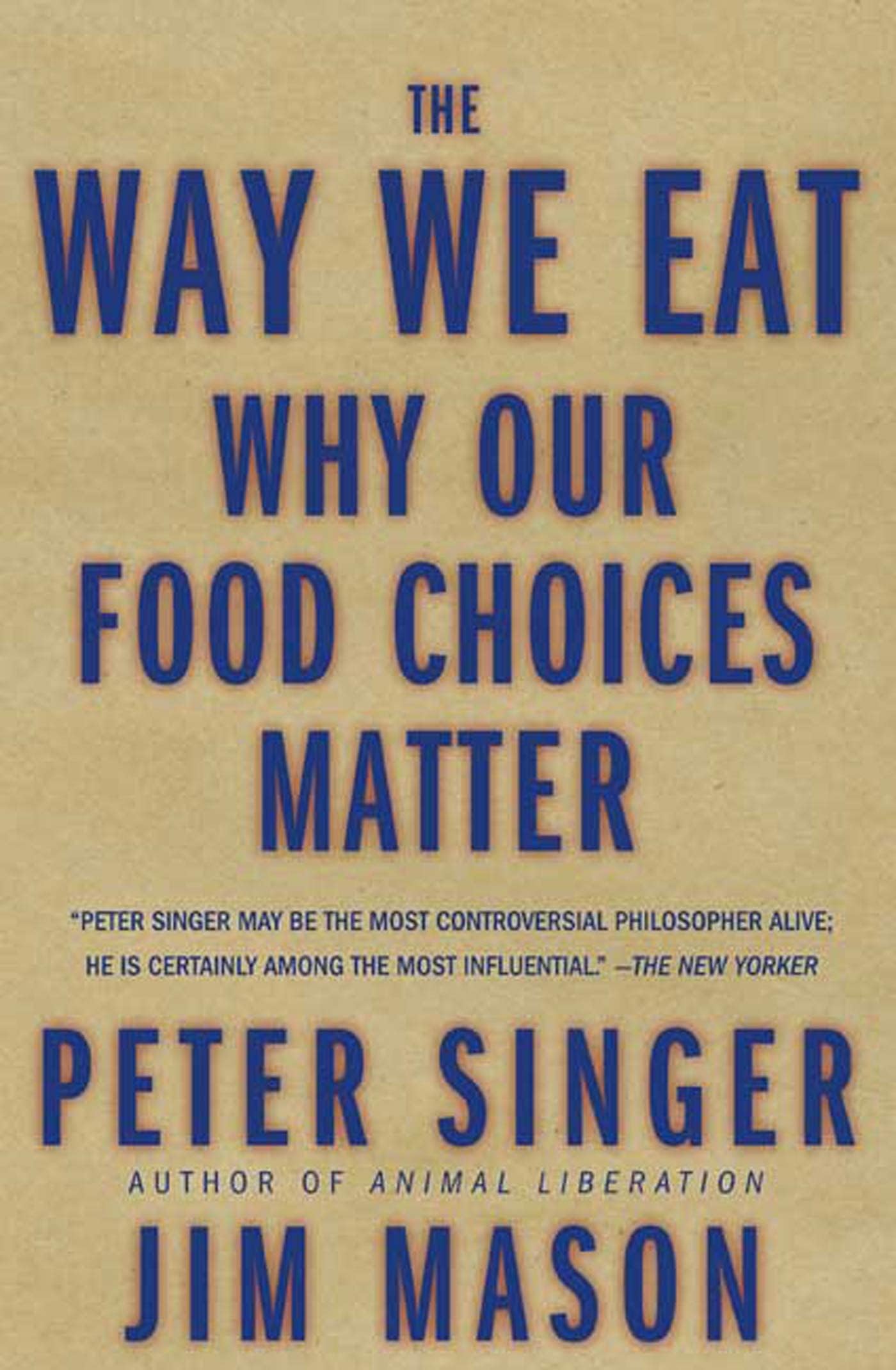

The Way We Eat: Why Our Food Choices Matter
Product ID: 79218588
Buy anything from 5,000+ international stores. One checkout price. No surprise fees. Join 2M+ shoppers on Desertcart.
Desertcart purchases this item on your behalf and handles shipping, customs, and support to Brazil.
The Way We Eat: Why Our Food Choices Matter [Singer, Peter, Mason, Jim] on desertcart.com. *FREE* shipping on qualifying offers. The Way We Eat: Why Our Food Choices Matter Review: Wait! What am I eating? - Singer, P., & Mason, J. (2006). The ethics of what we eat: Why our food choices matter. Rodale Publishing. Peter Singer is a moral philosopher who explores ethics of our treatment of animals, often credited with starting the modern animal rights movement. Jim Mason is an author and attorney who focuses on human/animal concerns including farming and agriculture. A powerfully written discussion about food production, food choices, and the importance of consciously considering how our food is grown, treated, and delivered. Singer's opening line: "We don't usually think of what we eat as a matter of ethics. This book examines how everyday food choices create ripple effects that extend far beyond our dinner plates. The authors argue that what we eat is fundamentally an ethical and political issue, affecting animals, workers, the environment, and communities worldwide. The book follows three American families with distinctly different dietary patterns, using their food choices as windows into broader ethical questions about modern food production: 1. The Standard American Diet (SAD) - Jake and Lee from Arkansas represent typical American consumers who shop at Walmart, prioritizing convenience and low prices while remaining largely unaware of how their food is produced. 2. The Conscientious Omnivores - Jim and Mary Ann seek out humanely raised meat, organic produce, and responsibly sourced foods, attempting to balance ethical concerns with their desire to continue eating animal products. 3. The Vegans - Joann and Joe have eliminated all animal products from their diet based on ethical convictions about animal welfare and environmental sustainability. Themes running through these narratives: Factory Farming's Hidden Costs: Singer and Mason expose how cheap food comes at enormous expense to others. More than 99% of American chicken comes from factory farms where birds spend their lives in severe confinement. The authors detail how industrial animal agriculture passes costs onto workers (through dangerous, low-wage jobs), communities (through pollution), animals (through immense suffering), and society (through public health risks like avian flu). Animal Welfare: The book challenges readers to recognize that chickens, pigs, and other farm animals are sentient beings capable of suffering. With few federal laws governing farm animal welfare and state exemptions for "common farming practices," the system prioritizes profitability over preventing animal suffering. Environmental Impact: Industrial food production degrades land, pollutes water, consumes excessive energy, and contributes to climate change. The authors explore whether buying local, organic, or plant-based foods offers meaningful environmental benefits. Worker Rights and Fair Trade: Low food prices often come from exploiting workers both domestically and internationally. The book examines fair trade movements and labor conditions throughout the food supply chain. The Illusion of Labels: Singer and Mason investigate marketing claims like "Animal Care Certified" eggs and "organic" labels, revealing that many certifications are misleading or represent minimal improvements over conventional practices. Five principles are proposed for ethical eating: 1. Transparency - Consumers deserve to know how their food is produced 2. Fairness - Food production shouldn't impose costs on others 3. Humanity - Animals shouldn't suffer significantly for minor human benefits 4. Social Responsibility - Workers deserve decent wages and conditions 5. Needs - Preserving life and health justifies more than satisfying mere preferences Singer and Mason concluded that factory-farmed food fails basic ethical standards and cannot be justified. While they acknowledge that perfect ethical eating is impossible, they argue that consumers can make significantly better choices—whether by eating less meat, choosing higher-welfare animal products, buying organic and fair trade, or adopting plant-based diets. The book emphasizes that food choices are moral choices, but cautions against fanaticism, encouraging readers to make improvements where feasible rather than demanding perfection. The strength lies in how it illuminates the intricate web of ethical decision-making. Dilemmas resist simple solutions: Should you buy local if those nearby producers engage in unethical practices? These aren't straightforward, 2D choices. Even when you try to trace the thread back to its source, uncovering the actual practices of food producers proves genuinely difficult. And then there's the reality we all face—after a long workday, sometimes you just need to get dinner on the table. Review: Lifestance Changing Book - Where Michael Pollan's "Omnivore's Dilemma" can leave one scratching their head about what to eat, Singer and Mason do a better job at exploring in detail where our food comes from, how it's produced, and why our food choices matter. Not only do they do a great job as explaining conditions in factory farms for various types of animals, but they explain the ethical implications of food choices in terms of animal treatment, sustainability, environmental costs, and impact on food producers from developing nations. They examine three types of diets: the standard american diet, an ethical omnivore's diet, and a vegan diet. Broad in scope yet appropriate in detail, this book answers many of the questions I had after reading "Omnivore's Dilemma". After learning the facts, and exploring the ethics of eating, I have changed my eating habits to conform with my new ethical standards. The book is interesting, well written, and extremely relevant. I couldn't recommend it more. -
| Best Sellers Rank | #2,806,295 in Books ( See Top 100 in Books ) #2,884 in Philosophy of Ethics & Morality #10,031 in Other Diet Books |
| Customer Reviews | 4.5 4.5 out of 5 stars (219) |
| Dimensions | 6.25 x 1 x 9 inches |
| Edition | First Edition |
| ISBN-10 | 157954889X |
| ISBN-13 | 978-1579548896 |
| Item Weight | 1.3 pounds |
| Language | English |
| Print length | 336 pages |
| Publication date | May 2, 2006 |
| Publisher | Rodale Books |
A**N
Wait! What am I eating?
Singer, P., & Mason, J. (2006). The ethics of what we eat: Why our food choices matter. Rodale Publishing. Peter Singer is a moral philosopher who explores ethics of our treatment of animals, often credited with starting the modern animal rights movement. Jim Mason is an author and attorney who focuses on human/animal concerns including farming and agriculture. A powerfully written discussion about food production, food choices, and the importance of consciously considering how our food is grown, treated, and delivered. Singer's opening line: "We don't usually think of what we eat as a matter of ethics. This book examines how everyday food choices create ripple effects that extend far beyond our dinner plates. The authors argue that what we eat is fundamentally an ethical and political issue, affecting animals, workers, the environment, and communities worldwide. The book follows three American families with distinctly different dietary patterns, using their food choices as windows into broader ethical questions about modern food production: 1. The Standard American Diet (SAD) - Jake and Lee from Arkansas represent typical American consumers who shop at Walmart, prioritizing convenience and low prices while remaining largely unaware of how their food is produced. 2. The Conscientious Omnivores - Jim and Mary Ann seek out humanely raised meat, organic produce, and responsibly sourced foods, attempting to balance ethical concerns with their desire to continue eating animal products. 3. The Vegans - Joann and Joe have eliminated all animal products from their diet based on ethical convictions about animal welfare and environmental sustainability. Themes running through these narratives: Factory Farming's Hidden Costs: Singer and Mason expose how cheap food comes at enormous expense to others. More than 99% of American chicken comes from factory farms where birds spend their lives in severe confinement. The authors detail how industrial animal agriculture passes costs onto workers (through dangerous, low-wage jobs), communities (through pollution), animals (through immense suffering), and society (through public health risks like avian flu). Animal Welfare: The book challenges readers to recognize that chickens, pigs, and other farm animals are sentient beings capable of suffering. With few federal laws governing farm animal welfare and state exemptions for "common farming practices," the system prioritizes profitability over preventing animal suffering. Environmental Impact: Industrial food production degrades land, pollutes water, consumes excessive energy, and contributes to climate change. The authors explore whether buying local, organic, or plant-based foods offers meaningful environmental benefits. Worker Rights and Fair Trade: Low food prices often come from exploiting workers both domestically and internationally. The book examines fair trade movements and labor conditions throughout the food supply chain. The Illusion of Labels: Singer and Mason investigate marketing claims like "Animal Care Certified" eggs and "organic" labels, revealing that many certifications are misleading or represent minimal improvements over conventional practices. Five principles are proposed for ethical eating: 1. Transparency - Consumers deserve to know how their food is produced 2. Fairness - Food production shouldn't impose costs on others 3. Humanity - Animals shouldn't suffer significantly for minor human benefits 4. Social Responsibility - Workers deserve decent wages and conditions 5. Needs - Preserving life and health justifies more than satisfying mere preferences Singer and Mason concluded that factory-farmed food fails basic ethical standards and cannot be justified. While they acknowledge that perfect ethical eating is impossible, they argue that consumers can make significantly better choices—whether by eating less meat, choosing higher-welfare animal products, buying organic and fair trade, or adopting plant-based diets. The book emphasizes that food choices are moral choices, but cautions against fanaticism, encouraging readers to make improvements where feasible rather than demanding perfection. The strength lies in how it illuminates the intricate web of ethical decision-making. Dilemmas resist simple solutions: Should you buy local if those nearby producers engage in unethical practices? These aren't straightforward, 2D choices. Even when you try to trace the thread back to its source, uncovering the actual practices of food producers proves genuinely difficult. And then there's the reality we all face—after a long workday, sometimes you just need to get dinner on the table.
J**D
Lifestance Changing Book
Where Michael Pollan's "Omnivore's Dilemma" can leave one scratching their head about what to eat, Singer and Mason do a better job at exploring in detail where our food comes from, how it's produced, and why our food choices matter. Not only do they do a great job as explaining conditions in factory farms for various types of animals, but they explain the ethical implications of food choices in terms of animal treatment, sustainability, environmental costs, and impact on food producers from developing nations. They examine three types of diets: the standard american diet, an ethical omnivore's diet, and a vegan diet. Broad in scope yet appropriate in detail, this book answers many of the questions I had after reading "Omnivore's Dilemma". After learning the facts, and exploring the ethics of eating, I have changed my eating habits to conform with my new ethical standards. The book is interesting, well written, and extremely relevant. I couldn't recommend it more. -
L**H
Very hard to read, hard to forget, but a powerful read
Like the school bully who gets in his hardest kicks once you're down on the ground and have essentially given up, this book drives home a message in powerful, painful punches. "For modern animal agriculture, the less the consumer knows about what's happening before the meat hits the plate, the better... one of the best things modern animal agriculture has going for it is that most people in the developed countries are several generations removed from the farm and haven't a clue how animals are raised and processed." (p.11) With this, Peter Singer lobs the ball in the air and then proceeds to light the court on fire. Some of it is hard to read. "For ten hours we grabbed and wrestled birds, jerking them upside down, facing their pushed-open [$%&@], dodging their spurting [$%&@], while breathing air filled with dust and feathers stirred up by panicked birds." (p.29) I think I threw up in my mouth a little bit. The dairy cow section was hard to read too, and I admit to my ignorance here. I suppose I thought dairy cows just made milk. I've thought that to be a humane way to farm with cows, and you can imagine a gawky 8-year-old boy straddling a three-legged stool in some ancient barn as the sun rises over the meadow, milking the lone family dairy cow before heading out to school. My quaint image was shattered when Mason informed me otherwise, painting a picture of a cow bellowing for the calf taken from her, and then we're told the calf is dead within a few days, "his body was lying on the farm's compost pile." (p.58) Oh, do I HAVE to keep reading?! I didn't believe the part about the "drop kicking" of chickens (p.27) so I looked it up on the Internet. Not too hard to find the Pilgrim's Pride video... and in watching it, my husband asked of me, "why are you watching this?!" I told him how disgusting this all was, that I could never buy a Tyson food product again (how many "bad lists" are they on, anyway?). For Pete's sake, where could I find a humanely raised chicken to eat? Then my husband asked if we should add fryers to our egg-laying hens this year. The gloves came off in the final round of the book. The last 50 pages of The Ethics of What We Eat delved hard into omnivore versus herbivore - with the authors' call to action clearly being for all us to convert to vegans in order to achieve ethical eating bliss. The language was harsh, reminding us that the industrial food model is "systematically abusive" and that "discomfort is the norm, pain is routine, growth is abnormal, and diet is unnatural." (p.242) Even Pope Benedict XVI is brought into the argument, being quoted on hens becoming "caricatures of birds" (which is also lyrically descriptive - Singer is a very good writer). The pages devoted to freeganism, or dumpster diving, were also interesting, and my mind brought up images of documentary coverage I had seen on TV a while back. While I generally don't have a problem with this - I'm not, say, grossed out by this or repulsed by the idea of eating wrapped food from the garbage... I think most parents have salvaged something incorrectly thrown away at one point or another - but I also posit that it isn't a practical way for a family to eat on a regular basis. I'm not going to pack up my kids late at night (or leave them home alone) to go sort through urban trash bins looking for stuff to pack in tomorrow's lunch boxes - so it's a bit laughable that this passage is essentially included in the call to action on what readers should do to make more ethical choices. The concrete What Should We Eat chapter tries to lay a clear foundation with simply-stated guidelines like "look for farmers' markets and buy directly from local farmers" (p.275). But the authors loaded too many heavy concepts, which shattered the foundation, and for me, rendered the final section ineffective. However, I really loved this: "It's this whole American thing about having cheap food. It's a fallacy. That guy thinks his food is cheap, but you and I are subsidizing that cheap food by paying for the social and ecological issues that are occurring in that community." (p.98) That's the real story behind much of this whole food ethics/politics/sustainability issue, and I hadn't seen it articulated so well until this passage. If you're up for it, this is a fantastic book worth reading. But if you find yourself nauseous, or lacking an appetite while strolling through your local supermarket, or offended by any of the [real] horror stories described in detail throughout the book... I warned you.
G**A
I just finished reading Singer and Mason (2006) "The Ethics of What We Eat." People should know where their food comes from, how it is produced, and what is the impact of that production. The book explores the production of meat (chicken, porc, beef), fish and seafood, and dairy products in North America, it explains the unethical issues about the production and consumption of these products. It also explores topics such as buying organic, local, free range. The authors' opinions are well thought and carefully justified, they are persuasive but also take into account several limitations people face when trying to make ethical food choices. This book is a MUST!
M**A
It doesn't matter if you're into animal ethics, food or enviroment and sustainability, this book is a great for everybody. It's written in a nice style so you don't have to be a Uni student or professor to understand what it's about. Very different from all other food and animal ethics book I have read so far. You'll find nothing but facts who speak for themselves!
A**R
I first read this book 10 years ago and thought I should read it again. This book gives an insight into where our food comes from. This book has made me change my shopping habits. Will only buy organic in future.
☘**�
Thank you
K**N
Excellent transaction. Excellent book highly recommended.
Trustpilot
2 weeks ago
1 week ago