

❤️🩹 Take control of your heart health—because your future deserves precision today!
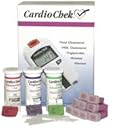
The CardioChek Analyzer Starter Cholesterol Kit by PTS Panels is a professional-grade home testing system that measures total cholesterol, HDL, and triglycerides using dedicated test strips and precise capillary sampling. Designed for accuracy comparable to lab results, it includes an analyzer, 3-count test strips for each lipid type, 9 lancets, and 9 capillaries, enabling convenient, multi-test monitoring with a single finger prick. Ideal for proactive millennials seeking reliable, at-home cardiovascular insights.
| ASIN | B00408NZRS |
| Battery Cell Composition | Alkaline |
| Brand | CardioChek |
| Brand Name | CardioChek |
| Customer Reviews | 4.1 out of 5 stars 431 Reviews |
| Included Components | Cardiochek Home Basic Analyzer, 3 count Total Cholesterol test strips, 3 count HDL test strips, 3 count triglyceride test strips, 9 capillaries, 9 lancets Included Components Cardiochek Home Basic Analyzer, 3 count Total Cholesterol test strips, 3 count HDL test strips, 3 count triglyceride test strips, 9 capillaries, 9 lancets See more |
| Item Weight | 28.8 Ounces |
| Manufacturer | Polymer Technology Systems, Inc. |
| Model Name | CardioChek |
| Part Number | CardioChek ST Starter Kit w/3 cnt strips |
| UPC | 861515000004 767644198943 045625000530 |
| Unit Count | 1 Count |
S**Y
>> DOES THE JOB
EVALUATION > Once you’ve done a couple of tests, it is easy and straightforward. The results appear to be accurate. COMPARING THE PRIMA AND CARDIOCHEK METERS > The CardioChek takes fairly large volume of blood (a drop a full 1/8+" in diameter), the Prima considerably less. The Prima meter is ~1/3 the size of the Cardiochek, and therefore perhaps easier for travel. The Prima meter is cheaper, and the test strips are only about ¼ the cost of CardioChek test strips. You can do a full lipid panel with a CardioChek meter (total cholesterol, HDL, triglycerides, and calculated LDL), but you can ONLY do total cholesterol and triglycerides with the Prima meter. > Note that both meters require a separate blood sample for EACH test. The CardioChek requires 3 big (15ul each) blood samples (with three different test strips) for all three tests. The Prima requires 2 samples (<10ul each and 2 different test strips) for two different tests. > Unfortunately, the Prima meter does not come with capillary transfer pipettes, which in my experience are essential in order to collect a large enough sample and transfer it to the test strip in the limited time allowed. See my review of the Prima meter. CAUTIONS AND TIPS > Technically the Prima does not require capillary transfer pipettes in order to transfer an exact volume of blood (although I very strongly recommend their use), because the test chamber is closed. However, the CardioChek does REQUIRE the use of 15ul pipettes because the test chamber is open. Never try to use the CardioChek without capillary pipettes. Do NOT use capillary pipettes of greater or lesser volumes with the CardioChek meter. > The Prima meter checks that both the test chip and test strip type (total cholesterol, HDL cholesterol, and triglycerides) and batch numbers match – which is very important. Apparently the CardioChek does not do this check – so, you’ve gotta be alot more careful with the CardioChek, and actually manually check that the test type (these are color coded to match, red, blue, and green) and batch numbers DO match. IMPORTANT -- When you finish a box of test strips, DISCARD the test chip which came with them. > WHICH TESTS? Note that you do NOT have to do all three tests, unless you want to calculate your LDL score. If you are only interested in total cholesterol or only in your triglycerides, those are the only tests you need to do. I'm concerned with my triglyceride level, so I run only the triglyceride tests. > Triglyceride (and probably other cholesterol) can vary widely, even from hour to hour. The current (recently changed) official SOP recommendation to screen for high triglycerides is non-fasting (so your physician may tell you that), but the purpose of that “officially recommended” recommendation is to promote "compliance" (to make it easier for you) --- NOT to improve accuracy. So, especially if you are trying to fine-tune your eating habits and medications, it is best to do a test while fasting and at the same time of day each time. Practically speaking, that means first thing in the morning. If you are a little spacy (as I am) before your second cup of coffee (I easy forget that I had even planned to take a triglyceride reading) -- then I suggest laying out the meter and all your supplies the night before. Set out everything (including gauss or tissue) exactly as you'll need it, best on a clean paper towel. The only exception is the test strips, leave them in their tubes until a few minutes before the test. But have the tubes (and test chips) out and ready. > You can do all three tests with only lancing your fingertip once, if you are organized. See "STEPS" below. > Work efficiently, but don't rush the test. Wash (or soak) your hands in warm (to hot) water first to get the blood flowing before you use the lancet. It is advisable to use an alcohol wipe after washing -- but if you do, be sure all the alcohol has evaporated before you use the lancet. Don't squeeze the blood out, instead just let in flow --- but you can gently "milk" your finger. Don't rush -- if you just wait 10 or 20 seconds the flow will speed up on its own. Letting your hand hang down can increase the flow. Regardless of the test (but particularly for the cholesterol tests), it is best to wipe off the first droplet of blood from your finger, and wait for a second droplet to form. > Read the instructions for using capillary transfer pipettes. You do NOT "suck up" the blood -- that is do not squeeze the bulb to "suck up" blood from your finger. In fact, do NOT even hold the pipette by the bulb. Just touch the droplet of blood obliquely (at an angle) with the pipette. The blood "automatically" flows to the "full mark" by capillary action. If you hold the pipette perpendicular (i.e., not at an angle), you'll plug the opening. If you don't get enough blood from the first drop of blood, you can squeeze a second droplet, and let the capillary action suck up the rest. EQUIPMENT & SUPPLIES NEEDED > Test chip(s), > corresponding test strip(s), > gauss or tissues, > lancet, > alcohol wipes, > (optional if you wash your hands with soap and warm water); pipette (one for each test), > > paper and pencil to write down results. STEPS 1) Set out all components (best on a paper towel), 2) prepare lancet (i.e., take off the safety plug), 3) Insert test chip, 4) insert corresponding test strip, 5) wash hands in warm water, or 6) wipe finger with alcohol wipe, 7) wipe off excess alcohol with dry tissue, 8) prick finger with lancet, 9) let droplet form, 10) wipe off first droplet (doesn't have to be large), 11) let another droplet form, >⅛" diameter, 12) touch pipette obliquely on the drop until blood fills the capillary tube to the fill line, 13) press “O” button on the meter, 14) wait until “insert strip” appears, 15) transfer sample from the capillary pipette to the test strip. To perform another test, change the chip and test strip and continue with step 11. > Note that it is important to prepare the supplied lancet first (step 2) because you can accidentally trigger the lancet as you remove it the protective plug. For that matter, it is a good idea to have a second lancet out and ready (without the plug removed), just in case you have a problem with the first one. > I cannot emphasize too much how important it is to wash your hands (with soap) in warm to hot water for a minute or so to get your blood flowing --- it really makes a huge difference. UPDATE > You can get better prices on the meter and supplies directly from the manufacturer at "Test Medical Symptoms At Home" than on Amzon (even though the product actually is shipped from TMS -- you are just paying for the sales commission that Amazon charges TMS). If you become a TMS "member", just by signing up, you get an additional discount plus free shipping. > Having performed 20-30 weekly tests on my blood, I've found that triglycerides are extraordinarily variable, comparable to blood glucose. That means that it is very difficult to "fine tune" your medications (i.e., to the minimum medications needed to get down to acceptable levels) as was my goal. I suspect that you'd have to test daily and use averages for a week to get dependable numbers for this purpose. However, weekly monitoring is still very valuable. The effect of a short-ribs dinner is very evident in triglyceride levels the next day. The affect of significant exercise (including hard work) is very evident. I'm diabetic, so I've learned that I can balance a "binge" (e.g., a short stack of pancakes) with 4 hours hard work. I've similarly learned that I can similarly balance a rack of ribs with serious exercise. A little sweat is more effective on both blood glucose, triglycerides (and probably total cholesterol) than a whole lotta denial. BRINGING DOWN TRIGYLCERIDES > First of all, I found that controlling my blood glucose is by far the most effective method of controlling triglycerides. First get your A1C down to 5.9 or 6.0 before considering other medications. > A combination of fenofibrate (160mg), niacin (1500mg), and omega-3 (3300mg) dropped my triglycerides from 1200+ to <200. My theory is that several medications in moderate levels is better than a single medication at massive levels. Three notes: > Fish oil omega 3 is good for nerves (e.g., siatica, neuropathy, memory), and may be good for your heart, even if your triglycerides are under control. Ideally, you should use the prescription Lovaza, which may be free, depending on your insurance. If Lovaza is too expensive for you, you can purchase OTC fish oil (I use NatureMade) --- BUT you want 1000mg capsules of Omega-3, NOT 1000mg capsules of "Fish Oil" (which contains only about 350mg of Omega-3). See my review of NatureMade Omega-3. > The Niacin should be "ordinary"niacin (sometimes called flushing niacin), not "slow release" (or "non-flushing", etc), and your entire dosage should be taken 1 time per day only (within about 3 hours), NOT multiple times (research it if you doubt me -- it's important). > The fenofibrate did cause problems with constipation and headaches for me -- which more-or-less cleared up after two weeks. But if you are told you must take fenofibrate, buy some Metamucil at the same time, at least for a week or two.
H**N
I love the meter so far and hope it continues to ...
Having been to the doctor 2 weeks ago and being told my cholesterol was borderline high, I decided I needed to do some lifestyle changes. This meter will help me monitor my progress. Mine just arrived and after fasting I ran the tests this morning, My advice would be, read the manual before you start or you will be confused. There is a bit of a learning curve, but not much really. Basically you set the language and date and time and you are ready to test. You need one strip for each :Total Cholesterol, triglycerides and HDL. The LDL is calculated by this formula Total Cholesterol minus HDL minus triglycerides /5. It seems the results are fairly close to what I had from LabCorp...slightly lower, but I attribute that to the changes I have made in diet and exercise the last 2 weeks. As others have said in their reviews, yes, you need quite a bit of blood for each test strip. I would say about 3 times what you need for a home glucose meter for each test. But, to me, that is not big deal. While the test strips are pricey, it is still less expensive than running to the lab constantly. And, what is your health worth. I love the meter so far and hope it continues to impress me down the road!
K**N
Results are very close to lab tests, glad I purchased this product
The results from this kit have been very close to my lab tests. This is a great tool to monitor between office visits to help me work on my target goals. They will never be exact to the lab since there are so many variables with the blood, the lab variables, etc, but they are within reason to know where I stand. I would rate this higher but the price is a bit high I hope as this product is more available to the public the price can come down. I've tried similar products so familiar with the blood draw process using the plastic bulbs. It would be helpful for this vendor to provide some extra bulbs and lancets for the first time users so they can get experienced at filling up the plastic tube - it does take practice. If you can't draw the blood you waste the kit and that is an expensive test.
H**2
Highly recommended!! 4% error with Lab reading.
First of all, product very easy to draw blood into device in which I was having problems with another manufacturer and wasted testing strips. Read the reviews and very happy with comparing with Lab results. The morning of my blood work, Cardio check showed 200 and my Lab blood work that same day was 207. It’s expensive but happy I’m getting close results.
P**N
Didn't work. Poor response from seller.
I thought this product looked very promising, but unfortunately when I tried to use it, it didn't work. I followed the manufacturers instructions and ran multiple tests with the provided "gray check strips", but got the 'FAILED' message every time. Instructions said to clean the sensor, which I did, but tests continued to fail. I tried removing the batteries and resetting the system, but the 'FAILED' message persisted. I tried contacting customer service, but there wasn't any available over the weekend, so I decided to return the faulty item for a refund. I actually contemplated buying another unit, assuming I got a dud, but I wasn't impressed with the response from the seller. I got an email notice saying that the returned unit was found to be working perfectly, so the buyer (me) must have set it up incorrectly. Therefore they charged me a 50% restocking fee, which was pretty significant waste of money from my perspective. UPDATE: Seller responded, and acknowledged that they didn't use the gray check strips to test the returned device. Here's my reply: "Got it, thanks. That's what I figured. But here's the problem: The manual states that the "check strip verification should be performed daily" and "the check strip verifies that the CardioChek® Plus professional analyzer’s electronic and optical systems are functioning properly." Now you are saying that you didn't perform this check; yet you affirm that it was functioning properly. That seems unreasonable to me. Plus, given what is stated in the manual, when I performed the recommended system check and received the 'FAILED' message repeatedly, it was reasonable for me to assume that the device was NOT functioning correctly, and to reasonably assume that I'd get a full refund if I returned it. If the device tells me that it's not functioning properly, how would I be expected to think otherwise? Given the above, it is unreasonable for you to state that the device worked fine, since the check strip feature is functionality that is expected to work, and it didn't. And given your acknowledgement that you didn't check this function, it's unreasonable for you not to provide me with a full refund. Why would I be expected to trust that the device was fine if it kept giving me the 'FAILED' message for the verification tests? "
P**S
Just ok but still useful
This analyzer is not reading as my lab results did. For example my triglycerides read 237 on this meter and (the same day) the lab read 280. That is quite a bit off. However, I did find it helpful to see my readings were decreasing as I had hoped. It did serve it's purpose but it would have been nice if the labs values were closer to this analyzer. I will keep using it as seeing values fall is encouraging even if it is not exact.
J**N
Highly recommend for home testing!
I hardly ever do a review but I just had to do one for the CardioCheck Cholesterol Analyzers. I ordered this for my husband who has recently changed his diet and wanted to see if it was effective on bringing down his cholesterol, but he didn't want to go back to the doctor for this. The best advice we could give is to make sure you read all of the directions thoroughly before you begin so you know what to expect and do. He read the manual several times and worked through the menu on the unit to make sure he knew what to do when doing his test. He did the test this morning and it worked perfectly. We know his readings were correct as we compared them to the readings he had done six months ago by his doctor. Bravo for creating such a great product. We cannot recommend enough!!
B**T
Love Being Able to Monitor my Progress!!!
I ordered mine last week after my wellness visit to keep track of my cholesterol as my doctor advised it was quite high. He believed it was due to hereditary issues because I am only 31, but I felt it was correlated to diet and exercise and wanted to try and get it down naturally before going on medication. I took my reading this morning (one week later and 6 lbs lighter) and it seems to have pretty accurate readings if you follow instructions. Please note I have drastically changed the way I am eating and exercising. I spent the month before the test eating very badly!!! Below you can see a comparison between my lab and my home test. Total Lab 300/ Home Total 268 HDL Lab 32/ Home HDL 39 Tri Lab: 208/Home Tri: 161 Even if these numbers are off by a few points, it is nice to see my hard work and discipline paying off. I will continue to use this product for a very long time...Well worth the money!
Trustpilot
1 month ago
1 week ago