We remain fully operational. Our teams are working around the clock to ensure your deliveries continue safely.

DOWNLOAD THE APP


Copyright © 2025 Desertcart Holdings Limited
DOWNLOAD THE APP
Buy anything from 5,000+ international stores. One checkout price. No surprise fees. Join 2M+ shoppers on Desertcart.
Desertcart purchases this item on your behalf and handles shipping, customs, and support to Brazil.
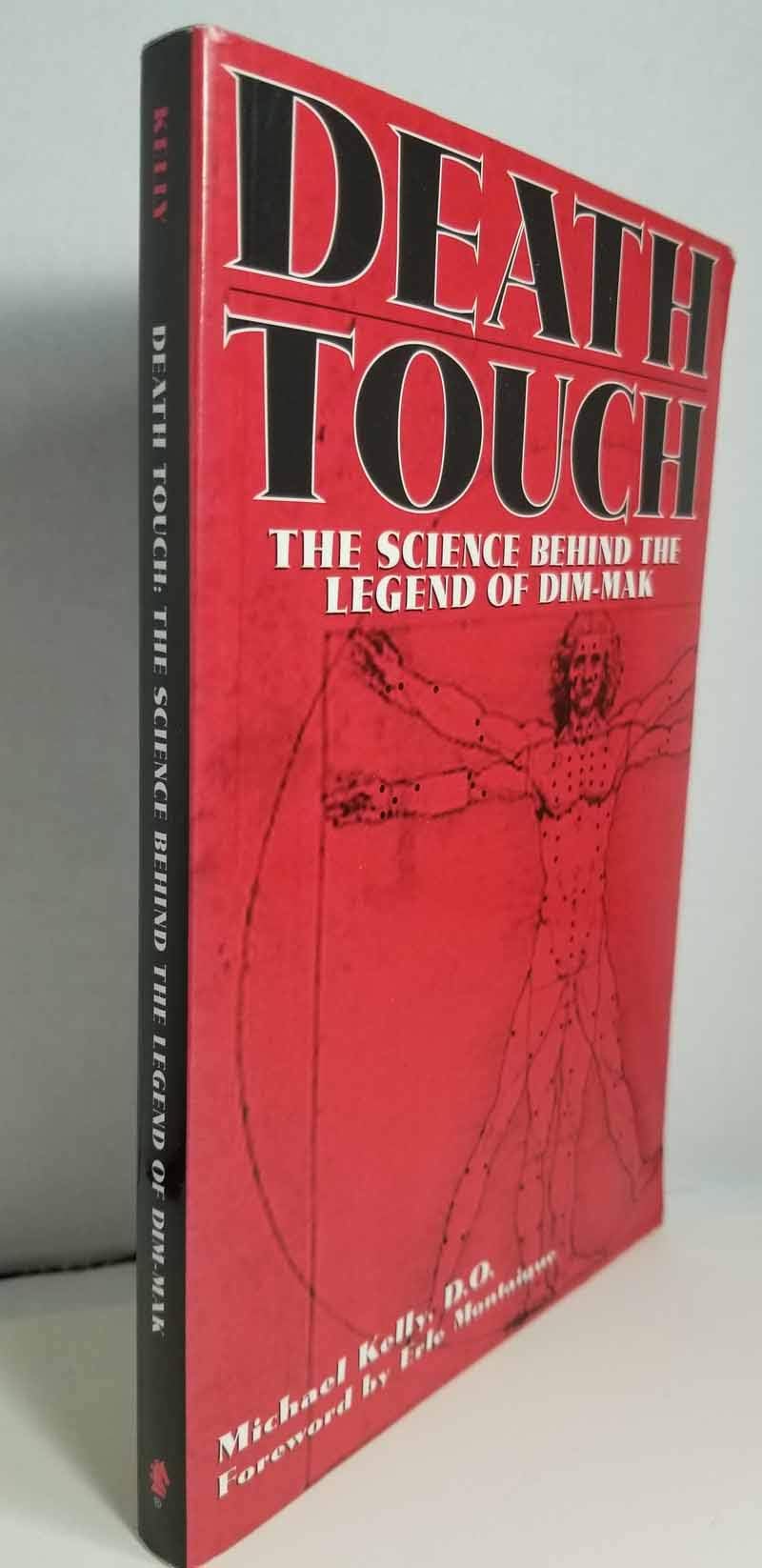
Death Touch: The Science Behind The Legend Of Dim-Mak [Kelly, Michael] on desertcart.com. *FREE* shipping on qualifying offers. Death Touch: The Science Behind The Legend Of Dim-Mak Review: Here are a few of the many revelations - This book helped me decipher the techniques used in energy medicine anatomically. Here is a few examples: Very strong stimulation of a peripheral nerve can cause the brain to think the pain is coming from an organ that the nerve was connected to by CONVERGENCE. For example: The points on the arms radial nerve are referred to as the lung triple warmer, and large intestines. An attack on the radial along the arm nerve stimulates the phrenic nerve by convergence leading to diaphragm spasms and labored breathing. When the diaphragm resting upon the large intestine goes into spasm, it irritates the large intestine causing the victims bowel to empty (Motility). The major cranial nerve responsible for parasympathetic stimulation on the internal organs is the VAGUS nerve. The vagus nerve transverses down the neck into the thoracic cavity where it connects to the heart, lungs, and digestive system. The heart rate will decrease with parasympathetic stimulation. Parasympathetic nerves feed the face, head, neck, and genitals. Sets of taps are commonly performed with acupressure to effect nerves. When a nerve is attacked, type c nerve fibers send a pain signal to the brain. Within each bundle of nerve fibers, there are multiple type c fibers with different thresholds. Repeated tapping a point recruits more nerve fibers. Since these effects occur in graduated steps, one must strike a nerve at least three times to magnify the effects at all levels until drastic effects can occur with a light tap. Acupuncture stimulates type A nerve fibers which have shown to block the effects of type C fibers. Review: an important contribution to study of dim-mak - The author has matched acupuncture/dimmak points against nerves and anatomy of internal organs, and presents a theory of possible mechanisms behind effects of nerve point attacks. My knowledge of both medicine and dimmak is scanty so I cannot say if the theory is valid or not, but with its thoroughness and clear explanations the book is an important contribution towards better understanding of eastern fighting arts in western terms.
| Best Sellers Rank | #431,200 in Books ( See Top 100 in Books ) #351 in Medical Anatomy #770 in Martial Arts (Books) #4,067 in Exercise & Fitness (Books) |
| Customer Reviews | 4.3 out of 5 stars 59 Reviews |
D**E
Here are a few of the many revelations
This book helped me decipher the techniques used in energy medicine anatomically. Here is a few examples: Very strong stimulation of a peripheral nerve can cause the brain to think the pain is coming from an organ that the nerve was connected to by CONVERGENCE. For example: The points on the arms radial nerve are referred to as the lung triple warmer, and large intestines. An attack on the radial along the arm nerve stimulates the phrenic nerve by convergence leading to diaphragm spasms and labored breathing. When the diaphragm resting upon the large intestine goes into spasm, it irritates the large intestine causing the victims bowel to empty (Motility). The major cranial nerve responsible for parasympathetic stimulation on the internal organs is the VAGUS nerve. The vagus nerve transverses down the neck into the thoracic cavity where it connects to the heart, lungs, and digestive system. The heart rate will decrease with parasympathetic stimulation. Parasympathetic nerves feed the face, head, neck, and genitals. Sets of taps are commonly performed with acupressure to effect nerves. When a nerve is attacked, type c nerve fibers send a pain signal to the brain. Within each bundle of nerve fibers, there are multiple type c fibers with different thresholds. Repeated tapping a point recruits more nerve fibers. Since these effects occur in graduated steps, one must strike a nerve at least three times to magnify the effects at all levels until drastic effects can occur with a light tap. Acupuncture stimulates type A nerve fibers which have shown to block the effects of type C fibers.
E**P
an important contribution to study of dim-mak
The author has matched acupuncture/dimmak points against nerves and anatomy of internal organs, and presents a theory of possible mechanisms behind effects of nerve point attacks. My knowledge of both medicine and dimmak is scanty so I cannot say if the theory is valid or not, but with its thoroughness and clear explanations the book is an important contribution towards better understanding of eastern fighting arts in western terms.
A**B
if you're curious about the "death touch"
Curious about the "death touch"? Then this book will give you a pretty good idea of how those secret vital point moves work. As another reader commented, it's a pity the book has so few schematics: figuring out where the actual points are is kind of difficult. And the anatomy diagrams look more like ascii art than anything else. You have to go back and forth between the book and a good anatomy encyclopedia to figure things out. Keep in mind this is not a manual to the "Vulcan death grip", though. It's more of a physiology-oriented attempt at explaining those ancient secret moves. And it should be stressed that the points discussed in this book can harm, but they can also cure. To see Dim-Mak in action (not the heart-stopping or knock-out moves, though), take a look at [...], or [...]. And do not practice on unsuspecting partners (little sister, or friends)!
R**B
Good Book, Great Content, Unfortunate Name
This is an excellent book with an unfortunate title. "Death Touch" is a bit of a spectacular phrase but once you start reading the book, you realize that it's a text book based in science and dealing with vital points from a modern medical perspective, explaining how the nerve endings that are listed work in the body's nervous system. Whether you're an active practitioner of kyusho or just interested in learning more, this is an excellent text. But you do need to know that this is written as a text book and not a novel. So be prepared to "study" the book instead of "read" the book. It's an excellent companion to many of the vital point encyclopedias on the market
P**S
An excellent book for anyone wanting to understand the science of pressure point fighting.
While the title of the book refers to Dim Mak it could just as easily have referred to Kyusho Jitsu. Traditionally Dim Mak and Kyusho Jitsu principles and applications were explained with reference to Traditional Chinese Medicine and acupuncture meridians. This book explains how Kyusho Jitsu and Dim Mak work, using Western Medicine terminology.
W**E
One Star
Looked like new but fell apart when opened. Pages fall out when turned. Very disappointing.
J**D
One of the best!!
I have been in the martial arts for almost six years. I have been studying Dim-Mak for about 3 years. When I read this book, I had a sudden understanding of how Dim-Mak really works. I HIGHLY recommend this book for anyone who is studying Dim-Mak. Paired with Mark Tedeschi's "Essential Anatomy for Healing and Martial Arts", this ancient and complicated art will make some sense to you.
J**N
The legend of dim mak reveled
It is a very good book with easy to understand explanations that can be of great value to any martial artist who wants a deeper understanding of dim mak and its effects on the human body without experimenting on others
Trustpilot
1 month ago
2 months ago