
Desertcart purchases this item on your behalf and handles shipping, customs, and support to Brazil.
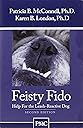
A dog who barks and lunges at other dogs when out for a walk is embarrassing and potentially dangerous. Using these pet-friendly, positive reinforcement techniques you'll soon be able to relax and enjoy your walks. Review: BEST TRAINING METHOD OUT THERE - This is the hands-down most up-to-date and long-term successful training method there is out there. I had fostered an extremely reactive dog...some of trainers suggested out-dated or worse punitive methods which only exacerbate issues in the long run and set up dogs to boomerang. This method takes consistency and about six months for more severe cases, as you are teaching a new behavior, but it's well worth it and it only takes about two to three five-to-ten minute sessions per day...it makes ever minute an easy training opportunity so that you can sprinkle throughout the day..consistency is the key, your molding a new behavior. She got to the point where she would look at me first whenever she saw another dog, waiting for her praise or treat. I am convinced that trainers and owners who utilize the punitive, outdated quick-fix methods of prong collars or shock collars or worse, are just too lazy and unmotivated to train/teach in the best , most humane and longest lasting permanent-results way. Where other methods fail is that they increase the association of tension or pain with seeing another dog or any trigger that causes the dog to react or be stressed in the first place,. What is KEY is to replace the internal emotional uncomfortable-ness of whatever causes your dog to react with a happy internal emotion instead. 'Oh look, another dog, if I look at my owner, I'll get praise or a treat'..is what you are aiming for, and it WORKS, and it continually reinforces itself. The other punitive methods work but they don't change the internal emotional cause, it's as if a human were terrified of spiders and reacted to them. ..and then someone hits you to prevent you from reacting to a spider....you don't react to the spider, but you are internally twice as tense and stressed!....and that is what punitive training does...it stops a behavior by exacerbating the uncomfortable feelings the animal already has in the first place, and reinforces associating their trigger with even more pain or discomfort...which is counterproductive and can lead to 'snapping' later. I truly wish humans had more knowledge and common sense as illustrated in this book on how to communicate with animals and teach them correctly...it's us who fail to know how to get our communication across, the animals WANT to please us. Excellent book, recommended by the local Humane Society. Review: A lot of great advice, but missing some things. - Feisty Fido is a fast, practical how-to book for the owner of a highly reactive dog. I read it in under 3 hours (including underlining and making notes). Although it's a quick read, it's not a quick fix, and I don't think it should be. Expect to practice three significant bits of training with your dog: "Watch," the U-Turn, and the Emergency Sit/Stay, all of which will require days and weeks to train. However, the training seems easy, practical, and worth it. Further, the book seems easy to reference: clear instructions, training guides, and bulleted chapter summaries. I can't give five stars because I had several questions the book didn't seem to address. Here are some examples: Training multiple dogs in these techniques was mentioned, but walking multiple dogs together was hardly addressed. The U-Turn to avoid the surprising appearance of another dog is helpful, but wouldn't that dog be prompted ("triggered") by the sudden turn-around and more interested in following/pursuing my dog? And wouldn't my dog become anxious, knowing that surprise-appearance dog is still behind us? The book addresses a loose dog directly approaching your dog and you and offers advice on how to avoid a fight and move on, but what if a dog, big or small, trails you? How do you "shake" a trailing dog? The book could likely address these and other "what-ifs" in one to five additional pages. If it did, I'd be inclined to give it five stars. Still, I recommend this book. What it lacks is far outdone by what it provides. The voice is friendly, welcoming, and influential, and I appreciate how quickly the book offers its advice and moves on.
| Best Sellers Rank | #42,049 in Pet Supplies ( See Top 100 in Pet Supplies ) #124 in Dog Training (Books) #263 in Standard Dog Leashes |
| Customer Reviews | 4.5 out of 5 stars 994 Reviews |
G**T
BEST TRAINING METHOD OUT THERE
This is the hands-down most up-to-date and long-term successful training method there is out there. I had fostered an extremely reactive dog...some of trainers suggested out-dated or worse punitive methods which only exacerbate issues in the long run and set up dogs to boomerang. This method takes consistency and about six months for more severe cases, as you are teaching a new behavior, but it's well worth it and it only takes about two to three five-to-ten minute sessions per day...it makes ever minute an easy training opportunity so that you can sprinkle throughout the day..consistency is the key, your molding a new behavior. She got to the point where she would look at me first whenever she saw another dog, waiting for her praise or treat. I am convinced that trainers and owners who utilize the punitive, outdated quick-fix methods of prong collars or shock collars or worse, are just too lazy and unmotivated to train/teach in the best , most humane and longest lasting permanent-results way. Where other methods fail is that they increase the association of tension or pain with seeing another dog or any trigger that causes the dog to react or be stressed in the first place,. What is KEY is to replace the internal emotional uncomfortable-ness of whatever causes your dog to react with a happy internal emotion instead. 'Oh look, another dog, if I look at my owner, I'll get praise or a treat'..is what you are aiming for, and it WORKS, and it continually reinforces itself. The other punitive methods work but they don't change the internal emotional cause, it's as if a human were terrified of spiders and reacted to them. ..and then someone hits you to prevent you from reacting to a spider....you don't react to the spider, but you are internally twice as tense and stressed!....and that is what punitive training does...it stops a behavior by exacerbating the uncomfortable feelings the animal already has in the first place, and reinforces associating their trigger with even more pain or discomfort...which is counterproductive and can lead to 'snapping' later. I truly wish humans had more knowledge and common sense as illustrated in this book on how to communicate with animals and teach them correctly...it's us who fail to know how to get our communication across, the animals WANT to please us. Excellent book, recommended by the local Humane Society.
C**S
A lot of great advice, but missing some things.
Feisty Fido is a fast, practical how-to book for the owner of a highly reactive dog. I read it in under 3 hours (including underlining and making notes). Although it's a quick read, it's not a quick fix, and I don't think it should be. Expect to practice three significant bits of training with your dog: "Watch," the U-Turn, and the Emergency Sit/Stay, all of which will require days and weeks to train. However, the training seems easy, practical, and worth it. Further, the book seems easy to reference: clear instructions, training guides, and bulleted chapter summaries. I can't give five stars because I had several questions the book didn't seem to address. Here are some examples: Training multiple dogs in these techniques was mentioned, but walking multiple dogs together was hardly addressed. The U-Turn to avoid the surprising appearance of another dog is helpful, but wouldn't that dog be prompted ("triggered") by the sudden turn-around and more interested in following/pursuing my dog? And wouldn't my dog become anxious, knowing that surprise-appearance dog is still behind us? The book addresses a loose dog directly approaching your dog and you and offers advice on how to avoid a fight and move on, but what if a dog, big or small, trails you? How do you "shake" a trailing dog? The book could likely address these and other "what-ifs" in one to five additional pages. If it did, I'd be inclined to give it five stars. Still, I recommend this book. What it lacks is far outdone by what it provides. The voice is friendly, welcoming, and influential, and I appreciate how quickly the book offers its advice and moves on.
R**R
Actually seeing improvement -- only one week in
This book is short, and clearly written. It is often funny, and is very easy to understand. The author goes into enough detail and gives advice on enough side issues (car aggression, techniques for specific kinds of dogs or owners) that I get the sense that she has worked these principles for a very long time with pretty much every kind of dog out there. In other words, at no point did I think, "but what about my dog, he's different because" without the author addressing the issue a few paragraphs later. If you want volume for your book-spending money, you may be a little unhappy with how short the book was, but I was relieved by it -- I wanted to finish the book and start applying the training ASAP, so the shorter the better. The "watch" technique is working for my dog. He's not "cured", but we are having positive events -- I got him to watch me while we were in my truck instead of lunging and barking at a dog that was walking by. He also let a cow (we hike, and ranchers let their cows out in the high country to graze) walk within ten feet of us and did not even bark. He actually stayed calm and kept looking back to me for treats. Maybe he doesn't mind cows (!), but staying that calm near another strange animal is new behavior. I still expect it to take several months before he lets a dog go by us on the trail without trying to tear it apart, but I am seeing very small results just one week into using the watch command. Like the author suggests, we are working with easy to moderate situations, and just getting those down before we move on to high stress situations. I have worked with 2 different $80 an hour dog trainers on this problem with my dog, and while they did teach me helpful things, I think I've gotten more useful information out of this book. If you can't afford a trainer, and you feel like you can't go another day with your dog acting like a maniac, definitely give this book a try.
S**M
Great Advice if you put the work in!
I had read McConnell's book The Other End of the Leash and really appreciated her scientific approach to the dog-human relationship. I rescued a big mix (3 years old, 70 pounds) about a year ago and once he got used to life with me and got his confidence up he started acting like a maniac on the leash when we would see other dogs. I took him to 2 rounds of obedience training which helped our bond and was good for his brain, but didn't do much for his "leash reactivity" as McConnell calls it. So I went online to see what I could find and ended up buying Feisty Fido as well as the Cautious Canine. I have been following Feisty Fido to the letter for 2 to 3 weeks and have already started to see results. I bought the equipment that she recommends (leash, collar, and bait bag) and am following the regiment exactly. It's a lot of work, but it's totally worth it to not own the Neighborhood Menace. The book is an excellent step by step way to rehabilitate a leash reactive dog. Feisty Fido is a program to correct one behavior, but I think the method could be applied to any kind of fear-induced reactive behavior. I wholeheartedly recommend this book.
M**B
Great Book!
This is a great little book that is simple, to the point and easy to follow. I have been obedience training my dog in a classroom setting for 8 months now and have had difficulty finding a real solution to his leash reactive behavior during training because his behavior is less reactive in class when he's working than when we are on a walk. On walks he goes wild if he sees another dog. In class we were taught the "Look" command. If you are soft spoken like me the "Watch" command is somehow more effective. It takes time but I am beginning to see positive results. I am seeing that this is beginning to build confidence in my dog as well as my self as we continue to work toward redirecting his attention from the other dog to me and what we are doing. This book has been very helpful!
Q**O
Just what my new rescue needs
A couple weeks ago, we added a third rescue to household and he's a wonderful dog. However, our little guy gets really overwhelmed when he walks past dogs or people or anyone comes close to the car while he's in it. We've been working with our local dog school to improve his obedience and to get him socializing more but we really need to make sure we can go on hikes and walk our dog without fear he will hurt another dog or the people we pass, and we really want to be able to drive him fun places without the cacophony. This is the second book from McConnell Publishing that I've read since getting our new dog and both times I've been really impressed. The authors start out by giving you an understanding of how dogs with these problems appear to be interpreting their situation. This isn't a bunch of wishy washy anthropomorphization. Instead, the authors deduce, from years of working with dogs with these problems, that, for instance, using a choke collar on a dog who is out of control, will simply add pain to the mix. If the dog barks and growls and the stimulus goes away, then the choking subsides which means the dog feels rewarded for barking. Practical information like this not only gives greater insight into why a dog may continue to be reactive despite one's best efforts but also gives one empathy for the dog which helps control one's frustration. The methods outlined in this book will not give results overnight but any real solutions for working through behavioral issues will always take time. What I can say is that the methods are simple and workable for the vast majority of people. They will require that you spend some time and work consistently with your dog but it's good to remember that this is a fantastic chance to bond with your dog as well as improve his or her behavior. And while I know another reviewer considered this the idea of running away from a stimulus a negative point for this book, I really appreciate that the authors offer solutions for avoiding setbacks in training when the stimuli are too great for your dog's current level of training. All in all, I have no qualms with enthusastically recommending this book to anyone who considers it time well spent to work with your dogs.
A**R
A must-read for ALL reactive dog owners!!
My 135lb Great Dane is leash-reactive and we have had some scary moments. This book is absolute gold for anyone with a reactive or aggressive dog. Patricia McConnell is very well-respected in the dog training/behavior world and this book is a quick read that concisely, but thoroughly, explains everything you need to know for changing your dog's behavior and making walks enjoyable! My Dane responded to "watch" during our first session, and started "auto-watching" after just a few sessions. It takes time, patience, and practice, but with these tools you can do it! If you're struggling I'd also recommend doing a private session with a trainer who's experienced with positive-reinforcement behavior modification for reactive dogs -- they will likely teach the same methods as McConnell, but will be able to pinpoint anything you as the trainer may be doing that's making it more difficult for your dog to learn. Also, thundershirt or anxiety wrap are great tools for training that can help your dog focus better and learn faster :)
C**T
Overly simplistic and repetitive
The author is overly repetitive and offers only one solution to the problem of dog-dog or dog-human aggression when the subject dog is on-leash. Granted, her solution is an excellent solution that is viable in many cases. Nevertheless, the author does not delve into the origin of the problem. Therefore, she does not eclectically adapt her solution nor provide a more circumspective solution plan when the origin of the behavior is complex. Is the dog aggressive when on leash due to a lack of socialization? A traumatic experience? Fear? Poor handling skills? Anxiety transferred by the handler? Insufficient respect toward the handler/owner? Territoriality? Object guarding? Opposition reflex? Barrier frustration? Excitability? Generalized aggression? Insufficient stimulation and exercise? There is no factfinding to inquire about the preceding issues of causation. In addition, she never asks the reader to contemplate whether the dog's behavior varies depending on which specific human is holding the leash, whether the dog is social off-leash and exclusively aggressive or excitable when on-leash, whether the behavior is new or has existed for a prolonged time, whether the behavior's onset occurred during puppyhood or is a more latent behavior that only manifested itself during adulthood, whether the behavior is increasing in frequency or severity, or whether the dog's aggressive, excitable, or "feisty" behavior is more generalized than solely manifesting itself when walked on-leash. Thus, the author's solution is overly simplistic and in many cases will be insufficient in its quest to accomplish goal-level solutions.
B**N
leinenpoebler adee...
Ich habe einen solchen leinenpoebler und habe fast alles versucht ihm das abzugewoehnen.diese autorin hat für mich die besten und vernünftigsten tipps, wie man dieser untugend herr werden kann. Dieses training dauert lange, und man muss viel geduld haben. Das buch ist einfach und gut geschrieben mit einem herrlichen sense of humor! Habe die englische ausgabe und die deutsche Übersetzung, an letzterer hapert es wie immer maechtig!ich kann das buch wirklich empfehlen!
A**S
Wow book
Excellent book if your dog matches any of the characteristics that the book tells. Absolutely recommended. And cheap for the value.
E**A
Très instructif !
Très bons conseils et explications pour les propriétaires et éducateurs de chiens réactifs. Bon niveau de détail, lecture fluide. Je recommande !
G**R
This book was recommended to me by the trainer of our dog class
This book was recommended to me by the trainer of our dog class, which was actually based on this book. It clearly outlines the different causes and reasons behind dogs becoming and being "reactive", which was helpful for me troubleshooting the best solution for my own dog's problem. It also contains some simple, well-described, techniques to help get you and your reactive dog through the world without too much fuss, and to help your dog reduce his threshhold so he can live more successfully in the human world.
J**L
Buen libro
Corto, conciso pero se necesita más información sobre perros reactivos, no creo que aplique para todos los casos, pero siempre se aprende algo nuevo buscando información.
Trustpilot
1 week ago
1 month ago