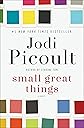

Desertcart purchases this item on your behalf and handles shipping, customs, and support to Brazil.
#1 NEW YORK TIMES BESTSELLER • In “the most important novel Jodi Picoult has ever written” ( The Washington Post ), the acclaimed author tackles race, privilege, prejudice, justice, and compassion—and doesn’t offer easy answers. “A gripping courtroom drama . . . Given the current political climate it is quite prescient and worthwhile. . . . This is a writer who understands her characters inside and out.”—Roxane Gay, The New York Times Book Review Ruth Jefferson is a labor and delivery nurse at a Connecticut hospital with more than twenty years’ experience. During her shift, Ruth begins a routine checkup on a newborn, only to be told a few minutes later that she’s been reassigned to another patient. The parents are white supremacists and don’t want Ruth, who is Black, to touch their child. The hospital complies with their request, but the next day, the baby goes into cardiac distress while Ruth is alone in the nursery. Does she obey orders or does she intervene? Ruth hesitates before performing CPR and, as a result, is charged with a serious crime. Kennedy McQuarrie, a white public defender, takes her case but gives unexpected advice: Kennedy insists that mentioning race in the courtroom is not a winning strategy. Conflicted by Kennedy’s counsel, Ruth tries to keep life as normal as possible for her family—especially her teenage son—as the case becomes a media sensation. As the trial moves forward, Ruth and Kennedy must gain each other’s trust, and come to see that what they’ve been taught their whole lives about others—and themselves—might be wrong. Review: Powerful, uncomfortable, and impossible to put down - This book made me uncomfortable almost from the beginning, but I could not stop reading. Every few pages it gave me something different to wrestle with. I was angry, heartbroken, surprised, frustrated, and more than once I found myself seeing a character differently than I expected to. What I loved most was how much time the book spent inside the characters’ thoughts. It made the story feel much more complicated than simply deciding who was right or wrong. My only real disappointment was the ending. The book spent so much time building tension and developing the characters that the final stretch felt rushed to me. I especially wanted more time with Turk’s transformation and a little more resolution around some of the relationships. I also would have liked to know for certain whether Ruth recognized him at the end, although I can appreciate why that was left open to interpretation. Even with that, this was absolutely a five-star read for me. It was uncomfortable in the best way, incredibly thought-provoking, and one of those books I wanted to discuss with someone every few chapters. Review: Small Great Things - I thought this book was an excellent read. I was disturbed, frustrated, on the edge of my seat, disappointed, disgusted, cheering, and shocked all through this story. Jodi Picoult was able to weave a story together that allowed us to understand both sides of very different situations. She helps us see that hate is learned and can be unlearned. She helps us see that the world isn’t so black and white. She reminds us that we need to ask hard questions. We need to be curious and not be judgmental of others. We need to treat others the way we want to be treated. We need to be the change for good even when everyone else is against us.
| Best Sellers Rank | #77,228 in Books ( See Top 100 in Books ) #77 in Family Saga Fiction #148 in Women's Friendship Fiction #157 in Mothers & Children Fiction |
| Customer Reviews | 4.6 out of 5 stars 101,122 Reviews |
K**R
Powerful, uncomfortable, and impossible to put down
This book made me uncomfortable almost from the beginning, but I could not stop reading. Every few pages it gave me something different to wrestle with. I was angry, heartbroken, surprised, frustrated, and more than once I found myself seeing a character differently than I expected to. What I loved most was how much time the book spent inside the characters’ thoughts. It made the story feel much more complicated than simply deciding who was right or wrong. My only real disappointment was the ending. The book spent so much time building tension and developing the characters that the final stretch felt rushed to me. I especially wanted more time with Turk’s transformation and a little more resolution around some of the relationships. I also would have liked to know for certain whether Ruth recognized him at the end, although I can appreciate why that was left open to interpretation. Even with that, this was absolutely a five-star read for me. It was uncomfortable in the best way, incredibly thought-provoking, and one of those books I wanted to discuss with someone every few chapters.
K**F
Small Great Things
I thought this book was an excellent read. I was disturbed, frustrated, on the edge of my seat, disappointed, disgusted, cheering, and shocked all through this story. Jodi Picoult was able to weave a story together that allowed us to understand both sides of very different situations. She helps us see that hate is learned and can be unlearned. She helps us see that the world isn’t so black and white. She reminds us that we need to ask hard questions. We need to be curious and not be judgmental of others. We need to treat others the way we want to be treated. We need to be the change for good even when everyone else is against us.
H**N
A true ringing of the bell
The author used this book to give voice to the millions of people of color who have never receives what Ms. Picoult refers to as equity. The book is like a mini series. With multiple stories and tragedies which collide and create a storm the size of Katrina and which leaves no one untouched. Ruth an African American Labor and delivery nurse who only wants to do her job is prevented from doing so because the parents of the newborn are white supremacist. So when they demand she not touch their child and the child goes into cardiac arrest and, Ruth the only available nurse does not act because the head nurse has commanded her not to, the child dies. This begins a vicious witch hunt in which Ruth is the target. She has been an exemplary nurse for over 20 years in a white hospital where she has thrived in spite of the racist acts and systems which failed her. But this is a story of survival. The hospital workers conspires with the parents and Ruth is arrested and charged with negligent homicide. The turns and twist will leave you empty, shattered and angry. There is no good way to write about an innately racist system where all the good guys where white and the bad black. Yet Ms. Picoult manages to make all her characters failingly human. Deep rooted flaws that reveal a society more racist and twisted than can be imagined. All the characters are fully developed, therefore we either love them or hate them. Brit, the daughter of an esteemed racist leader hooks up with Turk an aspiring future leader in the movement. Their son Davis is the the one who loses his life and together they target Ruth using a white social structure already in place and well oiled to Destroy Ruth basically because of her color. This is a compelling story and a true look at our so called great society. It also gives great insight into the social movement on the rise today which seeks to "make America great again" as if a white supremacist is the perfect antidote. Moving, revealing and well written.
K**R
Raw. Deep. Emotional. Honest.
This is a thought-provoking, raw, honest and amazing story about racism in America. It is written from the POV of three of the main characters - Ruth Jefferson, Turk Bauer and Kennedy McQuarrie. Their lives are very well developed and rounded out. We see them at home, at work, and in all walks of life. Ruth is a veteran L&D nurse with over 20 years experience who is considered one of the best nurses in her hospital. She is also the only African American nurse in her hospital. This has never been an issue until she runs up against Turk, a white supremist who insists that no African American personnel is allowed to care for his baby, Davis. Things happen that lead to Ruth being charged with negligence of care. In walks Kennedy McQuarrie, a white public defender who's never had a case like this. There are a few outlying characters to take notice of: Francis Mitchum, Turk's father-in-law, and the leader of a large online white supremacist group. There is also Odette, the prosecutor, and African American. And there's Brit, who is Turk's wife, Francis' daughter and also a longtime white supremacist. When Davis is 3 days old something happens that causes Turk to go ballistic, and in the end we have Ruth in jail, in her robe, and handcuffed. Kennedy believes that race and racism should never be brought up in a trial. She wants to build a case on Ruth being wrongfully indicted. Ruth, on the other hand, knows that everything about her case is based on racism. They make it to the end of the trial, having bickered a bit, and enjoyed each other a bit, with racism never being mentioned. However Ruth is headstrong, and she wants the privilege to take the stand and state her own case. Kennedy is strongly against this, however it is Ruth's right, as an inmate, to tell her story. Ruth opens up to the jury, explaining her life, and opening their eyes to what racism is really like, as told from her perspective. Lots of things happen during this time (no spoilers) that bring the case to it's stunning conclusion. You might just find your jaw on the floor like I did at the end. Jodi has the way of saying what needs to be said in all her books. She is an amazing writer, always having well researched material, brilliant character development, with thought provoking, deeply layered stories told from various point of views. This story made me take a deep look within myself to see where I stand. Having been raised during the 60s and 70s I feel very blessed to be colorblind - not in the traditional sense - but in the fact that when I look at people I don't see color. I search what's in their heart and choose my alliances based on that regardless of color. The "N" word was commonly used in my household but somehow I instinctively knew it was a "bad" word. My first boyfriend in kindergarten was a black boy named Robert Green, my best friend in first grade was a little black girl, and my best friend now is a black woman I work with. Yet, as much as I want to say she's "just like me," the truth is she's not. I have been the beneficiary of white privilege many times throughout my life, while she has been oppressed many times throughout her life, even today where we work side-by-side together. It's not fair at all, but if we don't speak up about it things will never change. Ruth Jefferson did just that - told the truth. You'll have to read the book to know if that changed things for her or not.
K**N
Great writing
Great writing- believable characters and good plot about an important subject matter. It was hard to stop each night! I appreciate the hard work behind the scenes and the author sharing her research process with us.
M**3
A Must Read!
I was thinking today of some of my greatest influences, even as a child. Dr. King, Selma, Maya, Mahalia and Dinah Washington. For some reason, maybe reincarnation? I have always felt a pull. The first time I heard Dinah sing, “This Bitter Earth”, I cried. When I heard Mahalia sing, “It is No Secret”, I cried. Maya’s “Still I Rise”, Dr King’s “I Have A Dream”, and when I learned of the events in Selma, I cried. And recently, after reading Small Great Things. I don’t cry easily, I really don’t. And I can’t stand racism, bigotry and xenophobia. Back to Small Great Things. This book moved me to tears. It is sad, poignant, though-provoking, touching, gripping and compelling. Without a doubt, this book will be on my favorites shelf. I have often said that I am “colorblind and a humanist”. I very much believe that everyone should be regarded equally with respect. To me, we are all God’s children. Black, white, gay, straight, Hispanic, Asian, Muslim or Mormon none of it matters to me as neither does creed or religion. As long as you’re not hurting anyone, I believe you should be able to live your life, in peace. Ruth Jefferson is a labor and delivery nurse at a Connecticut hospital with more than twenty years’ experience. During her shift, Ruth begins a routine checkup on a newborn, only to be told a few minutes later that she’s been reassigned to another patient. The parents are white supremacists and don’t want Ruth, who is African American, to touch their child. The hospital complies with their request, but the next day, the baby goes into cardiac distress while Ruth is alone in the nursery. Does she obey orders or does she intervene? The infant ends up dying and Ruth is charged with murder and committing a hate crime. Kennedy McQuarrie, a white public defender, takes her case but gives unexpected advice: Kennedy insists that mentioning race in the courtroom is not a winning strategy. Conflicted by Kennedy’s counsel, Ruth tries to keep life as normal as possible for her family—especially her teenage son—as the case becomes a media sensation. As the trial moves forward, Ruth and Kennedy must gain each other’s trust, and come to see that what they’ve been taught their whole lives about others—and themselves—might be wrong. A couple of poignant statements: “I am not a racist, Ruth. And I understand that you’re upset, but it’s a little unfair of you to take it out on me, when I’m just trying to do my best—my professional best—to help you. For God’s sake, if I’m walking down a street and a Black man is coming toward me and I realize I’m going the wrong way, I keep going the wrong direction instead of turning around so he won’t automatically think I’m afraid of him.” “That’s overcompensating, and that’s just as bad,” I say. “You say you don’t see color…but that’s all you see. You’re so hyperaware of it, and of trying to look like you aren’t prejudiced, you can’t even understand that when you say race doesn’t matter all I hear is you dismissing what I’ve felt, what I’ve lived, what it’s like to be put down because of the color of my skin.” “Active racism is telling a nurse supervisor that an African American nurse can’t touch your baby. It’s snickering at a black joke. But passive racism? It’s noticing there’s only one person of color in your office and not asking your boss why. It’s reading your kid’s fourth-grade curriculum and seeing that the only black history covered is slavery, and not questioning why. It’s defending a woman in court whose indictment directly resulted from her race…and glossing over that fact, like it hardly matters.” Oh my God. I am guilty of that and I am sorry. I would never intentionally dismiss what anyone has lived through, especially the black community. A tweet today from the Women’s March: “Throughout history, violence has been committed and justified in the name of white womanhood. Terence Crutcher is no exception.” I remember Dr. King saying “if you’re not part of the solution, you’re part of the problem.” And I am left with the question, what can I do to make a difference?
C**.
While I haven't loved each book I've read I have loved most of ...
I am a huge fan of Jodi Picoult and have been since first reading Nineteen Minutes. While I haven't loved each book I've read I have loved most of them and, regardless, she always presents a complex topic with a host of complicated and varied characters that keep me conflicted and engaged until the last page. She does not shy away from picking themes that touch on the situations that make many readers uncomfortable or angry but writes the stories in such compelling and heart wrenching ways that you feel for the characters and their lives even if you don't always agree with whatever situations they are presenting. Small Great Things is no exception and Jodi Picoult is at her best once again with this complex and multilayered story of race, discrimination, and understanding as only she can write it. The characters in this novel are amazing. The story is told through three perspectives: Ruth, a black nurse who loses her job and is charged with a crime due to a situation involving a baby; Kennedy, the white attorney who represents her; and Turk, the white supremacist father of the baby involved. Ruth is a remarkable woman and nurse and there were a few times that her descriptions of caring for the various babies and mothers as a Labor and Delivery nurse over the years really touched me. My son was born a preemie and remained in the hospital for the first month of his life, and it was the amazing nurses during that experience that kept me from completely losing it. Ruth is a true amalgamation of these nurses and the love she feels for her charges is palpable, which makes what she experiences all the harder to swallow. Kennedy is wonderful as well, often funny if misguided in her attempts to relate to and assist Ruth, and being a white woman myself her experiences trying to navigate and truly understand this complex and tangled world of race and privilege was very relatable. I found Turk and his wife to be just disgusting, close-minded, and hypocritical and while I could empathize with their abject grief at losing their son so suddenly, their misdirected blame and hate towards Ruth and, really, anyone who didn't look like them made it impossible to really feel anything for them. There are quite a few secondary characters that add perspective and spice to the story as well and I think each one presented a point of view and point of reference that covers many, if not all, of the possible viewpoints of this overarching theme. Something else I quite enjoyed was learning the medical and law jargon and procedures that aren't always shown or known to those outside the fields. It felt very realistic and authentic and helped ground the story with facts and methods inside what can otherwise be very emotional. Whether the case or not, I imagine the author must have done quite a bit of research to get these aspects correct and I appreciate, as a reader, the time and effort put in to make the story as accurate as possible. There are no easy answers or real resolutions to the situations expressed in Small Great Things, and I think anyone looking for that is missing the point of what is being discussed. The black characters would still be forced to face the fact that they're black based on the way they are treated by others, whether in overt or covert ways, every single day of their lives while the white characters might not even have to think about the color of their skin on any given day. This, obviously, can be transferred to the real world as well. Per the story, it is only when people start understanding and acknowledging that fact that any change can possibly happen. There is so much to discuss with this sort of story and I imagine book clubs will eat this one up.
L**E
Intensity that pulls readers urgently forward, while offering merit and meaning in the tale.
Writing novels of depth and demand, stories that ask the reader to reach beyond entertainment to additionally be moved by an idea, a concept, a discussion that involves controversy and debate, is always risky for a writer. Some readers don't want to work that hard, some might not agree with the conclusions drawn; others might be offended by explorations of diverse lives and characters. And some, like me, are thrilled to be pricked by ideas, provocations, questions surrounding a story that propels forward with nail-biting intensity. Small Great Things is one of those stories. The narrative involves a black neonatal nurse, Ruth, and the white supremacist couple whose child dies under her watch, an event that immediately throws us into the deep water of intense, skin scraping racial conflict. The resulting court case that evolves from this tragedy pulls together myriad perspectives about who did what, why; who didn't do what they should have and who's in the wrong. The attendant conflicts amongst the many characters involved drives the plot forward with a careening sense of "we don't know where this is going," which is thrilling and unnerving. Picoult shows no fear in taking us into the grit and gut-punching (literally) reality of white supremacy, its philosophies and calculations, its terrifying hatred and sociopathic disregard for human life, and we are asked to listen, watch, absorb how a rabid racist is grown and nurtured so that a culture of hate and bigotry can survive. It's brutal and it's disturbing, because in the midst of darkness, we also see - via the first-person narrative of Turk, the young father -- his capacity for tender feelings for his wife and his lost son, which confounds how we view someone with such a misguided sense of humanity. Ruth's world is equally rich in detail and character. At a time when some in the publishing and reading world feel that white authors ought not take on stories and characters of other races— which I believe is censoring and antithetical to the mission of art and creativity—a truer mandate emerges: that any author writing about any person, place, or thing outside their culture, their experience, their planet, their gender, their age, their race is obligated to do one thing: the work to GET IT RIGHT. That requires in-depth research, experiential exploration, a sensitivity to nuances of language and vernacular, an awareness of idiosyncrasies, idioms, predilections, authenticity. Engagement with sensitivity readers and people of the demographic being depicted to sharpen truth and offer honest, thoughtful, meaningful prose. If you read Picoult’s Author’s Note at the end of the book, it’s clear this writer did that work, and the resultant depth of her depiction of Ruth and her family confirms that. Their background, their passions and positions on various topics; their pain and sorrow, their anger and joy; their love of family. We climb inside that world and feel both Ruth’s pride and sense of accomplishment for all she’s achieved despite the corrosive effect of systemic racism in America, as well as her panic, her fear that this beautiful world she’s created will crumble around her. We feel every hurt and are drawn into her story with tremendous empathy and illumination. Some reviewers commented that they don’t want to read works that put forth a political view, that offer some enlightenment, debate, argument on difficult topics, but I am the opposite. I find nothing more satisfying than immersing myself in a page-turning novel that grabs my attention and pulls me urgently toward the conclusion, while offering something of merit and meaning in the tale. Small Great Things is just that book.
A**E
白人優位なコミュニティで生き抜いてきた、黒人女性Ruthが魅力的
ダイバーシティという言葉が浸透してきた昨今であっても、白人優位のコニュニティで生き抜いてきた、またこれから生き抜いていく黒人女性の主人公Ruthがとても魅力的な作品でした。様々なことを努力でカバーして、色んなものを手に入れてきたけれど、あっという間にすべてが奪われてしまいそうになる過程は、読んでいてハラハラしました。 裁判を引き受けた白人女性弁護士Kennedy、白人優位主義者のTurk、その妻Britなどの登場人物の背景をここまで描く必要があるか?と思っていたけれど、最後はこうつながるのか~!と唸りました。 日本に住む純日本人の私ですが、人種の問題に深く考えさせられたのも事実です。 作者の著作では「私の中のあなた」を読んだのですが、他にも読んでみたい作品がたくさんあります。
M**A
I love the story
Such a beautiful book—I really felt Ruth’s pain. I even cried while reading it.
M**T
a very necessary novel
I was originally reticent about a book about race being written by a white person but Picoult handles the subject with delicacy. Having read this novel twice now I am persuaded that Picoult tackles racism from a very relevant angle and manages to catch out today's white liberal population - you may not think of yourself as a racist but it's your actions that count. As the mother of a mixed race child I was encouraged by this book. Picoult writes in a very accessible style which is thought provoking rather than finger pointing. The world is full of white people who deep down feel that somehow they deserve more than the rest.
V**A
Very well crafted novel
A beautiful piece of writing. Picoult is a storyteller par excellence. A touching tale of introspection, bravery and heart. Shows a mirror to our deepest beliefs
S**R
A poignant and beautifully written story
I read, cried, smiled and read some more. I savored reading this book and was sad to finish it last night. This is a special story, unlike anything I’ve read before… it deserves to be read thoughtfully. I found parts of it difficult to read for different reasons. It’s a powerful story, told from different perspectives. One perspective is that of a white supremacist and it briefly includes spontaneous violence that, had it been televised, I surely would have held my hands up to block the view more than once. But the compelling story is so much more than that, so I’m glad I didn’t let those parts deter me from reading through – and in fact, I think those bits are important to the whole story and belong there regardless of how difficult they might be to read. I found myself pausing throughout this novel to allow what I was reading to soak in, and to recess for a little self-reflection. Reading this book my eyes are opened wide to just how pervasive racism and biases are – they permeate so many aspects of our daily lives. My own realization that I have not been sensitive enough to recognize just how ubiquitous racism is, and how privileged I am, has left me feeling disappointed and embarrassed at my own naivety around these subjects. Despite that embarrassment, I’m thankful this book afforded the opportunity to learn more about these issues and I appreciated the careful and thoughtful manner the author approached challenging topics. I enjoy Jodi Picoult’s writing style, and especially admire how she quietly and expertly weaves examples of veiled racism into a storyline dealing with flagrant racism. I found myself often raising my eyebrows and thinking ‘I never realized or even considered that…’ when encountering so many examples of the injustices minorities can face in every day living. I was deeply moved by Ruth’s unyielding bravery in the face of great adversity, by her relationships with her family, and by Kennedy’s journey to self-awareness too. Discussing this book with my husband last night, I found myself choked up even just talking about the author’s notes at the end. I don’t feel like I can do this book any justice in trying to capture its importance with my own review. I’ll just say that I expect each person’s experience reading it may be different, but it is so worth reading. I feel enriched for having read it and I can’t wait for my husband to finish it so we can discuss it more fully. I highly recommend this book, especially for book clubs, because this is one you're going to want to discuss after reading.
Trustpilot
2 weeks ago
2 days ago