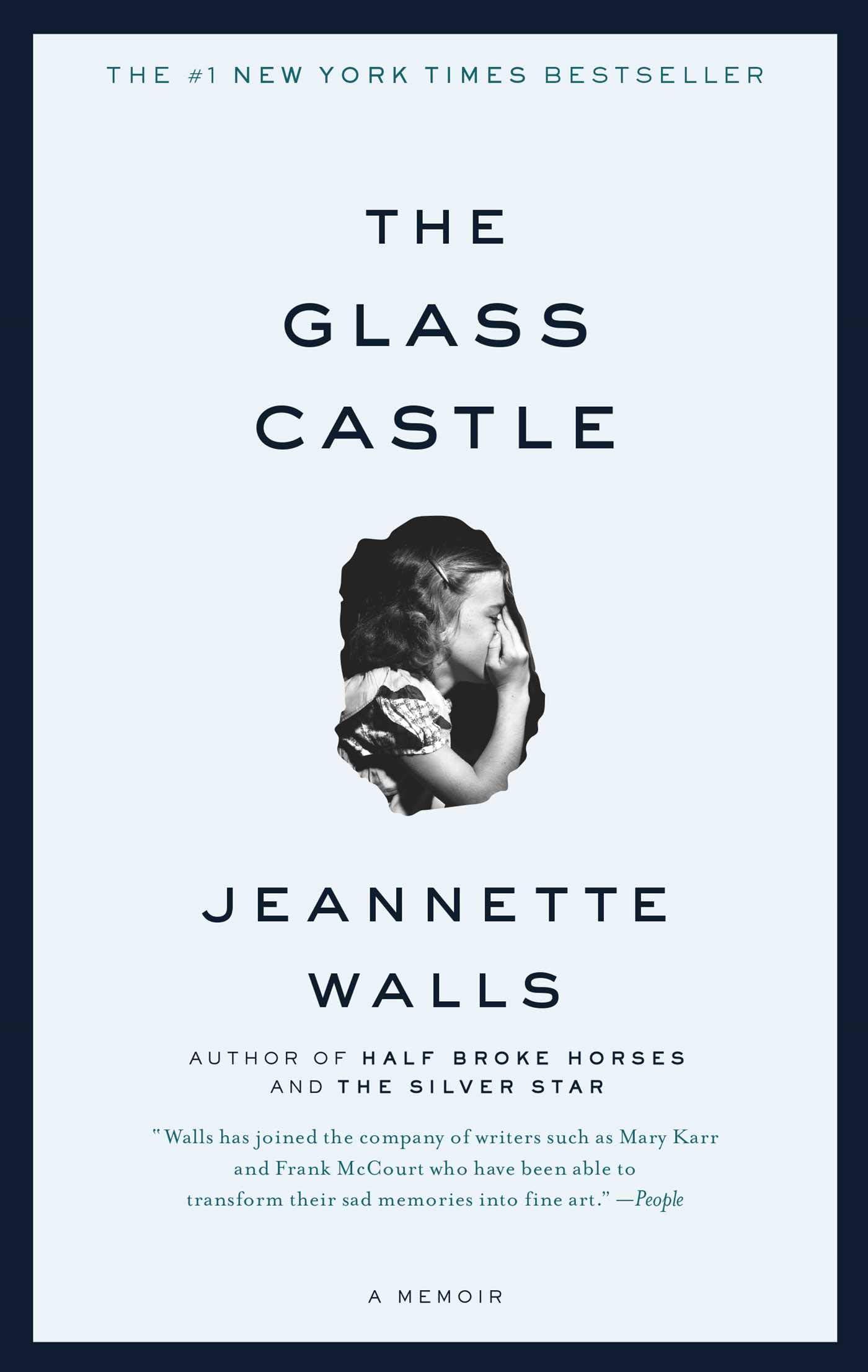
The Glass Castle: A Memoir (book)
Product ID: 315965
⭐4.6/5 Stars from 49,756 Reviews
🎬Major Motion Picture Adaptation
📚NYT #1 Bestseller
Desertcart purchases this item on your behalf and handles shipping, customs, and support to Brazil.
📖 Dive into the memoir that everyone’s talking about—where grit meets grace in a story you can’t afford to miss!
The Glass Castle is a #1 New York Times bestselling memoir by Jeannette Walls, celebrated for its raw and inspiring portrayal of a dysfunctional yet fiercely loving family. Praised by critics and readers alike, it has been adapted into a major motion picture and holds top ranks in multiple biography categories, backed by nearly 50,000 glowing reviews.


| Best Sellers Rank | #1,247 in Books ( See Top 100 in Books ) #1 in Journalist Biographies #1 in Author Biographies #9 in Women's Biographies |
| Customer Reviews | 4.6 out of 5 stars 49,762 Reviews |
A**1
Love of Fate: Triumph of Meaning over Suffering
Dickensian world of poverty is so abominably tenebrous that we tend to think of it simply as an anachronistic, if not antediluvian, work of fiction apropos of a bygone Victorian era, without translating its elemental essence of nobleness of human spirit that arises from predicaments into our own zeitgeist. The fictitious characters of Oliver Twist, David Copperfield, and Pip are the embodiment of such resilience, phoenix-like spirits enduring sordid conditions that life could impose upon us to the extent possible. Spinoza, the Dutch thinker and watchmaker, once said that it is Amor fati, love of fate, by which man’s inner strength could raise him above his outward fate. In fact, Nietzsche centuries after corroborated by saying: “That which does not kill me only makes me stronger.” Given the above axioms, what if someone in our contemporary time a fortiori lives to tell such victory of human spirit? That was the reason that I chose The Glass Castle by Jeannette Walls. All of the aforesaid noble triumph of human spirit over existential horrors of life is substantively and stoically recorded in this compelling living memoir with all her spirit, with all her intelligence, and with all her heart. The story starts as Walls invites us to board her memory train and travel back in times until we return to where we depart along the long and winding railroads of her windy but beloved past. We meet her charismatic, intelligent father whose engineering feats are passed in smolder by his ever independent, anti-establishment, recalcitrant spirit a fortiori emboldened by a spirit of Dionysian portion. The artistically inclined mother is all liberality: She is a devout Catholic - although far from being sanctimonious - and has a heart of gold, save a practical sense of the world. Then there are one brother and two sisters, all of whom are highly intelligent and well-behaved thanks to the moral upbringing by their parents. The parents do not have the gumption to support their children, let alone themselves in terms of economic security, which was the cause of the existential ills of the family, pushing Walls into a position of a de facto breadwinner of the family. What is most profoundly august about Walls through living amid the straits of constant economic insecurity, frequent threats of family separation by social agencies, and dangers of physical harassments was her strong sense of responsibility for her life and for her family that enabled her to endure the existential predicaments. Many people mired in such situations might have develop disputatious streaks of rebellion against everything ascribed to them. However, Walls and her siblings took different attitudinal values to their existential dilemmas: they held on to a sense of purpose and a tenacious grasp on togetherness nurtured by their yearning to achieve a higher aim in life. In fact, such attitude toward life corresponds to one of the tenets of Logotheraphy: in order to find a meaning of life however trivial or nihilistic it many seem, taking a different, constructive stance on what is ascribed helps us to rise above biological, social, and cultural inhibitions during a difficult times because we give our suffering meaning by the way in which we respond to. Which also brings us back to Spinoza’s Amor fati axiom: a different approach to our suffering is sublimated into supremeaning of life in travails by believing in its meaning to every situation with will to live a meaningful life, which then ceases to be a suffering itself. The literary merit of this memoir lies in its absence of unbridled namby-pamby outpourings of emotions in the narrative with a certain air of stoicism. Ironically, Walls’s frank, touchy-willy, matter-of-fact manner of discoursing her story belies her overwhelmingly heartrending heartaches, disappointments, and dismay smothered under factual descriptions of her past that renders the authority of truth and the power of reality without hindrance of prohibitive emotions that often results in fabrication. In her literary confession, Wall achieves catharsis by putting what was in her mind on pages after pages, pushing her pen through in expense of her will to come to terms with her parents, let alone herself, producing forgiveness of her parents’ wrongdoings and acceptance of their frailties in a package of love and tenderness. All in all, Walls’ s message to her reader is clear: you can’t choose your fate, such as a family, but you can choose what to make out of what you are given. In one way or another, the story itself chimes the bells of emotions and thoughts of many of us: the problems and issues that the Walls had and the ones we have or had may have are not oranges and apples through our voyages of life. Walls shows us that notwithstanding all the vicissitudes of life, self-reliance, resilience, and determination helps us to sail through with cheerfulness and humor as handmaids to courage. This honest-to-goodness tale of a woman rising above the planes of her inhibitions speaks straightly to our hearts. This book is a one-of-kind testament to its veracity and quality that upon reading this book, you will feel as if you knew Walls telling a story with a sense of elemental kinship which you can relate to. Moreover, this bona fide memori gives us a sense of relief that no family is perfectly blissful, which resonates with Tolstoy’s view of families as inscribed on the first page of Anna Karenina: “All happy families are alike; each unhappy family is unhappy in its own way.”
C**N
You can’t choose your family, but you can choose how much responsibility you take for yourself
Jeannette Walls was raised by parents who did not make economic security for the family a priority. Her father was an engineer and quick to share his intelligence with his children. He could fix most engines and knew the names of the stars and planets. He was also a hopeless alcoholic, spending his paycheck on booze and leaving everyone’s stomachs empty. Her mother was an artist and writer who never sold a painting or a book. She made no money except when Walls and her siblings pleaded with her to be a teacher—a job she could never hold down because she didn’t like showing up. Her parents were irresponsible, and throughout her entire childhood, Jeannette and her siblings never knew stability. When they lived in California, they camped in the desert and worried for water. When they lived in Arizona, they lived in a house filled with cockroaches that had no locks on the doors. When they lived in West Virginia, winter froze the water, rainstorms poured through holes in the roof, and a mudslide carried the front steps away. There were many instances when, without warning, their father would disappear for a few days, or their mother would refuse to get out of bed, or they wouldn’t have anything to eat. What is captivating is that despite her poor circumstances, Walls developed and maintained a strong internal sense of responsibility (so did her three siblings). If her parents weren’t going to take care of her, then she was going to have to take care of herself, and she started learning early. She taught herself how to cook and do household chores, she made her own braces, she fought off a bigger kid who wanted to rape her, and she learned how to manage the little money that they did have. She developed a spirit of resourcefulness throughout the book that led to her paying her way through college with scholarships and part-time jobs and eventually becoming a published author. The book is well written. It moves at a great pace and kept my attention from cover to cover. I enjoyed her voice as narrator and enjoyed getting to know each member of her family intimately through her eyes. It was beautiful to see her question her circumstances and slowly come to recognize that she both loved her parents for their kindness and intelligence and hated them for their abuse and neglect. Her stories have the full range of human emotion infused into them and are equal parts heartfelt and entertaining. At the end of the book, the kids are all adults and living in New York City. Their parents are living in the city too and are voluntarily homeless. Walls and each of her siblings relates to their parents in different ways, much reflective of each of our own complicated family dynamics. If this book had a message it would be: You can’t choose your family, but you can choose how much responsibility you take for yourself.
P**S
Remarkably Well-Written Life Story
Life writing is not exactly my favorite genre, but this book was selected by my book club and so I dutifully read it. Two things surprised me about it: firstly, it was an incredibly fast read (I sped through the first hundred pages while juggling a million other things), and secondly, it was really well-written. The reason I avoid this genre is that most people's life stories are written with an eye to provoking our emotions in the basest possible way. They manipulate us into feeling angry, or sympathetic, or inspired, but whatever the intended output, I almost always feel as though I'm being conned into feelings that are manufactured rather than natural. The great strength of Walls's account, by contrast, is that she shows remarkable restraint in telling this story without any of those emotional manipulations. Indeed, she goes out of her way to present the past through the eyes of her younger self, justifying the behavior of her parents in the same manner as she had done during the original experience. There can be no doubt that the Walls parents were abusive and neglectful, shifting the family from town to town in a spiral of increasing poverty and desperation. Juxtaposed to this, however, is the sense that they were also geniuses in their own way: their father Rex Walls repeatedly shows his skills in science, mathematics, and mechanics, while their mother Rose Mary is a seemingly talented but out-of-touch artist. Jeanette Walls does a remarkable job of showing these two starkly contrasting characters and how circumstances slowly swallow up their good qualities. For most people, this book will hit all the right notes, but I wanted a little bit more in terms of pushing the limits of the genre. There are moments, for instance, where Walls wants to blur the line between literature and biography, such as the scene where her young self wants to replant a Joshua tree so that it will flourish: "One time I saw a tiny Joshua tree sapling growing not too far from the old tree. I wanted to dig it up and replant it near our house. I told Mom that I would protect it from the wind and water it every day so that it could grow nice and tall and straight. Mom frowned at me. 'You'd be destroying what makes it special,' she said. 'It's the Joshua tree's struggle that gives it its beauty.'" In moments like these, I started to wish that Walls would push this strategy further by playing with her narrative voice a little, undermining its authority to some extent rather than building so insistently into the person she would become as an adult. There was no need to push such experimentation as far as, say, Chuck Barris's Confessions of a Dangerous Mind: An Unauthorized Autobiography , but it is the nature of subjective writing to account for the teller's inherent biases and the unreliability of memory and I would have liked to see some acknowledgment of that fact. Overall, however, I think this is a very well-written and interesting life story that mostly deserves the glowing accolades it has garnered so far.
B**I
Incredible story
This book is so fascinating and interesting. I was drawn right in page after page after page. What an absolute testament to the strength of the human spirit.
H**H
In the memoir, “The Glass Castle”, written by Jeannette Walls. She writes about her childhood, growing up with unorthodox and i
Hannah Bauman Dr Vogel English 340 May 7th 2014 The Glass Castle In the memoir, “The Glass Castle”, written by Jeannette Walls. She writes about her childhood, growing up with unorthodox and irresponsible, yet intelligent and talented parents. Moving from one city to another, living in a variety of environments, from a mobile home, to a motel at one point, to an abandon train depot, and then to a rundown miner’s house until her and her siblings moved to New York on their own finally. Their father, a man, who in some aspects could be mistaken for brilliant, is a belligerent drunk, can’t keep a job, and steals his children’s hard earned money, that they are saving to finance a new life in New York City and then spends it on booze. Then a mother who is an artist with a college degree, but refuses to act like an adult and get a job in order to take care of her children. Jeannette and her siblings have no choice, but to fend for themselves and find a way to get themselves out of this terrible dysfunctional environment. For the children of this story growing up was full of unexpected adventures and struggles with consistent poor living conditions. The children would routinely go for days without eating anything, or when they did eat the meals consisted of very poor nutritional value. At one point Jeannette and her brother have to dig through the school garbage container for leftover food. This often led to the kids being bullied and/or ridiculed by their peers because of their social status and unkempt appearance. However, even with these misfortunes the children managed to excel in school. Despite their unfavorable situation, they were extremely resilient and somehow managed to find humor in their unfortunate predicament. An example of the children’s resiliency is…one day, Jeannette being the resourceful girl she was, after a visit from a Child Protective Services, she went to the library and researched their options to get themselves out of this predicament. After many hours of research Jeannette came up with a solution. She ended up giving her mother an ultimatum; to leave her father or she needed to find a job and improve their living conditions. Jeannette stressed to her mother that they cannot keep on living like the way they had been. Although hesitantly, their mother decided to get a job as a teacher. However, it was short lived due to the mother being a terrible teacher and having childlike tendencies. The children often had to assist their mother with her duties as a teacher, grading school work and organizing papers. Additionally, to make matters worse, she even at times refused to get out of bed to go to work. This eventually led to the kids having to drag her out of bed in order to get her to work. Jeannette and Lori, the older sister, finally got fed up with their mother’s behavior. They eventually made plans to go to New York, Lori planned to go first, following high school graduation, then, Jeannette would follow next when she finished High School. From this point on they both saved their hard earned money and put it into their piggy bank. Shortly before Lori graduated High School as they count the days until they could move out on their own and fend for themselves, Jeannette came home to find the piggy bank torn apart and all the money gone. They immediately confronted their father and of course he denied it. They were both devastated, but they stayed positive, put their heads together, and found another way to get to New York. I enjoyed reading this book and it reminded me to be appreciative and be thankful for my upbringing and supportive family. I found it to be a page turner, very inspiring, couldn’t put it down. The children’s difficult childhood story is a true testament to resiliency. I would recommend this book to anyone in search of inspiration. This book included drama, adventure, humor, and redemption and kept me interested and attentive throughout. In the end…the children triumph over the struggles they encounter due to their irresponsible parents. However, in the end, their upbringing made them, but it didn’t break them. Their shared hardships only made their bonds stronger and together, they prospered with each other’s support.
J**N
Glass Castle Review
The Glass Castle by Jeannette Walls is a memoir about Jeannette’s life from the time she was three years old, to her adult life. Jeannette faces many challenges growing up, financially and socially. The Walls family moves around many times throughout Jeannette’s life. They were always on the run. The Walls family spent the most amount of time in Battle Mountain, Nevada; Phoenix, Arizona; Welch, West Virginia, and New York City. The Walls family consists of Rex and Rose Mary Walls, and their four children: Lori, Jeannette, Brian, and Maureen. Rex and Rose Mary rose their kids to believe that life was one adventure after the next and that they should always be open to the new opportunities life has for them. Jeannette was undoubtedly the most adventurous of the children. She looked up to her father’s positive mindset and wanted to be just like him, despite his alcohol addiction. Rex’s alcoholism created more and more financial trouble for the family as the children grew up. When Rex was sober, however, he encouraged his family to the best they could be every day and to live life to the fullest: and that’s exactly what they did. Living life to the fullest is integrated subtly throughout the story along with the theme of family obligation. In part II of The Glass Castle, Jeannette talks about how her mother, Rose Mary, would often take the kids to Sunday mass and occasionally Rex would tag along. Jeannette explains that Rex was an atheist and often challenged the priest during the sermon. The rest of the church was always appalled by the behavior of this man, but Rose Mary would simply say “Don’t worry, God understand. He knows that your father is a cross we must bear.” Rose Mary and the kids knew that no matter how much Rex drank, swore, or broke things, they had an obligation to remain loyal to him as his family. While The Glass Castle is a hefty book, it’s really a quick read. A story like Jeannette’s completely envelopes the reader and makes reading a book feel like watching a movie. Jeannette has a fantastic writing style and reveals what her life growing up was actually like. Throughout The Glass Castle, Jeannette touches on emotional subjects such as loss, alcoholism, rape, abuse, and molestation. One of the first (of many) scenes in The Glass Castle that made me cry was in the very beginning of the memoir when the Walls family packed up to move from a southern Arizona town. The family piled in the car and were on the road when Quixote, the Walls family cat, was growling and meowing about being shoved in the car. Rex Walls’ response was simple. He told his family that any who wasn’t up for an adventure wasn’t welcome. With that, he tossed poor Quixote out the window and kept on driving. Rex and Rose Mary raised their kids to be tough and to never become attached to anything. Jeannette’s parents definitely had a unique parenting style. However, I appreciate that Rex and Rose Mary always reminded their kids to do their own thing without fearing judgement. In one particular part of the book, the Walls kids were swimming and playing in a public fountain. When people started to stare, Rose Mary Walls simply yelled “mind your own beeswax.” then turned to Jeanette and said “Ignore the fuddyduddies!" I think any parent who preaches self expression is quite admirable. The Glass Castle is a book for readers of any level and will make every reader walk away feeling differently and seeing the world through a new lens.
E**P
Read it in Three Days Flat
The Glass Castle by Jeannette Walls, an emotionally gripping story of the major events and day-to-day struggles of the narrator, is a stunning read. It has earned both a Christopher Award and a New York Times Notable Book award and was the #1 New York Times Bestseller for 3 years. The author has also written titles such as Half Broke Horses and The Silver Star. Jeannette Walls is the second-oldest child of 4, with the oldest being a girl named Lori, the youngest below Jeannette a boy named Brian, and the absolute youngest a girl named Maureen. Her mother’s name is Rose Mary Walls and her fathers’ was Rex Walls. The memoir begins not with the start of her life, but with a memory of her mother and her sitting and eating in a restaurant when she was an adult. It establishes an important baseline for her relationship with her mother throughout the book, and also sets up what kind of person her mother is for the reader. From there, the book continues on about her life as a young girl and the various different places she and her family travel to as she grows older. It features such sites as Battle Mountain, Phoenix, and other locations, and all throughout this bout of traveling, the interactions between the characters establish their various personalities and ideals. Her father is an intelligent, ambitious man with eccentric tendencies and grand plans for continuing their adventures. He teaches her much about math, science, the stars, and all the while still fulfilling the role of a caring father. Her mother is an aspiring artist and writer, and wherever they travel, whole rooms and a multitude of materials are dedicated to her mother practicing her craft. Brian is an athletic boy, always out playing and roughing it up in all the new places they frequently travel to. Lori is the typical intelligent bookworm, only occasionally venturing outside to play and normally stuck reading a book inside on a comfortable perch. Maureen is only a young baby for most of the book, and so I’ll not go into detail about her. It quickly becomes apparent to the reader, though, that her family is, to put it simply, heavily dysfunctional. For all her father’s brilliance, grand plans of adventure for the family, and everything he taught Jeannette, he was a severe drinker, and it wasn't uncommon for him to be gone for hours at a time, getting absolutely pickled and only stumbling home when he was retrieved by his family or managed the walk there. Her mother, in spite of loving her children, tended to place her own wants and desires above theirs were her art or literary career concerned, like the time she kept refusing to go to her job at their local school unless forced to by her kids. She also held out of the ordinary beliefs, and this governed the way she raised her kids. The chief example of this is when, as a very young child, she was being treated at a hospital for severe burns after spilling boiling water over herself at home. After a few weeks spent at the hospital, getting her burn wounds healed, her family broke her out of the hospital, with her mother herself suggesting that they should’ve just taken her to a local Native American witch doctor.
J**I
A must read!!
Well written book a must read!! I couldn’t put the book down.
D**I
Faszinierende Geschichte einer schwierigen Kindheit
Jeannette Walls schreibt faszinierend über ihre Kindheit in großer Armut mit völlig unangepassten, unkonventionellen Eltern, deren Traum vom Glass Castle immer wieder zerbricht und die an der Überwindung ihrer eigenen Dämonen immer wieder scheitern. Das Verhältnis der Autorin und ihrer Geschwister zu ihren Eltern ist sowohl von Liebe als auch immer wieder von Verzweiflung und Hassgefühlen geprägt. Dennoch gelingt es den Eltern, ihren Kindern humane Werte zu vermitteln und sie letztendlich zu Kämpfern zu erziehen, die ihren Weg finden und das Leben meistern. Die Kapitel sind kurz, der Stil schnörkellos und direkt, es lässt sich spanend hintereinander weg oder in kleinen "Häppchen" abends vor dem Einschlafen lesen – tolles Buch, super erzählt.
C**0
Adored it
Rlly good
M**N
The Glass Castle
Shows hopeless destitution while managing to be unbelievably. Uplifting. It's made me so sad and frustrated but made me laugh. Ultimately made me feel I could eventually overcome any and all obstacles IF I actually wanted too. A wonderful story of freedom and growing up in the end. Covering too many issues to mention. Loved it!
A**R
Fantastic Read
Great read! Very insightful look into this woman and her families life. It is funny, sad, unbelievable and at times horrific what they went through. Well written descriptions that are both detailed but easy to read. I especially enjoyed the highly philosophical content which really makes you think. Will definitely watch the movie!!!
C**N
A crystal clear window on another world
It's a fine line that separates a free-spirited nomadic lifestyle from abject neglect in this unputdownable memoir by Jeannette Walls which so gripping I read it in two great greedy gulps late into the night right up till dawn. Despite the most dire of indigent circumstances this family display a remarkable degree of resilience (and charm) forged at the coalface of having to contend with each other during a steady descent into stigmatized poverty and starvation. Initially easy to empathize with a mother who 'Treats the Ten Commandments more like the Ten Suggestions' and prefers creating lasting art to cooking an ephemeral meal, surreptitiously sucking on a chocolate bar while leaving only margarine out for her children contributes to a catalogue of abuse caused by inattentive ambivalence that no amount of imaginative Christmas gifts comprised of planets and stars can cure. It's precisely the lack of sustenance that prompts substantive observations concerning the fact that 'Too much hard luck can create a permanent meanness in any creature' which also serves as a reminder of just how steely this clan really are to have survived in relatively unscathed fashion. When reduced to living rough on the streets her parents refuse offers of financial assistance in favor of a request for electrolysis treatments and boast of their ability to conduct daily ablutions at public library bathrooms where, 'We wash as far down as possible and as far up as possible, but we don't wash possible.' This compassionately related narrative of strength and character is one of the most compelling I've ever encountered and my hats off to Walls for having the courage to share it.
Trustpilot
2 months ago
2 weeks ago