
Desertcart purchases this item on your behalf and handles shipping, customs, and support to Brazil.
๐ Speak Spanish Like a ProโNo Boring Drills, Just Magic!
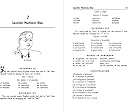
Madrigal's Magic Key to Spanish is a timeless, creatively illustrated language guide that uses a unique, confidence-building approach to teach Spanish quickly and effectively. Designed by renowned teacher Margarita Madrigal and featuring original Andy Warhol artwork, it eliminates rote memorization and helps learners form sentences from the first lesson. Perfect for millennials seeking efficient, engaging language mastery to boost travel, career, and cultural connection.


| Best Sellers Rank | #3,218 in Books ( See Top 100 in Books ) #4 in Reading Skills Reference (Books) #12 in Words, Language & Grammar Reference #14 in Language Study & Reference (Books) |
| Customer Reviews | 4.6 out of 5 stars 5,356 Reviews |
F**Y
Excellent lesson plan!
I am about 85% of the way through Madrigal's Magic Key and have to say that I am very impressed with Madrigal's approach. Her approach is different from the conventional lesson plans with which I have been familiar since language training in high school. One person posted the comment that it matters HOW one learns and perhaps Madrigal's approach isn't the right approach for everyone, but it is certainly the right approach for me. A number of years ago I tried to learn Spanish using, "Spanish Made Simple". Essentially, I got nowhere. This time around, using Madrigal, I'm making very rapid progress. Another person commented that the best thing about Madrigal's approach is that it engenders confidence. This is totally true. Her teaching approach is brilliant, really. She starts off by showing the student all the Spanish words that he already knows and quickly builds other basic language skills on that starting foundation. From there, she presents lessons in terms of basic "blocks" of concept areas in ascending order of difficulty. Interestingly, one of the first starting concepts is how to use past tense. After that she presents the next big "block" (most common) verb forms; the "ar", "er" and "ir" verb groups. I can't say enough good things about this approach. It serves to give the student a basic orientation to major concept areas very quickly starting with the easiest to understand concept areas first. This works very well for me. The usual language approach is to start with "useful phrases". This invariably turns out to be useless for me because providing me with details that I cannot assemble into anything bigger is just totally confusing. I need the opposite approach. Give me the "big picture", then show me how to break it down into smaller useable bits, and then I'm off and running. The details can be ground finer and finer as necessary. Another thing in Madrigal's text which makes perfect sense is that she saves discussion of familiar forms of address until the last lesson. I can remember being confused early on in my high school French class because of the "need" to learn the familiar (It also added unnecessary complexity to my German language studies). But think about this just one minute. One only needs to use the familiar form of address with family and close friends. If one lives in an environment where there are significant numbers of Spanish speaking family members and intimate friends with whom one needs to communicate, then how is it remotely possible that one doesn't already know how to speak Spanish!!! Obviously, for the non-native speaker, the familiar form of address can safely be left for the last lesson. In an earlier edition of this review I mentioned a couple of criticisms which, as I have progressed through my "Madrigal course work", have proven unfounded. Margarita's lesson plan is idiosyncratic and would benefit from an appendix with a little bit more detail to help the student to better navigate questions as they arise. I recommend the Mirriam-Webster Spanish/English dictionary as a basic study aid. Additionally, I have found very helpful the guide to conjugating the 254 most often used Spanish verbs, and 501 Spanish Verbs is another text worth considering. These books are very useful because the Madrigal Method approaches teaching the verb forms piecemeal and, depending upon the student, he or she may be better served if he can just forge ahead with some of the conjugations. I highly recommend Madrigal's Magic Key as the cornerstone of a beginning Spanish course with the understanding that at some point, one will need to add additional course materials.
C**2
When You REALLY need to learn Spanish....!!!
I have given away so many of these books - I always keep an extra copy on hand when someone tells me they are "trying" to learn Spanish. It is BY FAR the easiest, most efficient and most effective way to learn Spanish that I have ever used. I started using this book while in Mexico years ago and within a few weeks of daily practice and study people were astounded at my Spanish - really! The best thing about this book is how it teaches you how many Spanish words you already know - English words that can easily be converted into Spanish using simple language patterns. I have tried MULTIPLE books on language learning - I also speak Dutch, Italian and German - and I wish I could find a book like this for them. Neat factoid: This book was first published in the mid-50's and the drawings were done by Andy Warhol! It also shows you how it has beautifully stood the test of time - that it is still so popular and useful! I just gave away my last extra copy recently - and now need to buy more..!
C**Y
Great supplement
I use Duolingo for Spanish and this book is a really great supplement to that as it presents information in a more logical learning style. It starts with these lessons: Words ending in โorโ doctor are the same in Spanish in English with different accents emphasizing the trilled R. Words ending in โal,โ criminal same as with words ending in โor,โ with different accent. Same for words ending in โAbleโ impossible Words ending in โitโs,โ dentist become dentista. It helps you learn what is already in your recall and with that it covers a large swath of words you pretty much already know. I donโt think it can teach you to perfectly speak Spanish, but it can really fast track the pace with its clear understanding of grammar and vocabulary.
R**K
Great book for learning Spanish language and why things are as they are.
Okay, I will jump into this right away and say that she takes an unorthodox approach from the vast majority of Spanish learning texts (and she states this early on), but I use her book much more than the other 5-6 books I have on learning Spanish. I am somewhat of an old fart and do not believe that everyone can learn in the same way (and certainly not like we did as a child). Madrigal takes a different approach and to me it make sense when you consider what made me at least (and perhaps a lot of Spanish learners stumble so much when first trying to converse with others. I will state what her approach was and why I think she did so. 1. First she starts out with 2-3 chapters illustrating how familiar we are with hundreds (if not thousands) of Spanish words and how they can be constructed following a few simple techniques. This builds one's confidence that they literally already know or can easily guess at hundreds of words in Spanish. 2. Then she goes into the simple past tense first, a quite different approach from almost all other teaching guides who first jump into the present tense in chapter one. Why does she do this?? I think for several good reasons. First, we generally converse with others using two tenses, the past and the future. Secondly, the present tense conjugations are where the vast majority of conjugation irregularities occur with Spanish. I think students often get overwhelmed with these irregular conjugations in the present tense. Thirdly, at least in my case, it was the change in accents that caused me to stumble the most when trying to converse with others. One can concentrate on learning the verb infinitives and they are always accented on the final syllable. Our ear and mind get used to this pattern with all the verbs. But when we conjugate the verb in the present tense, the penultimate syllable gets the accent...and often the verb will sound different to our ears So in a sense, you have to train your tongue to say each verb in two different ways or patterns. The simple past tense, for the most part, uses the same accent patterns as the present tense and of course there are far far fewer conjugation irregularities in the past tenses, so the student can rely more on the verb infinitive to know how to say conjugate the verbs. The untrained tongue stumbles less. To me, this gives the average student of the Spanish language a boost in confidence and shortens the learning curve. Obviously, sooner or later, one will have to tackle the present tense with all its learning problems, but at least it is not so immediately overwhelming to the beginner. Finally, Madrigal is one of the few authors who explains why some irregular endings are the way they are, which was helpful for me in learning patterns of irregular verbs, etc. Also, it was important for me to see how she used many exercises to form many sentences using 3 groups of words. The Spanish Learning Institute first course software also uses this approach for forming sentences from groups of words and it worked for me in the same way. My only complaint about the book is that it is/was a little hard to figure out where it goes from topic to topic (chapter to chapter)...but I felt it was more akin to a teacher standing in front of a class and often going into a new topic or maybe just reviewing a topic from a couple of days ago. All in all, I would highly recommend this book.
D**.
The only thing I would do to improve this book
In the preface to this book, the author, Margarita Madrigal, promises that if you complete this book, you will then be able to go to a Spanish speaking country and understand them. I will now go that far and agree with the author because I believe that in order to speak and understand Spanish with confidence, you will need a learning-Spanish audio program to supplement this book. But as the author promises, I honestly believe that this book will help you to do the following: 1. Speak Spanish 2. Read Spanish 3. Write in Spanish 4. Think in Spanish There are so many things that I like about this book. For starters, the author of this book uses a very interesting method to help you quickly learn Spanish. What she does is teach the reader how to add hundreds and hundreds of Spanish words to his or her vocabulary by simply using the English words that you already know. For example, did you already know that the following words are both Spanish and English words: Actor Popular Animal Capital hotel Radio Conductor Probable Cable Ideal Flexible The only difference is the pronunciation is different in Spanish. But the words are spelled the same way and have the same meaning in both Spanish and English. In addition to showing the reader that he or she already knows many Spanish words because there are so many English words that are spelled the same and that have the same meaning, the author also shows how the reader can take many English words that he or she already knows and convert them into Spanish words just by making small changes in the words. For example, the author shows how we can convert many English words that end in โistโ into Spanish words by adding the letter โaโ to them: Pianist โ el pianista Violinist โ el violinista Dentist โ el dentista Oculist โ el oculista Capital โ el capitalista Communist โ el comunista Novelist โ el novelista Optimist โ el optimista I also found it beneficial that there is a helpful pronunciation key at the beginning of the book. Another thing that I really like about this book is that after every 9 or 10 lessons, there are a series of tests that help you test your progress and see how far you have come. Near the end of the book, there is also a section called โCommon Spanish Expressionsโ where youโll find five pages packed with helpful Spanish expressions, such as: Acabar de (plus infinitive) - to have just A pesar de โ in spite of Buena suerte โ good luck Claro โ of course Dar la mano โ to shake hands Echar la culpa โ to blame Esta vez โ this time Me alegro de verlo โ I am happy to see you No lo haga โ donโt do it No es justo โ it isnโt fair Otra vez โ again Poco a poco โ little by little Ya lo creo โ now I believe it At the very end of this book, there is a handy 35-page โVocabularyโ section that is organized like a dictionary. You will find Spanish words from โaโ (to, at) all the way to โzoologiaโ (zoology). Out of the 45 chapters covered in this book, my favorites were Chapter 41 and Chapter 42. In chapter 41, the author teaches The Present Subjunctive and breaks down how to express hope, fear, doubt and desire in Spanish. In chapter 42, the author teaches The Past Subjunctive and breaks down how to express past hopes, fears, doubts and desires in Spanish. She even explains how to use the conditional and past subjunctive together. In other words, you will learn how to express the following in Spanish: I would write a letter if I had the time. She would buy an airplane if it were possible. They would watch the movie if were interesting. In chapter 42, Madrigal also covers the Past Perfect Subjunctive which enable you to express the following in Spanish: I would have known the lesson if I had studied. We would have spoken Spanish if we had studied. If they had had time, they would have traveled to Spain. The reason why Chapters 41 and 42 are my favorite chapters is because these are the chapters that teach the Spanish subjunctive. I, like many native English speakers, find that the Spanish subjunctive is one of the most difficult areas of Spanish. In Chapters 41 and 42, Madrigal does a fantastic job breaking-down the complex topic of the Spanish subjunctive. The only thing that I did not like about this book is that the vocabulary does not cover modern technology. The first edition of this book was written in 1951. This book seriously needs to be updated. You will learn how to say the Spanish words for telephone, newspaper and telegram. But donโt expect to learn how to say cellphone, website or email in Spanish. Although this book does not teach you any Spanish words related to modern technology, I still recommend that buy this book because it will allow you to quickly learn hundreds of Spanish words quite easily โ just by using the English words that you already know. By the way, this same author, Margarita Madrigal, has another helpful book that you will find available here at Amazon: In closing, Iโll leave you with a list of my current favorite learning-Spanish resources. (My list of favorites changes from time to time so you may want to check my list periodically. Updated 07-13-2023): 1. 501 Spanish Verbs If you think you can accomplish fluency in Spanish as an adult without mastering conjugating Spanish verbs, you are only fooling yourself. This book is an absolute essential resource for learning how to conjugate Spanish verbs. It will show you how to conjugate every Spanish verb tense imaginable. This is my NUMERO UNO resource for learning Spanish. 2. How To Speak Spanish Like a MF This is Patrick Jackson's newest learning-Spanish program. Despite the unusual name of this audiobook, it's the best program I have found for learning how to do both, speak and comprehend Spanish just like a native. From my experience, it's much better than any free or paid mobile app for learning Spanish. You will not hear any of that old, obsolete Spanish that sounds like something from 19th Century Spain. Instead, you'll learn to not only understand but actually partake in Spanish conversations discussing technology, veganism, ride-sharing apps, life as a digital nomad, using social media apps, etc. There are also two bonus lessons covering what many would consider "woke" Spanish โ which involve a woman and two gay content creators who work on an adults-only online platform. Another plus about this program is that all the voice actors are native Spanish speakers to make sure you develop a true Latin American Spanish accent and proper pronunciation. Make sure you download the free Audible mobile app to get the most out of this audio program. 3. Practice Makes Perfect: Spanish Verb Tenses This is another resource that you truly need if you are serious about mastering conjugating Spanish verbs. Conjugating Spanish verbs is by far the most challenging area of learning-Spanish for native English speakers. After studying with "Practice Makes Perfect: Spanish Verb Tenses" you will find that you can confidently conjugate Spanish verbs in any verb tense, from easier tenses such as the present tense ("I run") and the preterit ("I ran) all the way to the most challenging Spanish tenses, such as the pluperfect subjunctive - which is known in Spanish as "pluscuamperfecto de subjuntivo" (I would have run). 4. Learning Spanish Like Crazy Level 1 - NEW & Improved Version or Learning Spanish Like Crazy Level 1 - ORIGINAL Version At one time, these two were my favorite learning-Spanish audio programs. There's a "NEW & Improved Version" and an "Original Version". Although I found the "NEW" version a bit more interactive and engaging, I have a slight preference for the "Original" version because the narrator's voice was more interesting and entertaining. Both the narrators are native Spanish speakers as well as the voice actors - which really helped me to develop an authentic Latin American accent. But what appeals to me most is that there is a major emphasis on everyday, conversational Spanish unlike the Spanish taught in most audio programs which teach more academic or formal Spanish. Besides the two beginner programs (NEW & Improved Version vs. Original Version), there is also an Intermediate version and an Advanced version available. Regardless of which program you invest in, youโll need to download the free Audible mobile app to get the most out of it. 5. Practice Makes Perfect: Spanish Pronouns and Prepositions This little-known book is the go-to guide for mastering Spanish Pronouns and Prepositions. Most Spanish-language learners have no idea that mastery of Spanish pronouns and prepositions is an area of Spanish grammar that is essential for effective communication with Spanish-speakers. Another major advantage of this book is that it is accompanied by flashcards and audio recordings (available online and via app) which will further help master the Spanish language.
A**E
One of the Best Spanish Learning Books I've Used
I've been working on improving my Spanish, and this book has been very helpful. The explanations are clear, the lessons build on each other naturally, and the approach makes it easier to remember vocabulary and grammar. It keeps me motivated to continue learning because I can actually see my progress. I'm very happy with this purchase and would recommend it to anyone serious about learning Spanish.
A**.
Best beginner's book! Helped me a lot
I'm very happy I came across this book. It is probably the best of all 20-something Spanish learning books I own. It is FULL of information and exercises that will help anyone who wants to learn learn quickly and quite easily. Like other people have said, I am surprised I've retained so much information. Because of this book, which goes through a lot of the verb tenses and a lot of the common verbs as well as vocabulary (from the beginning of the book, you find out you actually already know hundreds of words in spanish, because they're the same in english: words with certain endings), I'm able to express myself and have conversations with others without making errors because everything is explained so well and she shows the english equivalents, and the little reminder cards the author tells us to make to glance at when we have a moment as well as the variety of exercises and tests help me a lot to remember what I've learned. I would recommend this to anyone who wants to learn the language. It will help get you off to a quick, solid start. Even though Magic Key is just a book, the author has a pronunciation key that is very useful. Ex) The ll (double l) is pronounced Y as in "yes". Because of that and the reminders throughout the book on where to stress syllables for different words, I'm much more confident when I speak than I would otherwise be. If you are interested in learning the language and you know either nothing or are just a beginner with some knowledge, I highly recommend that you add this book to your learning library! After going through this book, I went through the "Practice Makes Perfect" Verb Tenses and Pronouns and Preposition books which really helped me with more in depth grammar. I think those books are best to learn after a book like Magic Key though because I think Magic Key will help *prepare* you for more in depth grammar books.
R**E
Great Foundation
This book does really well with strengthening the foundational portion of learning Spanish. I like that you are in control of how you use it. I took Spanish courses in middle school and high school but none of that experience resulted in me being confidently conversational. For me, this book is super helpful with reinforcing concepts that I'm struggling with. It's helping me understand when and why certain sentence structures / words/ conjugations are used. Memorizing the tips and tricks has been more efficient than trying to memorize a lot of words. I use this as a supplemental resource in conjunction with following content creators who teach Spanish, joining language learning communities online, Quizlet, and engaging with Spanish media. Also, most of the popular streaming services allow you to watch shows and movies in Spanish with English subtitles, and vice versa. In addition to improving my conversational skills, the concepts in this book have also improved my listening abilities. I definitely recommend this book for learners for beginner and intermediate level learners. Even as you progress in your language journey, it's nice to have handy to use as a quick reference.
A**A
NICE TO LEARN SPANISH
Very nice
C**ร
Excellent book!
Excellent book! I would recommend it to anyone. I am very impressed by everything I have learned and HOW MUCH I have learned with the book. The book is very easy to understand and pleasant to go through. It's great if you are just starting to learn or want to improve your Spanish and review some things. Even though my mother tongue is French and there is a significant part at the beginning of the book especially, where there is an emphasis on the similarity between English and Spanish, I could easily find what that similarity would be in French. The progression from lesson to lesson is perfect. The sentence making exercice and translation from English to Spanish together are really good practices. They help really well with knowing where the different words in the sentence go, if example a specific proposition is needed that you wouldn't know. As you go through the book you will remember pretty well what you have learned.
C**E
Excellent!
Great book! Super easy and user friendly way to learn Spanish. Starts with showing you what you already know, but didnโt think you did. Highly recommend for beginners
F**N
Perfect to learn to understand Spanish
The book explains the Spanish grammar from the base into very detailed.
A**E
Really good!
Easy to follow teaching guide to learning spanish. Especially if you overthink/overcomplicate things often. This book just really helps to simplify things so that its easier to pick up and learn the spanish language faster. Very highly recommend!
Trustpilot
1 week ago
3 weeks ago