We remain fully operational. Our teams are working around the clock to ensure your deliveries continue safely.

DOWNLOAD THE APP


Copyright © 2025 Desertcart Holdings Limited
DOWNLOAD THE APP



Buy anything from 5,000+ international stores. One checkout price. No surprise fees. Join 2M+ shoppers on Desertcart.
Desertcart purchases this item on your behalf and handles shipping, customs, and support to Brazil.
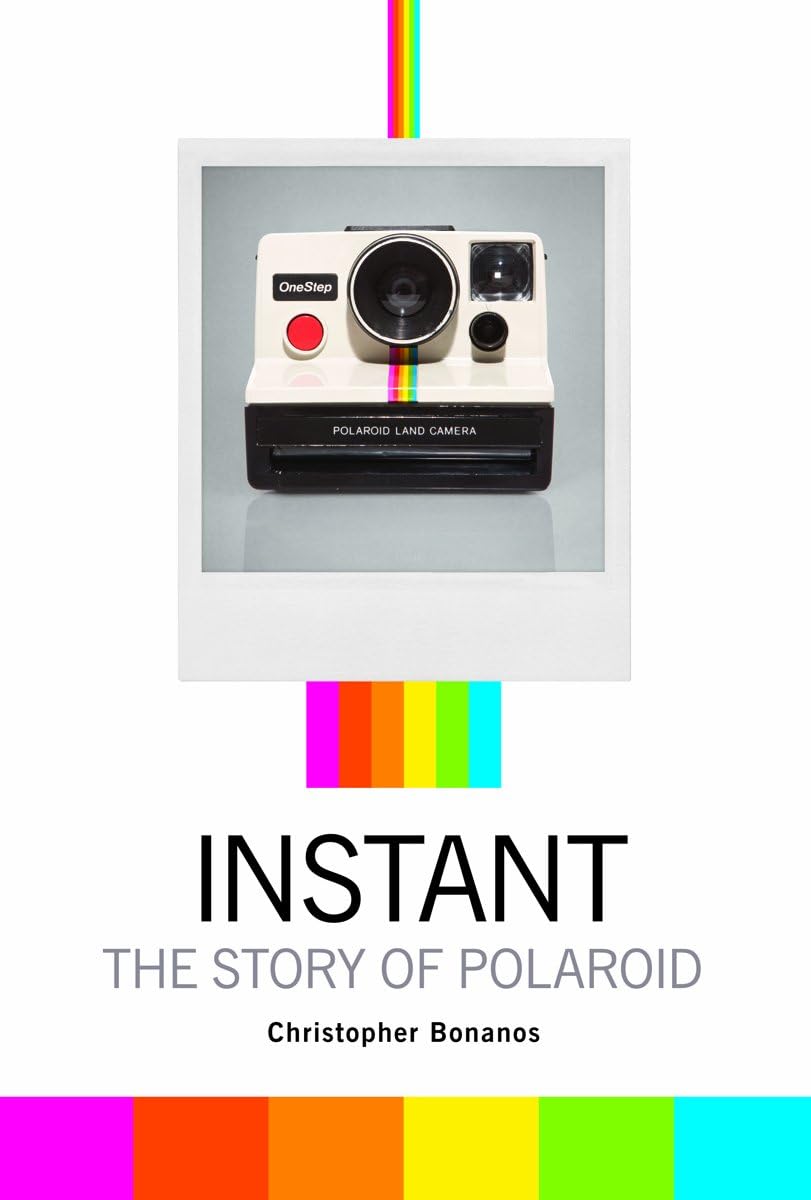
Instant: The Story of Polaroid [Bonanos, Christopher] on desertcart.com. *FREE* shipping on qualifying offers. Instant: The Story of Polaroid Review: Very well done, readable, good pictures, just the right level of detail. - Very nice, couldn't put it down. Well-written, well-informed, just the right level of detail, insightful. If you're interested in Land and Polaroid you'll enjoy this book. I remember a lot of the products and events mentioned and it brought them to life for me. It connected a lot of dots... for example, I'd wondered about the Fujifilm Instax cameras showing up in stores; basically, Polaroid technology had been licensed to Fuji under a business deal, and when Polaroid was destroyed by corporate raiders, Fujifilm kept on with it. The pictures are very well done. For reasons I don't understand, Kindle books often seem to have low-resolution pictures, or pictures with technical problems. These don't. And, almost magically, the color pictures actually seem to capture the _look_ of Polaroid color. Review: Overview of Polaroid's Brilliance, Its Rise, and Its Precipitous Fall. - The Polaroid name and patents are now owned by a Dutch company that used to be called The Impossible Project, but Polaroid disappeared in 2008 in the minds of most consumers when it stopped making integral film for the instant cameras that had been ubiquitous since the 1970s. That was after the company's first bankruptcy and before its second. In "Instant: The Story of Polaroid", Christopher Bonanos takes the reader through Polaroid's beginnings and its string of successes in consumer instant cameras and film at the direction of the company's genius founder Edwin Land, then the poor decisions, changes in ownership, and criminal exploitation that led to its gut-wrenching downfall. There are more than seventy color photos and illustrations scattered throughout the book, some the work of Polaroid artists and some behind-the-scenes photos or advertisements. Bonanos begins with Polaroid's birth in 1932 as a partnership between George W. Wainwright III and Edwin Land, who had patented the world's first polarizer in 1929. The company was a manufacturer and supplier of sheet polarizers, and Edwin Land's values were in evidence everywhere –the product's presentation, company communication, every word chosen for its annual report. In 1937, the company was reincorporated as Polaroid Corporation and parted ways with Wheelwright. The book's second chapter talks about Land's unorthodox hiring practices and its success in 3D glasses and sunglasses, followed by a boon from military contracts during World War II. The first Polaroid camera, an 8x10 view camera, made its debut in 1947. In 1948, the Model 95, weighing 4 pounds, appeared on the shelves of a Boston department store and sold out in one day. It used a peel-apart orthochromatic sepia film and was Polaroid's first big success with consumers. A black-and-white Type 41 film was introduced in 1950. It needed a print-coater to prevent the image from fading, as did every Polaroid film until 1970. That's why people "shake it like a Polaroid picture." People waved the photos around to get the print-coater to dry faster. Chapter 4 takes us through Polaroid's hey day in the 1950s and 1960, which saw the company produce a string of innovative consumer cameras and films. There is discussion of research and development, advertising, and the design team that made Polaroid cameras desirable and memorable. Chapter 5 covers the creation of Polaroid's first integral film in 1972: SX-70, know for its ability to manipulate the image until it was discontinued in the 2000s, and the fantastic Land Camera that would use that film. Polaroid's first failure is discussed in Chapter 6. That was Polavision in 1977, an instant movie film. The problem was that it was behind the times. Video tape had recently been invented and would soon take the market for home movies. Chapter 7 covers the decades-long legal battle with Kodak over its instant film that allegedly infringed twelve of Polaroid's patents. On the other hand, Polaroid struck a deal with Fuji that allowed that company to produce instant film for the Japanese market. The Fall: The changes in management, in product philosophy, discontinuation of a lot of R&D, catastrophic decisions to abandon digital technologies, especially printing, and the mounting debt from resisting a hostile takeover in the 1980s and 1990s are cataloged in Chapter 8. Polaroid had a string of presidents who made bad decisions and lacked an overarching vision for the company. The downward spiral continues in Chapter 9 with the controversial sale of the company to Bank One, who might have fixed the price. In the end, Polaroid was the victim of fraud for which Tom Petters went to prison, an ignominious end for perhaps the most innovative company ever. There are other books about Edwin Land and Polaroid, but "Instant" is a concise, readable, and informative overview.
| Best Sellers Rank | #1,416,017 in Books ( See Top 100 in Books ) #385 in Popular Culture Antiques & Collectibles (Books) #1,450 in Photography History #2,664 in Photograpy Equipment & Techniques |
| Customer Reviews | 4.4 4.4 out of 5 stars (242) |
| Dimensions | 6.5 x 1 x 9.5 inches |
| Edition | Illustrated |
| ISBN-10 | 1616890851 |
| ISBN-13 | 978-1616890858 |
| Item Weight | 1.35 pounds |
| Language | English |
| Print length | 192 pages |
| Publication date | September 26, 2012 |
| Publisher | Princeton Architectural Press |
D**H
Very well done, readable, good pictures, just the right level of detail.
Very nice, couldn't put it down. Well-written, well-informed, just the right level of detail, insightful. If you're interested in Land and Polaroid you'll enjoy this book. I remember a lot of the products and events mentioned and it brought them to life for me. It connected a lot of dots... for example, I'd wondered about the Fujifilm Instax cameras showing up in stores; basically, Polaroid technology had been licensed to Fuji under a business deal, and when Polaroid was destroyed by corporate raiders, Fujifilm kept on with it. The pictures are very well done. For reasons I don't understand, Kindle books often seem to have low-resolution pictures, or pictures with technical problems. These don't. And, almost magically, the color pictures actually seem to capture the _look_ of Polaroid color.
M**S
Overview of Polaroid's Brilliance, Its Rise, and Its Precipitous Fall.
The Polaroid name and patents are now owned by a Dutch company that used to be called The Impossible Project, but Polaroid disappeared in 2008 in the minds of most consumers when it stopped making integral film for the instant cameras that had been ubiquitous since the 1970s. That was after the company's first bankruptcy and before its second. In "Instant: The Story of Polaroid", Christopher Bonanos takes the reader through Polaroid's beginnings and its string of successes in consumer instant cameras and film at the direction of the company's genius founder Edwin Land, then the poor decisions, changes in ownership, and criminal exploitation that led to its gut-wrenching downfall. There are more than seventy color photos and illustrations scattered throughout the book, some the work of Polaroid artists and some behind-the-scenes photos or advertisements. Bonanos begins with Polaroid's birth in 1932 as a partnership between George W. Wainwright III and Edwin Land, who had patented the world's first polarizer in 1929. The company was a manufacturer and supplier of sheet polarizers, and Edwin Land's values were in evidence everywhere –the product's presentation, company communication, every word chosen for its annual report. In 1937, the company was reincorporated as Polaroid Corporation and parted ways with Wheelwright. The book's second chapter talks about Land's unorthodox hiring practices and its success in 3D glasses and sunglasses, followed by a boon from military contracts during World War II. The first Polaroid camera, an 8x10 view camera, made its debut in 1947. In 1948, the Model 95, weighing 4 pounds, appeared on the shelves of a Boston department store and sold out in one day. It used a peel-apart orthochromatic sepia film and was Polaroid's first big success with consumers. A black-and-white Type 41 film was introduced in 1950. It needed a print-coater to prevent the image from fading, as did every Polaroid film until 1970. That's why people "shake it like a Polaroid picture." People waved the photos around to get the print-coater to dry faster. Chapter 4 takes us through Polaroid's hey day in the 1950s and 1960, which saw the company produce a string of innovative consumer cameras and films. There is discussion of research and development, advertising, and the design team that made Polaroid cameras desirable and memorable. Chapter 5 covers the creation of Polaroid's first integral film in 1972: SX-70, know for its ability to manipulate the image until it was discontinued in the 2000s, and the fantastic Land Camera that would use that film. Polaroid's first failure is discussed in Chapter 6. That was Polavision in 1977, an instant movie film. The problem was that it was behind the times. Video tape had recently been invented and would soon take the market for home movies. Chapter 7 covers the decades-long legal battle with Kodak over its instant film that allegedly infringed twelve of Polaroid's patents. On the other hand, Polaroid struck a deal with Fuji that allowed that company to produce instant film for the Japanese market. The Fall: The changes in management, in product philosophy, discontinuation of a lot of R&D, catastrophic decisions to abandon digital technologies, especially printing, and the mounting debt from resisting a hostile takeover in the 1980s and 1990s are cataloged in Chapter 8. Polaroid had a string of presidents who made bad decisions and lacked an overarching vision for the company. The downward spiral continues in Chapter 9 with the controversial sale of the company to Bank One, who might have fixed the price. In the end, Polaroid was the victim of fraud for which Tom Petters went to prison, an ignominious end for perhaps the most innovative company ever. There are other books about Edwin Land and Polaroid, but "Instant" is a concise, readable, and informative overview.
M**E
An accurate and well written history of Polaroid
My father was an engineer in the model shops at Polaroid--he started in 1943 and retired in 1980--and worked often with Dr. Land. Much of the story in this book was dinner-table conversation at our house. Christopher Bonanos gets the story of those years right, particularly the personality traits of Edwin Land, and tells it in a very readable way. In the years after 1980, I paid less attention to the company (except when the corporate takeover goons took away my mother's pension and health benefits) and the book brought me up to date nicely. I think the recent parts of the story are missing from the other books about Polaroid. Recommended.
A**N
Fascinating
This is a history that reads like a novel. From the larger than life nature of the main character to the grimy super villain, I couldn't put it down. The technological nature of some of the content contrasts nicely with the fairy tale nature of Land's character and the deep business lessons to be learned. It was at once accessible and quite educational. Highly recommended from this design, tech, and history nerd.
B**R
A very fast read...wishing for more depth on Edwin Land
I read "Instant" in an instant...at least it felt that way. The book is a very enjoyable introduction and overview of the history of Polaroid and Edwin Land. However, after recently reading such excellent historical books like "The Idea Factory/Bell Labs" by Jon Gertner or "Steve Jobs" by Walter Isaacson, "Instant" feels like it has the depth of an extended magazine article. I was particularly hoping for far more depth regarding Edwin Land himself. And it seems like that information is readily available, if the author had chosen to include it: The book makes several repeated references to older, out-of-print biographical books about Land, which unfortunately makes me feel like I should have just read those, instead.
J**Z
Excelente historia de la marca Polaroid. Descripción de lo que pudo hacer todo un genio con una sola ganial idea y el espíritu innovador por bandera.
M**E
Well written and full of interesting information.
M**A
Libro molto interessante, perfetto regalo per appassionati di fotografia.
D**N
A fascinating read with lovely photos.
J**R
During my life time a new and useful product was developed and was so useful to many people
Trustpilot
2 weeks ago
1 month ago