We remain fully operational. Our teams are working around the clock to ensure your deliveries continue safely.

DOWNLOAD THE APP


Copyright © 2025 Desertcart Holdings Limited
DOWNLOAD THE APP
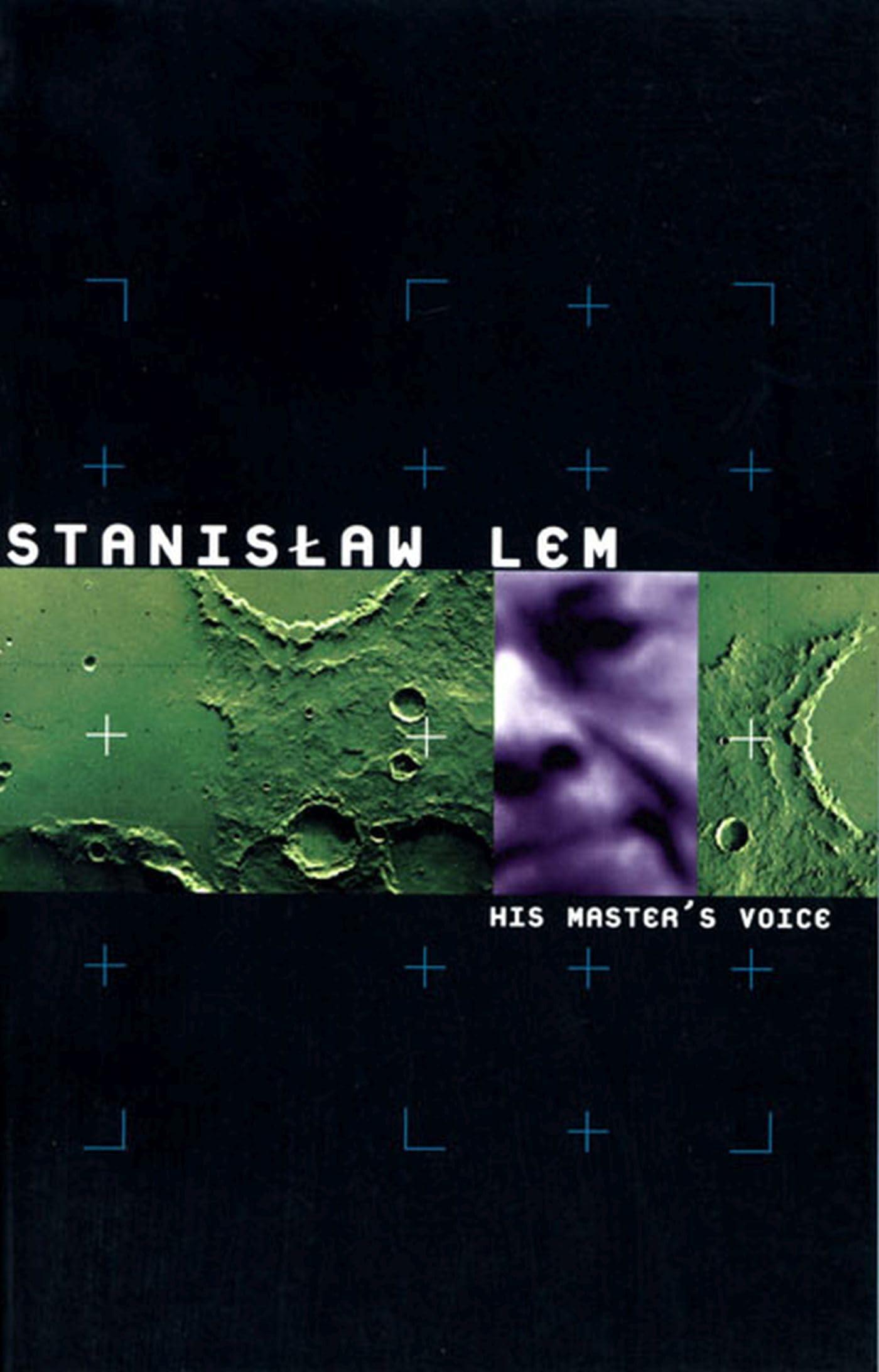
His Master's Voice [Stanislaw Lem, Michael Kandel] on desertcart.com. *FREE* shipping on qualifying offers. His Master's Voice Review: Superb on every level - This is science fiction of the highest order: a meditation on man’s place in the cosmos, an examination of the limits of our knowledge, and a scathing condemnation of how politics influences the practice of science. Originally published in 1967, this title, along with a number of Lem’s other works, was reissued in 2020 by MIT press. Like Solaris, His Master’s Voice aims far above run-of-the-mill sci-fi. You can see it in the depth and breadth of the author’s reflections and in the quality of his prose. Lem touches on on the birth and death of the Cosmos; the structure and limits of language, culture, and mathematics; how the fundamental laws of physics and thermodynamics manifest in both biology and culture, and much more. It’s one of those books you can read a dozen times, coming away with a different reading each time. As in Solaris, Lem packs more thought into a single volume than many writers cover in their entire ouvre. Put this one on your list. You’ll be thinking about it long after you finish reading. Review: Thought Provoking - The book unfolds to open the mind to many possibilities of first contact. It asks some sobering questions about whether we are mature enough to understand the voice of a much more advanced sender. I loved this thought - you can communicate with a 2 year old but will it understand what an adult has to say about science?
| Best Sellers Rank | #3,554,460 in Books ( See Top 100 in Books ) #4,141 in Classic American Literature #6,862 in Science Fiction (Books) #8,110 in Classic Literature & Fiction |
| Customer Reviews | 4.1 out of 5 stars 420 Reviews |
A**D
Superb on every level
This is science fiction of the highest order: a meditation on man’s place in the cosmos, an examination of the limits of our knowledge, and a scathing condemnation of how politics influences the practice of science. Originally published in 1967, this title, along with a number of Lem’s other works, was reissued in 2020 by MIT press. Like Solaris, His Master’s Voice aims far above run-of-the-mill sci-fi. You can see it in the depth and breadth of the author’s reflections and in the quality of his prose. Lem touches on on the birth and death of the Cosmos; the structure and limits of language, culture, and mathematics; how the fundamental laws of physics and thermodynamics manifest in both biology and culture, and much more. It’s one of those books you can read a dozen times, coming away with a different reading each time. As in Solaris, Lem packs more thought into a single volume than many writers cover in their entire ouvre. Put this one on your list. You’ll be thinking about it long after you finish reading.
K**.
Thought Provoking
The book unfolds to open the mind to many possibilities of first contact. It asks some sobering questions about whether we are mature enough to understand the voice of a much more advanced sender. I loved this thought - you can communicate with a 2 year old but will it understand what an adult has to say about science?
L**N
One of the most sophisticated books on scientific practice that i know of in great narrative form
I read this book first time 25 + yrs ago. It still is one of the most intelligent and entertaining book of it's genre which I actually do not view so much to be sci-fi but "sociology of science". It is author at his best and together with the "Invincible" consider this to be jos best work over the better known ones like Solaris. I think it is tremendously enjoyed anybody working in academia or research in general, but should be fun and educational also to people that want to understand what scientific practice is about and scientific knowledge generation in general. And from less philosophical perspective it is just an extremely well written story ...
A**D
difficult story line
I'm a big fan of Lem. I'm currently reading "Invincible" and enjoying it very much. HMV was a difficult read despite the fact that it was written well and had done very interesting concepts. It was written in first person and that can get tedious. There isn't really a lot of action as it's more of a memoir. To his credit, Lem, in the voice of the protagonist, explains this to the reader. Would recommend for hard core fans.
S**H
Lem's Masterpiece
I am inclined to think of Lem as a Romanticist who writes in science fiction. His Master's Voice (much like Lem's masterpiece, Solaris) explores events and phenomena which elude or transcend rational understanding. The novel revolves around the discovery of an inexplicable neutrino emission. Examination leads scientists to believe the emission a kind of "letter" from other planetary beings. Despite their best efforts, and numerous complex theories and experiments (of which Lem has imagined at least two dozen), nothing about the code can be comprehended by the methodologies the scientists have available. Like the rambling Ishmael of Melville, or the detached Miles Coverdale of Hawthorne, the narrator's thoughts wax philosophical in long arcs of meditation on the nature of humanity and existence. The narrator, Dr. Hogarth, has been recognized in the field as an iconoclast of scientific principles; it is his ability to immediately draw out hasty assumptions of theoretical and mathematical proofs that is both his burden and virtue. The character is left wandering through a philosophical wasteland, a kind of temperate nihilism, though his own biases are soon unearthed by his colleagues. Ultimately, His Master's Voice is about the pretension of ultimate knowledge. For a work that insists on science, it is highly critical of the biases of the methodology; and yet, there are numerous diatribes against individuals who rest solely upon the imagination, as well. The hesitancy of the narrator (and I would extend this to Lem) to propose a positive argument with any hint of certainty is the epistemological crux of the novel. Even the narrator tires of the futility and impossibility of comprehending the signal, a signal that may very well originate from non-human organisms, in a language which does not presuppose the binaries at the base of our language (if such binaries even exist), from a civilization that has so surpassed our own that their reality is beyond our understanding. Or--particularly mystifying--the signal may be entirely natural in origin, a possibility which challenges our ability to distinguish between nature and artifice. In the final pages, the author tries to force an order onto the chaos of the project, and yet he cannot bring himself to any more evidence for his beliefs than intuition--a difficulty that he both rejects and embraces. There is a kind of Romantic postmodernism at play in Lem, and this novel is (in my opinion) a better expression of it than even Solaris.
L**S
Tough going but worth it.
This novel is more of a philosophical treatise than anything else, and it does require concentration and active thinking on the reader's part. Lovers of space opera, or stories about monsters will be disappointed. There is no dialogue, no action sequences, no special effects in this book. However it is probably the most realistic depiction of how scientists would try to decipher a first contact message ever written. It is probably more realistic than the (rightly) highly praised movie The Arrival. What is most valuable to me in this book is how it reveals the mind set and attitudes of scientists as they attempt to solve a puzzle not knowing how many pieces there are, or if its even a puzzle. Views on government and military involvement in scientific endeavors will anger and frustrate. The ending will likely disappoint most readers. But read as a philosophy book gussied up in sci fi trappings, its a rich and rewarding read.
K**K
Not sci-fi, but SCIENCE fiction
I suspect some of the negative reviews are from people who were expecting sci-fi, or, to steal a line from a Woody Allen movie, they liked Lem's "earlier, funnier ones". Lem certainly wrote a range of books, from the Kafkaesque (Memoirs Found in a Bathtub), to the grim, to the philosophical, to mystery (Chain of Chance). I thought his autobiography very unusual, in that it focused not on his adult interpretation of his childhood, but his memories of how he saw it as a child. Thus the early part focuses on food and sensations, etc. Quite unusual. But now to His Master's Voice. I believe people will be reading this book in 200 years, long after most sci-fi has faded from print, the way most of us have not read the various fads of fiction of the Victorian era. Time winnows the seed from the chaff. HMV has important things to say, and to my scientific mind Lem says it in a beautiful and moving and wholly believable way. When, as the project gets started, Lem ends a chapter with the line: This is the story of an ant, I literally got goose bumps, for he has so perfectly described the very best of the human brain, man's semi-coordinated attack on puzzles and problems, and yet its weaknesses and limitations, for as effective as a hoard of ants are, they are also a bit chaotic; and that chaos is to be embraced, for perfect human union can lead to both great AND terrible things. Mortality and chance are important, necessary, for they periodically shuffle the deck. I could go on for pages on what this novel stimulated me to ponder. I read it first at age 22, during the height of public feminism, and it did take me a bit of time to accept that Lem does not seem to attribute women with any ability or interest in science, but once over the oddity of an all male world devoid of all sexual tension, the book feels fully rounded (imagine the statue of David with the genitalia airbrushed out. I'm not talking about "sex scenes", I'm talking about the absolute divorce of men from women, children, parents, FAMILY.) Decades later, having long forgot the details of who did what, the book still reads as very fresh to me.
K**Y
Brilliant but Boring
In reading His Master's Voice at times the reader should be staggered by the powerful intellect of the author. Lem's understanding of psychology, and philosophy are greater than his considerable scientific knowledge. As an unorthodox textbook on those first two subjects I would recommend this book. As a Sci-Fi novel, however, I think it falls flat. There just isn't enough entertainment value in His Master's Voice to make it worth your while. I regret saying this because the laugh, ultimately, is on me. It seems obvious throughout the book that one of it's main purposes is to satirize "Western" Sci-Fi as mindless escapism. Lem was often critical of popular Sci-Fi authors and their readers for not using the genre to create stories that ask deeper questions and created a more meaningful culture around them. By declaring this book, "not entertaining enough" I'm only proving him right. Sorry Lem.
Trustpilot
2 months ago
3 weeks ago