






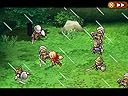

Radiant Historia
Product ID: 1282109
⏳Time-travel mechanics
🎯3x3 tactical battle grid
⚔️Turn-based combat with combo attacks
Buy anything from 5,000+ international stores. One checkout price. No surprise fees. Join 2M+ shoppers on Desertcart.
Desertcart purchases this item on your behalf and handles shipping, customs, and support to Brazil.
⏳ Rewrite history, command the battlefield, and never play the same game twice!
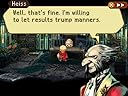
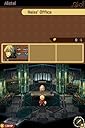
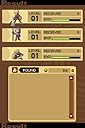
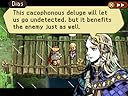
Radiant Historia is a critically acclaimed single-player turn-based RPG for Nintendo DS that blends classic 16-bit style with innovative time-travel gameplay. Featuring a unique 3x3 tactical grid combat system, players manipulate enemy and ally positions to execute powerful combos. The White Chronicle lets you jump between timelines, making choices that drastically alter story outcomes and unlock multiple endings. With hand-drawn visuals, a compelling steampunk narrative, and deep character progression, this game offers over 40 hours of strategic adventure and replayability.
| ASIN | B004CVWETI |
| Best Sellers Rank | #37,936 in Video Games ( See Top 100 in Video Games ) #578 in Nintendo DS Games |
| Compatible Video Game Console Models | Nintendo DS |
| Computer Platform | Nintendo DS |
| Customer Reviews | 4.2 4.2 out of 5 stars (602) |
| Date First Available | November 22, 2010 |
| Department | Children/Teenagers |
| Genre | role_playing_games |
| Global Trade Identification Number | 00730865400423 |
| Is Discontinued By Manufacturer | Yes |
| Item Weight | 0.32 ounces |
| Item model number | RH-40042-3 |
| Language | English |
| Manufacturer | Atlus USA |
| Number of Players | 1 |
| Product Dimensions | 5.1 x 5.4 x 0.9 inches; 0.32 ounces |
| Publication Date | February 22, 2011 |
| Rated | Everyone 10+ |
| Release date | February 22, 2011 |
| Type of item | Video Game |
| UPC | 783719715471 730865400423 |
M**A
Taking RPGs to the next level on handhelds
Radiant Historia is by far one of the best JRPGs I have played on Nintendo DS. Before I get into the gory details, because it may not be for everyone, I want to mention that this review will contain no major character or plot spoilers, but I will spoil game mechanics. Why are you reading the reviews in the first place if you can't stand any spoilers? ;) Radiant Historia is set in a steam punk-esque world between warring nations. You are the protagonist, Stocke, a "secret agent" of sorts for one of the nations. The game focuses around the political and social intrigue between these two nations and several others. As you investigate some major and minor problems you do standard JRPG stuff like fighting foes, levelling up, gaining and buying equipment and making decisions of whom to include in your fighting party of three. Gameplay This will be a long section because RH does a lot of things differently from typical JRPGs and this is what really makes this game unique. Radiant Historia is roughly like a cross between a time travel JRPG like Chrono Trigger, a Choose Your Own Adventure book and a tactical RPG like Final Fantasy Tactics or Tactics Ogre. Very early on, Stocke gets the ability to travel between two timelines: a "Standard" history and an "Alternate" history. What happens in one timeline effects the other. Its best to suspend your disbelief about this sort of thing if you're going to enjoy the game. Although the game does a pretty good job of smoothing over logical inconsistencies in this method, you can always be successful with "go do something you missed" in the other timeline when you got stuck. The game forces you to jump timelines to obtain items needed to solve problems or change someone's attitude or life. You can't jump to any precise point. You are limited to "nodes" that are major events for the main character. All of the available nodes are nicely laid out in a timeline map for you that also contains pertinent information about your status on different quests. At critical junctures in the story, the main character must choose between two alternatives to progress the story. There is no penalty for a "wrong" choice as the game immediately gives you the chance to jump back in history to correct your mistake without a game restart. Completists will enjoy finding all of the "bad" endings, of which there are many. I found many of these choices to be logical yet requiring some depth of thought. You really need to consider all the character's motivations to get the story-progressing outcome right away. While some crave finding all the bad endings, I challenged myself to avoid as many bad endings as possible and was quite proud that I got through with only a few out of likely dozens of possible bad endings. The key to success in this game is following the mantra of: "if you get stuck, go to the other timeline." There was only one place in the game "near the beginning" when I wasn't sure what to do and its right in the beginning when you have to do your first transfer between timelines. Many people find themselves asking "why is doing this going to change something in the other timeline? After this first one it makes more sense what you have to do to accomplish tasks (the game makes it very clear too) so my initial frustration at this first one was quickly replaced by an understanding of how the game "works". Combat in the game is on a 9X9 tactical grid and the object is not just your standard JRPG "use your skills to kill each individual enemy as quickly as possible." The grid adds the interesting tactical element of being able to "push" and "pull" your enemies into different spaces. The front line allows you to do more damage, but you take more damage and the back line allows you to avoid damage while you do less. The middle is, well, the middle ground. Most characters have the ability to manipulate enemies on the grid in some way, with Stocke being the best at it. By pushing and pulling enemies around, you can "stack" enemies on a single square of the grid, resulting in any attack doing damage and affecting all enemies on that square. Rarely are battles the same in beginning setup and enemies change frequently. Three additional mechanics make battles fresh. Yes, we're still going. Every battle is governed by a turn order that you can manipulate. If you want to have your three characters go nine times in a row, you can switch with enemies and allow them to go before you to make it happen. There is a down side, of course. When you switch, your character becomes slightly more vulnerable to attack until they act. The purpose of switching turn order is to take advantage of the multiplier system. By alternating magic and physical skills, your characters can chain together a long series of attacks to build the multiplier, increasing the damage done to enemies when you have a large multiplier. Before battles begin, you can press the Y button to swing Stocke's sword at enemy, potentially "stunning" it. If you enter battle while an enemy is "stunned" you get a "surprise" round with three or four total turns to take before your enemy gets to act. I should probably also mention that battles are not random "sprung" encounters. You can choose to enter combat. Many are annoyed by traditional "random" encounter JRPGS and this is not one of them. Characters Extra characters (six of them) enter your party as the story progresses and leave as the story requires them to do so. Each character has a defined personality and there is character development and growth of several of the characters. They are all likeable for different reasons and I personally found myself growing to like all of them. Stocke is particularly likeable as the "reluctant" hero archetype. He is much grittier than a lot of JRPG protagonists and he is much more intelligent than almost all of them. He doesn't say dumb things and this in game thoughts are logical. Skills Combat systems are driven by skill sets and the skill sets in this game are well thought out. Every character gets some sort of "grid manipulation" skill and several characters specialize in them. You also have characters specializing in magic and some in other nuances. You can build some characters in multiple different ways although some characters clearly have strengths that you will want to cater towards. Every character in the game is useful in some way and I was surprised how much utility that I could get out of characters that seemed like they would be ineffective on the surface. You really just need to know how to play their role. Some of the best characters are not damage dealers. Characters gain most of their skills automatically through levelling although each character can also learn four additional skills through side quests. Many (but not all) of these "extra" skills are useful and make the end game much easier. One of things that I like about the skills in this game is that most of the skills that inflict status ailments on enemies are useful and make a big impact. Poison, often the lamest mechanic in most games is very useful in this game. Use it often, especially on bosses. Steal, also a very lame mechanic in most games, is incredibly useful here and can result in getting some unique equipment. The "stacking" nature of the grid can often result in multiple enemies with just a little health left and the Steal skill can be a good finishing move. Just like with damage, your chance to steal increases with increasing multiplier and increases with more enemies on a space. Equipment The economy in the game is pretty loose in that I rarely had any trouble buying anything. Note that I fight nearly every enemy that I encounter and reaped a lot of cash as a result. The challenge of this system isn't so much to have enough cash as it is to remember what time and place has the equipment that you need. Certain equipment is only available in certain times at certain places. Some of the best equipment is found in dungeons or as drops or can be stolen from bosses. Extras The game has about two dozen side quests. This may not sound like a lot to some fans, but since many of these side quests require multiple different jumps back in forth through time to complete it is a lot of extra content. These side quests can also unlock different skills. Doing different sidequests can unlock alternate endings, including a "true" ending which I have not attained yet. Length and Difficulty I am no stranger to tactical or JRPGs and I found the game challenging at first and progressively easier as I went along. It is important not to "fight" the stacking nature of the mechanics to be successful. General JRPG rules like "having the best equipment" and "having enough support items" apply here. I think I was over-levelled throughout most of the game. I took my sweet time and fought every enemy and as a result I experienced little challenge from the final boss. I think if you did a blitz play-through only fighting what was necessary you would find the game much more challenging, especially around a certain chapter. It took me 45 hours to finish the main story and most of the side quests but there is still content I haven't seen. I think that the 45 hours is probably a mid-high estimate of how long it should take the average gamer. I usually take longer than most people, especially with games that interest me. Look and Sound/Music The game has a nice look to it with interesting locations. It has a steam punk aesthetic with technology in a sword and sorcery world. Monsters have no sound effects but weapons and spells do. They are pretty basic. There is no spoken dialogue in the game. The music is very nice although there isn't much (about eight tunes or so) and it is appropriately recycled depending upon the general "mood" and location of the game. There are some times in game where the music suddenly seems to disappear. A minor glitch. Criticisms Dialogue This game has a lot of dialogue. Reading all the dialogue is very important to get an understanding of where you are supposed to be going and what you are supposed to be doing there as the timeline doesn't always tell you. I think this an advantage to the timeline because it forces you to actually pay attention. It can get tedious to listen to dialogue over and over again as you skip through time. The game allows you to press START to skip entire conversations, but sometimes when you change history the conversations change and you miss out on subtle dialogue changes and whether you actually obtained the item you needed. Its a lot to re-read if you don't want to miss out on the clues. Enemy weaknesses Just like many JRPGs, enemies in this game are supposed to have weaknesses to physical and different elemental attacks and spells. The degree to which this matters is pretty weak in this game. What I would say is that there actually seems to be no middle ground. Enemies will tend to be nearly completely immune to certain attack types or vulnerable to certain ones. Almost every enemy in the game seems to be affected by lightning, which kind of cheapens the whole enemy weakness system and makes certain characters more valuable than others, but not by much. Conclusion This is by far one of the best JRPGs I have played and in my top five games I have played on the DS. I do a lot of research before I buy games and I only buy the ones that suit my tastes and get good reviews. So, to put this in my top five means a lot. My only regret is that I finished it. By the time I finished posting this review the game is likely hard to find and has had a price jump so if you are still looking to find it, good luck!
T**E
Absolutely amazing! Classic style RPG is worth every penny!
Radiant Historia is a great game that displays the true potential of an RPG in every way. Classic 16 bit games have pretty much disappeared by this point, such a sad state for those of use that love the style, but this game fits the mold in every way and builds on the greatness of games such as Final Fantasy III (SNES, Final Fantasy VI in Japan) and quirky classics like Earthbound (SNES). Radiant Historia takes a very serious approach to the storyline and thrusts you into in a very convincing world and its problems. Radiant Historia has a very unique battle system that is a great addition to the turn based battle system and adds great depth and strategy to the game and each individual battle. Being turn based is a turnoff to many, but this new battle system is a great way to keep people intrigued and on the edge of their seat in a tough battle. Each battle has a grid that fits the enemies and player characters on it. Each character has a set of special moves and regular moves that are able to attack certain squares on the grid, the more squares it can target, the more MP (magic points) used, the more deadly it is. This was a great addition to the battle system and made the battles unique and fun. The characters were also unique and very believable, the main character being a soldier looking to end wars and have world peace. Seems to follow many RPG plots, but that is almost unavoidable. Each character has depth as you learn about them throughout the game. Earning about their past is a great experience and explains why each character is the way they are. Now, the greatest part of the game: the game includes time travel to complete! Yes, Chrono Trigger (SNES) did do time travel first, but this game does it different. The story is started with the main character being given a book that can control time travel. Throughout the game, you have to traverse time to find where the conspiracy lies and how it unfolds over time. Each step of the way, it seems someone is always one step ahead of you, but how and why? You must play to find that out and it kept me playing nonstop until I beat it! The touch screen, unfortunately, is not a major focus of the game, but it takes nothing away at all from the game. Even this minor criticism could not alter my score for this fantastic game. If you are an RPG fan, pick this up, you will not be disappointed!
S**O
A love letter to a bygone era of RPGs
It seems almost redundant for any reviewer to mount further praise onto the critically acclaimed Radiant Historia, but this game is a spectacular example of a breed of RPG that becomes harder to come across as time moves forward. If only we had Stocke's White Chronicle to shift the course of history. Stocke, the game's protagonist, is far from the typical JRPG protagonist. Stocke is a jaded and no-nonsense solider and following his growing attachment to the characters in the title is an absolute delight. Each character is well developed and their back stories are expanded upon in great detail. Even the villains are incredibly sympathetic characters, though some more than others, at the game's resolution gamers will be left with moral questions as to who was ultimately in the right. The story is paired with excellent gameplay that is an amalgamation of run-of-the-mill turn based mechanics and an innovative grid-based combat system. Players must use various attacks to manipulate enemy positioning to optimize their offense. The various strategies players can employ keep one turned into the action rather than dreading each battle. The lack of random encounters in favor of monsters appearing on the map to be freely dodged is also a great mechanic. The game flows well and leaves players with plenty of room to complete sidequests at their leisure. The time-traveling mechanic is incredibly interesting and requires players to think outside of the box when it comes to solving their next objectives. While suggesting the game has "choice" is somewhat deceptive, the game culminates in the same conclusion no matter what, there's a great deal of freedom in terms of side-quests and what side-quests you complete does have a marginal impact on how the game progresses. Those who complete side-quests are rewarded with nods to these feats as the game moves forward, sometimes at unexpected moments. Upon completion, the game allows players to reload their save to complete any unfinished side-quests and replay any portion of the game which heavily augments the game's replay value. Graphically, the game is gorgeous, and the art direction is incredibly unique. For those who grew up with Super Nintendo and Playstation 2D RPGs, this title is not just a nostalgic romp but a genuine evolution of the genre. For those who are unfamiliar with 90s and 2000s JRPGs, the title modernizes what made those games great, and is a fantastic starting point. Radiant Historia is a fantastic, mature game that any RPG fan owes it to themselves to check out.
F**B
Radiant Historia: This isn't Time Travel. It's PLOT Travel.
If the title of my review hasn't sparked your curiosity, let me explain why Radiant Historia is a breath of fresh air. So many RPGs are similar in that their plots are linear, even if time travel is a device. Even if you travel back 1,000,000 years ago, you will technically arrive X days since your RPG journey began. Ergo, you can never meet yourself, you can never change decisions you've made, and such. This and many boring RPG conventions are not true for Radiant Historia. Radiant Historia innovates and challenges in plot movement, battle mechanics, and storytelling. I was charmed by how Radiant Historia approached plot and its gameplay. The fact I could replay a scene I misunderstood, skip parts I had seen before, and choose a different outcome made time control an inexorable piece of the game. Instead of simply being a plot device, I felt that it was an exciting gameplay element. I felt like I needed to be aware of the plot threads left dangling by a poor decision or lack of ability. This was compounded by the fact that the plight of the main character, his world, and his best friend were compelling. The battle mechanics in the game make me feel competent, yet continuously challenged. Typical RPGs' feature battle difficulty by wars of attrition--Radiant Historia has left that in the dust. The first few battles in the game show how to move enemies around the 3 x 3 grid to defeat them quickly. That hooked me. I felt that "planning ahead" and playing with time had extended its emphasis into battle. Battles can be difficult, but never frustrating or unbalanced. This makes each battle feel more like a strategic compromise between defeating a few foes at a time or making yourself vulnerable to have one massive combo attack. Even when winning was distant, it was always just within my reach. I could easily avoid encounters or even run from battle when I didn't need to fight. Finally, Radiant Historia manages to evoke emotion from me by telling a story well. It's been a long time since a game has made me feel even the slightest emotion. However, it manages to draw me in with spectacular storytelling and plot. In a literary sense, RH uses foreshadowing well (to make you wonder if clairvoyant visions, as well as evil intent come true), dramatic irony (between the main character's foreknowledge of events versus his friends' ignorance), and great characters. Finally, the plot conspicuously ignored telling me the hero's back story long enough to make my discomfort about my ignorance another motivating factor in the game. Many games try to use plot twists to compensate for bad storytelling, but Radiant Historia does not need that. (To be honest, deliberate omission/delay is going to be a storytelling tactic I will forever remember, now.) Ever since picking up Radiant Historia, I haven't put it down. Make sure you get everything done before buying this game, because you won't work until it's over.
T**S
Pretty linear for a time travel game
In this game, Locke, a brooding loner hero with a troubled past must go on a dangerous mission for his country. As luck would have it, turns out the world is dying, and now he has to fix that too. The story and characters are interesting - I found myself desiring to know more about them. The battle system is also enjoyable early on. The key mechanics are swapping turns with enemies to setup chain combos, and using skills to reposition enemies to attack multiple baddies at once. All in all, good ideas. I have two major gripes with the game that bring down it's score. First, 80% of the game is spent running through fields and plains to get to where the story is, all the while fighting random monsters. (You can avoid the battles, but you do need XP.) The remainder of your fights will be 'Cut and Paste Soldier A, B, and C.' As you level up, damage scales a little slower than HP, so you'll find these pointless battles take longer, especially when monsters hide in the back row and take reduced damage, and you don't have a party member with grapple at the time. The second gripe is how the time travel plot hook is used. Generally, at any point in time, there are only two possibilities for outcomes. If you come across a decision, you either make the right one and proceed, or make the wrong one, and it's game over, back to the decision point so you can make the right one. Then, at certain points, you will be unable to proceed in one timeline until you go to the other timeline and do something silly and arbitrary. For example, spending 10 seconds mastering a sword dance, or giving a character a pep talk. Even though the timelines run parallel, for some reason, giving a guy a pep talk in one makes him different in the other. Strangely, though, the sidequests come up with more interesting ways to use the time travel mechanic, as NPCs ask for stuff that can only be obtained in the past or the future, so I can't imagine why the main quest got the shaft. After all, there are games like Chrono Trigger where using time travel brings on interesting effects or consequences. Here, there are no such effects or consequences. There is one way to proceed throughout the main story and the game won't let you forget it. Ever. On the whole, this is an average game. Not a waste of money, but it could have been better.
R**J
Unique combat system, but the story is not for everyone
I am sure that others have covered the basic mechanics by now, so I'll spare anyone who reads my opinion from having to read them again. This is also spoiler free. COMBAT: This is the high point of the game for me. It's been a very long time since I played a handheld rpg that the dev team actually went out of their way to make combat more than a tedious chore. The turn/grid based strategy combat system was so fun for me I actually went out of my way to change up my team to try out new things. Not that there isn't a "golden team" that is more powerful than others in a majority of situations, like most RPGs with multiple party members, but there are no characters that are terrible enough to bench permanently. One of the best parts about combat is that if you don't feel like fighting you can skip every single non-boss encounter in the game by stunning, running and dodging. And if you are good enough at the combat mechanics the lack of levels won't hurt your progression. I love it when a game let's me make decisions on what is fun at the time, rather than force me to slog through whatever is not. Another nice thing is that you can go back in time to any fight you want and try it again with a different set up just for fun without having to restart the entire game to do so. I wish more games would allow this. STORY: Personally, the story started out interesting but quickly sunk into stereotypical themes. It might be fresh for someone who hasn't played a lot of jrpgs, but if you have I would be very surprised if you were unable to guess every single plot twist coming from a mile away. The foreshadowing is so constant that I found myself wishing the writer would just present the twist already and spare me another crappy moment of "oh it couldn't be this thing that it is". I also didn't like the fact that some bits of the plot come out of nowhere, seemingly written in at the last second to cover a generic rpg trope. No offense to those who find the same old stuff found in countless other games/books/movies comforting. It's just not my thing. The time travel via nodes system seemed pretty exciting at first, but that faded away quickly when I realized that the story is still linear. At certain points you will be asked to make one of two choices. Sometimes it will not be obvious that one trivial decision will lead to certain doom, but it will. And after you've made this decision it's game over, back to the start of the chapter, press start to skip, go back to Historia to select the right node, etc. Players are encouraged to view every bad end with the promise of a special ending, but as it is with the rest of the story it is easy to guess what changes by simply viewing the normal ending and having basic knowledge of usual rpg plot twists. I honestly feel like I wasted my time on it and wish I had cheated by using a list to save myself the effort. My main complaint about the story is that this game has the illusion of choice without actually having any to make, because there is always just one right decision. A.k.a. the "True History" as it is explained on the back of the box. I prefer to be given choices. MUSIC/GRAPHICS: Because the review wouldn't be complete without it. The music is pretty nice and the piano versions on the CD, if you are able to pick up a game from the original print run, are very pretty. I also like the sprites quite a bit, but that is just my taste. I can see someone who prefers 3D not liking it, but saying the graphics are terrible just because the art is 2D is silly. Overall I liked the gameplay quite a bit. If you like fun combat, or even the choice of running away, I would recommend it. However, if you play rpgs for the story and are looking for something new and interesting it might be better to pick this one up used.
J**Y
Good but old school
I bought this because I wanted to try an Atlus game before dropping $50+ on Persona Q. Yes I realize it's very old. Pros 1. Really interesting story line. Love the time travel bit, the characters are likeable, and it has the classic fantasy RPG vibe. 2. The battle system is interesting and fun. Definitely different from ATB and still way faster than a strategy RPG. 3. The menus are no nonsense. You get what you need, and nothing else. 4. The game progresses quickly. I hate games that take eternity to go nowhere. Inside of an hour and you're already time traveling. 5. The character art is really good. A little grungy but distinctive. 6. Over 200 nodes. That means you can travel back to over 200 points and do side quests or change history. That's a lot of content. Cons 1. Uses the bottom screen for main game play while the much more glorious top screen is stuck showing stats. I've always disliked it when games did that. 2. The game is very basic. The story is deep, the battle is deep, but it seems like it's built on top of nothing. It's little things, like after battle screens, the menu, battle menus, etc. There just doesn't seem to be a lot there and it feels off. It's a design thing and not detrimental to the game. You have the tools to play, but you only have the tools to play. 3. I know it's from 2010 but even for 2010 the graphics seem a bit old to me. Chrono Trigger seemed more polished graphically. Doesn't ruin things but a little bit more polish would've been appreciated. Overall, this is a great game. Lots of story, and it's a good story. After playing this, I have a lot more confidence in Atlus' other titles. Here's hoping they're a bit more polished than this one =) *Update* I have since finished the game and am upping my rating to 5 stars. Amazing game. Tons of story. Still wish the UI had better polish, but extremely satisfied. Will play again.
M**R
A DS Gem
If you like JRPGs and have a DS, you owe it to yourself to check this game out. It has a good story, unique characters, a simple yet good battle system and a memorable soundtrack. The game main feature is that it has a time travel mechanic in it. Early in the game, Stocke (the hero of the game) will obtain a book named the white chronicle. This will enable him to return back in time to important points in history that he has witnessed and correct any mistakes that you make and ultimately, as in any classic JRPG, save the world. In the game, you can travel between two main timelines based on an early decision at the beginning. Each timeline branches to either an ending (a bad one) or a side mission. The fun part comes when you jump between the timelines and see every possibility to progress the story and this is where the game shines. However, this is a very liner game (which is not a bad thing) meaning that between the choices that you make, one of them will always gives you a bad ending while the other progress the story. Unlike Shepard in Mass Effect, Stocke is not an avatar for the the player to do whatever he wants as the game will only let you make decisions at very specific points. Stocke's personality is very consistent and you cannot control most of his decisions throughout the game. The game's battle system is the old fashioned turn based that most JRPGs have. Each character/enemy has a turn. You kill the enemy, gain experience points, level up and learn new moves. It is not revolutionary by any stretch of the imagination, but it will keep you engaged while playing the game. As I mentioned in the beginning, this game is a worthy purchase if you have a DS and yearn for a classic JRPG with a fun mechanic. You will not be disappointed.
Trustpilot
1 day ago
1 month ago