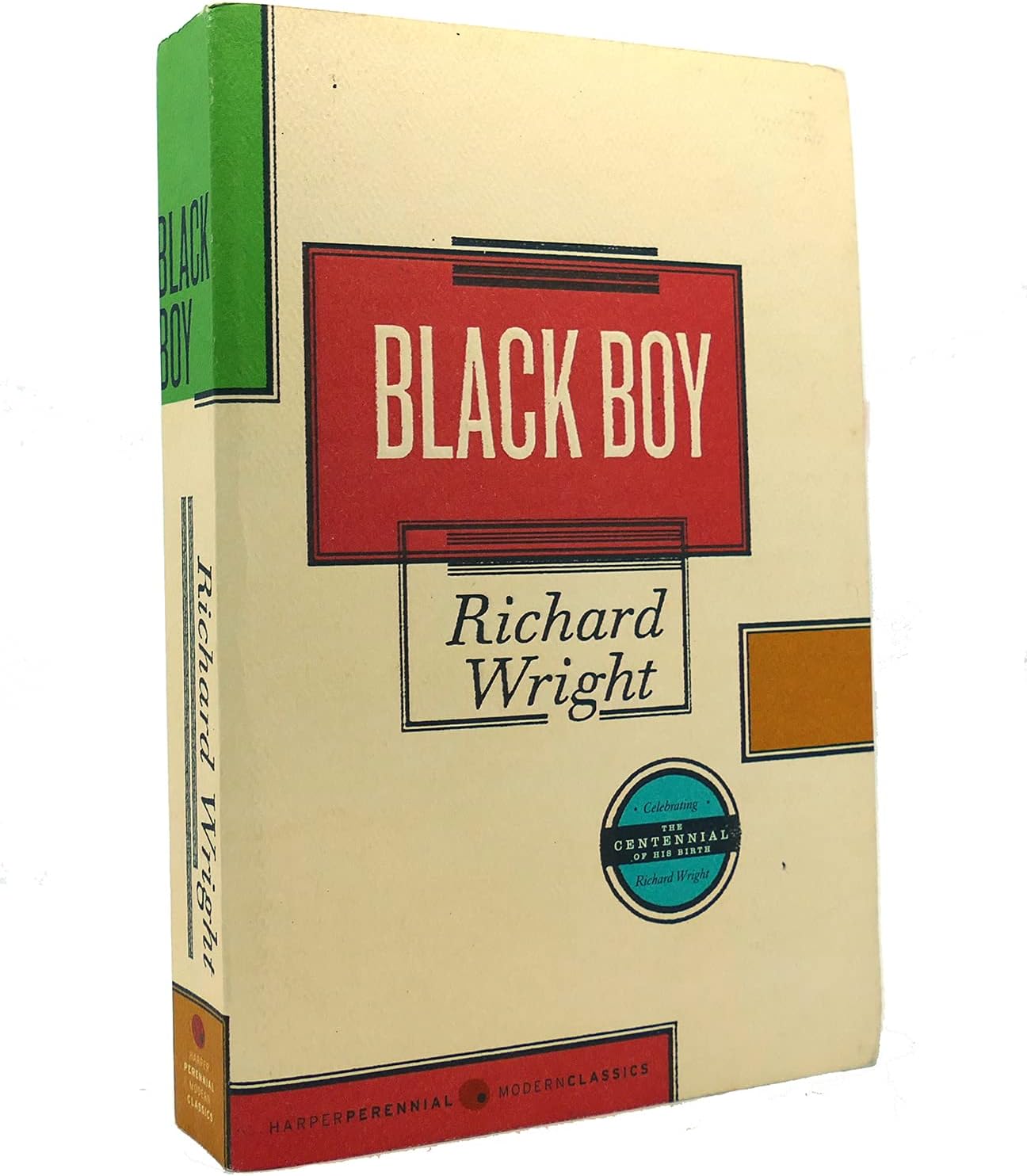

Black Boy (Harper Perennial Deluxe Editions)
Product ID: 119831042
Buy anything from 5,000+ international stores. One checkout price. No surprise fees. Join 2M+ shoppers on Desertcart.
Desertcart purchases this item on your behalf and handles shipping, customs, and support to Brazil.
Black Boy (Harper Perennial Deluxe Editions) [Wright, Richard, Wright, Malcolm, Wideman, John Edgar] on desertcart.com. *FREE* shipping on qualifying offers. Black Boy (Harper Perennial Deluxe Editions) Review: Lessons In Sociology - Richard Wright, born in 1908, tells his life's story while living in Mississippi, Arkansas, Tennessee and later, the more accepting city of Chicago, in this interesting and eloquently written autobiography. A self-taught reader and never formally-taught writer, Mr. Wright was an incredible writer and story-teller, lending his gifted talent to the reflective re-telling of his own memories and story. There are glimpses into the harsh, oppressive, White-dominated southern world in which Mr. Wright was born into, and equal glimpses into his genius mind and questioning psyche. From page 100: "At the age of twelve, before I had had one full year of formal schooling, I had a conception of life that no experience would ever erase, a predilection for what was real that no argument could ever gainsay, a sense of the world that was mine and mine alone, a notion as to what life meant that no education could ever alter, a conviction that the meaning of living came only when one was struggling to wring a meaning out of meaningless suffering." A sample of Mr. Wright's struggle of strong will and mighty sense of justice within an environment in which he tried desperately to be subservient is found on page 164: "Was I really as bad as my uncles and aunts and Granny repeatedly said? Why was it considered wrong to ask questions? Was I right when I resisted punishment? It was inconceivable to me that one should surrender to what seemed wrong, and most of the people I had met seemed wrong. Ought one to surrender to authority even if one believed that that authority was wrong? If the answer was yes, then I knew that I would always be wrong, because I could never do it. Then how could one live in a world in which one's mind and perceptions meant nothing and authority and tradition meant everything? There were no answers." Another insight during his younger years, while working in a diner and talking to the White waitresses while on break, is found on pages 271-272: "I often wondered what they were trying to get out of life, but I never stumbled upon a clue, and I doubt if they themselves had an notion. They lived on the surface of their days; their smiles were surface smiles, and their tears were surface tears. Negroes lived a truer and deeper life than they, but I wished that Negroes, too, could live as thoughtlessly, serenely as they. The girls never talked of their feelings; none of them possessed the insight or the emotional equipment to understand themselves or others. How far apart in culture we stood! All my life I had done nothing but feel and cultivate my feelings; all their lives they had done nothing but strive for petty goals, the trivial material prizes of American life. We shared a common tongue, but my language was a different language from theirs." The ending paragraphs of "Black Boy" poetically describe Mr. Wright's desire to write: "I picked up a pencil and held it over a sheet of white paper, but my feelings stood in the way of my words. Well, I would wait, day and night, until I knew what to say. Humbly now, with no vaulting dream of achieving a vast unity, I wanted to try to build a bridge of words between me and that world outside, that world which was so distant and elusive that it seemed unreal. "I would hurl words into this darkness and wait for an echo, and if an echo sounded, no matter how faintly, I would send other words to tell, to march, to fight, to create a sense of the hunger for life that gnaws in us all, to keep alive in our hearts a sense of the inexpressibly human." A powerful book and story of a brilliant man, this recommended one for all readers includes many lessons and triumphs over the overwhelming obstacles set before him as he retained his underlying strength, courage and undeniable individualism. Review: Richard Wright's Hardscrabble Life Makes for Compelling Tale - The reality of post-Reconstruction life is brilliantly depicted in Richard Wright’s memoir Black Boy, with Wright showing the mortal dangers faced by African-Americans and the daily struggles in a society designed to oppress and marginalize; in essence, a hardscrabble reality. Wright’s own personal struggle to find identity and success serve as a microcosm for African-Americans of this period, and sadly, even today. This struggle is reflected in Wright’s continuous questioning of life’s inequalities and injustices and ironically, by people around him questioning why he asks so many questions. This theme is epitomized when Wright’s grandmother tells him, “Quit asking questions and do what you are told” (142). As the novel progresses, Wright does neither, discovering the reality of life in the Jim Crow South and struggling to cope with it. The word hardscrabble seems to fit Wright’s life with its definition, “getting a meager living from poor soil” (“Hardscrabble”). Here, the poor soil symbolizes the Jim Crow South. The Jim Crow laws, written and unwritten restrict African-Americans, hampering any progress in education, social, and employment opportunities. Wright experiences this repeatedly, questioning why it is and why it has to remain. Like most children, Wright begins questioning life at a young age. When his brother tells him he shouldn’t burn a broom, Wright questions him, ignoring the dangers. He repeatedly asks his mother about race, such as when he questions why his grandmother is white (confused by her biracial identity), or why she married a black man. Wright does not take long to learn that whites treat African-Americans differently and that African-Americans must defer to this or face consequences, usually violent. Richard Wright’s questioning nature is understood at the age of twelve when he realizes he has, “… a sense of the world that was mine and mine alone, a notion as to what life meant that no education could ever alter a conviction that the meaning of living only came when one was struggling to wring a meaning out of meaningless suffering” (100). However, many questions lie ahead and any answers he finds, are usually not easy. Wright seeks answers to these questions but he must do so while navigating a dangerous society where questions can be risky. The independent Wright’s question make him a target of a society dedicated to disempowering African-Americans but it also makes him a target of his fellow African-Americans. “As the outside world grew more meaningful, I became more concerned, tense; and my classmates and teachers would say: ‘Why do you ask so many questions?’ or ‘Keep quiet’” (169). Various family members try to stifle his curiosity, often striking him when he asks too many questions. Wright’s fellow African-Americans see the dangers ahead for Wright due to his independent and questioning nature. Griggs warns Wright, “Your way of doing things is all right among our people, but not for white people. They won’t stand for it” (184). Wright’s way of doing things- making deliveries to white neighborhoods during the evening, forgetting to say sir to whites, and asking when he will learn a trade he was promised he was hired to learn, are just three instances where his blackness target him for unequal and dangerous treatment. Wright not only questions how whites treat African-Americans but how some African-Americans put up with abuse. Working as a porter at a store that sells to African-Americans, Wright observes how they are overcharged for cheap merchandise and treated contemptuously by the store’s owner and staff. Wright cannot help but wonder, “No matter how often I witnessed it, I could not get used to it. How can they accept it? I asked myself” (179). Wright will not allow himself to become desensitized to injustice. This is seen again when Wright asks Shorty “How in God’s name can you do that?” (229) after Shorty encourages a white man to kick him for a quarter. Later, Wright wonders if justice is attainable. Wright’s genius and relentless questioning of injustice do not provide an easy path or easy answers. “But, as I listened to the Communist Negro speakers, I wondered if the Negro, blasted by three hundred years of oppression, could possibly cast off his fear and corruption and rise to the task” (298). Wright’s journey for truth seems to lead him to conclude that there will be no easy solution. Questions can also be used as weapons as Wright shows when he employs questions to attack injustices he sees. Wright is only a child when he defends his decision to kill a cat at his father’s rhetorical request and when punished, asks, “Then why the hell did he tell me to do it?” (11). Wright seems to know he did wrong but questions his father’s authority with this question. Later, Wright uses a question to call out a Communist agitator about an erroneous prediction. “’What about that revolution you predicted if the bonus marchers were driven out?’ I asked” (296). Wright sees through Communism’s easy promises and realizes that people in general (not just African-Americans) are complacent in rising up against injustice. His question also shows his refusal to blindly follow someone. Black Boy provides deep insight into living conditions in the Jim Crow South through Richard Wright’s non-stop questioning of economic, social, and political inequalities. Wright’s refusal to stop questioning things are a testament to his character but the answers he finds are a disturbing confirmation of the harsh reality of inhuman treatment suffered by African-Americans.
| Best Sellers Rank | #990,307 in Books ( See Top 100 in Books ) #100 in Black & African American Biographies #110 in African American Demographic Studies (Books) #297 in Discrimination & Racism |
| Customer Reviews | 4.6 4.6 out of 5 stars (3,067) |
| Dimensions | 5.5 x 1.12 x 8.25 inches |
| ISBN-10 | 0061443085 |
| ISBN-13 | 978-0061443084 |
| Item Weight | 14.4 ounces |
| Language | English |
| Print length | 448 pages |
| Publication date | April 29, 2008 |
| Publisher | Harper Perennial Modern Classics |
R**E
Lessons In Sociology
Richard Wright, born in 1908, tells his life's story while living in Mississippi, Arkansas, Tennessee and later, the more accepting city of Chicago, in this interesting and eloquently written autobiography. A self-taught reader and never formally-taught writer, Mr. Wright was an incredible writer and story-teller, lending his gifted talent to the reflective re-telling of his own memories and story. There are glimpses into the harsh, oppressive, White-dominated southern world in which Mr. Wright was born into, and equal glimpses into his genius mind and questioning psyche. From page 100: "At the age of twelve, before I had had one full year of formal schooling, I had a conception of life that no experience would ever erase, a predilection for what was real that no argument could ever gainsay, a sense of the world that was mine and mine alone, a notion as to what life meant that no education could ever alter, a conviction that the meaning of living came only when one was struggling to wring a meaning out of meaningless suffering." A sample of Mr. Wright's struggle of strong will and mighty sense of justice within an environment in which he tried desperately to be subservient is found on page 164: "Was I really as bad as my uncles and aunts and Granny repeatedly said? Why was it considered wrong to ask questions? Was I right when I resisted punishment? It was inconceivable to me that one should surrender to what seemed wrong, and most of the people I had met seemed wrong. Ought one to surrender to authority even if one believed that that authority was wrong? If the answer was yes, then I knew that I would always be wrong, because I could never do it. Then how could one live in a world in which one's mind and perceptions meant nothing and authority and tradition meant everything? There were no answers." Another insight during his younger years, while working in a diner and talking to the White waitresses while on break, is found on pages 271-272: "I often wondered what they were trying to get out of life, but I never stumbled upon a clue, and I doubt if they themselves had an notion. They lived on the surface of their days; their smiles were surface smiles, and their tears were surface tears. Negroes lived a truer and deeper life than they, but I wished that Negroes, too, could live as thoughtlessly, serenely as they. The girls never talked of their feelings; none of them possessed the insight or the emotional equipment to understand themselves or others. How far apart in culture we stood! All my life I had done nothing but feel and cultivate my feelings; all their lives they had done nothing but strive for petty goals, the trivial material prizes of American life. We shared a common tongue, but my language was a different language from theirs." The ending paragraphs of "Black Boy" poetically describe Mr. Wright's desire to write: "I picked up a pencil and held it over a sheet of white paper, but my feelings stood in the way of my words. Well, I would wait, day and night, until I knew what to say. Humbly now, with no vaulting dream of achieving a vast unity, I wanted to try to build a bridge of words between me and that world outside, that world which was so distant and elusive that it seemed unreal. "I would hurl words into this darkness and wait for an echo, and if an echo sounded, no matter how faintly, I would send other words to tell, to march, to fight, to create a sense of the hunger for life that gnaws in us all, to keep alive in our hearts a sense of the inexpressibly human." A powerful book and story of a brilliant man, this recommended one for all readers includes many lessons and triumphs over the overwhelming obstacles set before him as he retained his underlying strength, courage and undeniable individualism.
M**I
Richard Wright's Hardscrabble Life Makes for Compelling Tale
The reality of post-Reconstruction life is brilliantly depicted in Richard Wright’s memoir Black Boy, with Wright showing the mortal dangers faced by African-Americans and the daily struggles in a society designed to oppress and marginalize; in essence, a hardscrabble reality. Wright’s own personal struggle to find identity and success serve as a microcosm for African-Americans of this period, and sadly, even today. This struggle is reflected in Wright’s continuous questioning of life’s inequalities and injustices and ironically, by people around him questioning why he asks so many questions. This theme is epitomized when Wright’s grandmother tells him, “Quit asking questions and do what you are told” (142). As the novel progresses, Wright does neither, discovering the reality of life in the Jim Crow South and struggling to cope with it. The word hardscrabble seems to fit Wright’s life with its definition, “getting a meager living from poor soil” (“Hardscrabble”). Here, the poor soil symbolizes the Jim Crow South. The Jim Crow laws, written and unwritten restrict African-Americans, hampering any progress in education, social, and employment opportunities. Wright experiences this repeatedly, questioning why it is and why it has to remain. Like most children, Wright begins questioning life at a young age. When his brother tells him he shouldn’t burn a broom, Wright questions him, ignoring the dangers. He repeatedly asks his mother about race, such as when he questions why his grandmother is white (confused by her biracial identity), or why she married a black man. Wright does not take long to learn that whites treat African-Americans differently and that African-Americans must defer to this or face consequences, usually violent. Richard Wright’s questioning nature is understood at the age of twelve when he realizes he has, “… a sense of the world that was mine and mine alone, a notion as to what life meant that no education could ever alter a conviction that the meaning of living only came when one was struggling to wring a meaning out of meaningless suffering” (100). However, many questions lie ahead and any answers he finds, are usually not easy. Wright seeks answers to these questions but he must do so while navigating a dangerous society where questions can be risky. The independent Wright’s question make him a target of a society dedicated to disempowering African-Americans but it also makes him a target of his fellow African-Americans. “As the outside world grew more meaningful, I became more concerned, tense; and my classmates and teachers would say: ‘Why do you ask so many questions?’ or ‘Keep quiet’” (169). Various family members try to stifle his curiosity, often striking him when he asks too many questions. Wright’s fellow African-Americans see the dangers ahead for Wright due to his independent and questioning nature. Griggs warns Wright, “Your way of doing things is all right among our people, but not for white people. They won’t stand for it” (184). Wright’s way of doing things- making deliveries to white neighborhoods during the evening, forgetting to say sir to whites, and asking when he will learn a trade he was promised he was hired to learn, are just three instances where his blackness target him for unequal and dangerous treatment. Wright not only questions how whites treat African-Americans but how some African-Americans put up with abuse. Working as a porter at a store that sells to African-Americans, Wright observes how they are overcharged for cheap merchandise and treated contemptuously by the store’s owner and staff. Wright cannot help but wonder, “No matter how often I witnessed it, I could not get used to it. How can they accept it? I asked myself” (179). Wright will not allow himself to become desensitized to injustice. This is seen again when Wright asks Shorty “How in God’s name can you do that?” (229) after Shorty encourages a white man to kick him for a quarter. Later, Wright wonders if justice is attainable. Wright’s genius and relentless questioning of injustice do not provide an easy path or easy answers. “But, as I listened to the Communist Negro speakers, I wondered if the Negro, blasted by three hundred years of oppression, could possibly cast off his fear and corruption and rise to the task” (298). Wright’s journey for truth seems to lead him to conclude that there will be no easy solution. Questions can also be used as weapons as Wright shows when he employs questions to attack injustices he sees. Wright is only a child when he defends his decision to kill a cat at his father’s rhetorical request and when punished, asks, “Then why the hell did he tell me to do it?” (11). Wright seems to know he did wrong but questions his father’s authority with this question. Later, Wright uses a question to call out a Communist agitator about an erroneous prediction. “’What about that revolution you predicted if the bonus marchers were driven out?’ I asked” (296). Wright sees through Communism’s easy promises and realizes that people in general (not just African-Americans) are complacent in rising up against injustice. His question also shows his refusal to blindly follow someone. Black Boy provides deep insight into living conditions in the Jim Crow South through Richard Wright’s non-stop questioning of economic, social, and political inequalities. Wright’s refusal to stop questioning things are a testament to his character but the answers he finds are a disturbing confirmation of the harsh reality of inhuman treatment suffered by African-Americans.
V**D
A recommend read!!
さ**い
自伝といってもよいのかと思いますが、David Copperfieldに比べると、ほとんど自伝と思います。 1908年に南部で生まれた黒人少年がどのような生活を送り、自我に目覚め、自由な北部を目指して、シカゴで共産党と出会い、如何に幻滅していったかが、分かりやすい英文で生き生きと描かれています。 懸命に生きた少年時代と異なり、後半のシカゴ時代は共産党との出会い、葛藤がテーマで、少し重たく感じましたが、共産主義者の組織の描写が、日本の戦前の非合法時代の共産主義者の組織・人間関係や、つい30年前の学生運動・内ゲバ時代の描写と微妙にダブって感じられました。 小説に出てくるアメリカの黒人関係の歴史を少し書きますと、おじいさんが参加した南北戦争が1865年に終了し、解放後の黒人に対し人種隔離政策をとった南部のJim Crow Systemは1876年から1965年ころまで続き、南部で実質的に黒人から選挙権を奪った文盲テストは1877年ころから1965年、1970年に連邦法で禁止されるまで続いていました。また、作者自身がそうであるように、多くの黒人が、投票権があり子供の教育も可能な北部中部西部へ移住したGreat Migrationでは、1910年から1940年の間に160万人が、1940年から1970年までに500万人が移住したそうです。 同様な黒人のつらく厳しい子ども時代を書いた作品としては、1969年に出版された「I Know Why Caged Bird Sings」は黒人女性の子ども時代を描いています。 また、映画「アラバマ物語」の原作で1960年に出版された「To Kill A Mockingbird」は白人少女の子ども時代の話ですが、南部の貧しく無教養な白人の生活と、さらに虐げられていた黒人の生活が描かれています。 いずれも読む価値のある小説だと思います。
D**O
Richards Wrights Autobiographie seiner Kindheit und Jugend im US-amerikanischen Süden zur Zeit der Rassentrennung zwischen den zwei Weltkriegen ist eigentlich ein Standardwerk über dem Alltag einer schwarzen Familie zu dieser Zeit. Ohne den Hang zu Kitsch und Pathos wie in "Onkel Toms Hütte" erzählt Wright in einer einfachen, auch in Englisch leicht lesbaren und doch sehr poetischen Sprache von seinen Erinnerungen an das Aufwachsen in einer rein schwarzen Gemeinde, seiner ersten Erkenntnis, dass es auch weiße Menschen gibt und dass diese aus irgendeinem für das Kind zunächst überhaupt nicht nachvollziehbaren Grund den schwarzen Menschen grundsätzlich zu dieser Zeit übergeordnet sind, seinem aus der Furcht vor dem Ku-Klux-Klan aufkeimenden Hass gegen Weiße während der Pubertät und schließlich seiner Erkenntnis als junger Erwachsener, dass nur zwei Dinge ihn aus diesen Lebensumständen befreien können: eine gute Ausbildung und ein Umzug in den Norden der USA. Wright erzählt in Episoden und man merkt, wie nah die Erinnerung bei ihm war, als er die Geschichten niederschrieb. Obwohl manches Geschehene düster ist, wobei Wrights dann oft stoischer Stil das Unfassbare fast banal klingen lässt - so war es damals eben, dem muss man nichts hinzufügen, hier muss nichts ausgeschmückt oder noch mehr dramatisiert werden - wenn er trocken und sachlich von Misshandlungen Schwarzer und Lynchmord, dem auch sein Onkel zu Opfer fällt, berichtet. Andere Stellen lassen dann aber auch Raum für humorvolle Schilderungen und zwischenmenschliche Einblicke in die eigene Familie und nachbarschaftliche Umgebung. So ist zwei der freundlichsten Menschen, denen Richard begegnet, eine weiße Frau, die ihn als Hausgehilfe beschäftigt, damit er zur Schule gehen kann, und ein weißer Fabrikarbeiter, der ihm seine Büchereikarte gibt (Schwarze durften keine Bücher ausleihen), weil der Mann selbst auf der Arbeit schikaniert wird (er ist Jude) und Richards Situation nachempfinden kann. Wrights Werk wäre eigentlich geschaffen, ein Standardunterrichtswerk zu sein, doch da der Autor später der kommunististischen Partei beitrat, wurden seine Werke in den USA wenig gewürdigt und beworben, so dass sie auch größtenteils nicht weiterverkauft und in Europa verlegt und übersetzt wurden. Sehr empfehlenswert für Lehrer der gymnasialen Oberstufe, die gute Texte für die Themen "The Afro-American Experience" und "The American South" suchen.
B**A
Pourquoi quelqu'un a décidé un jour que le noir valait moins que le blanc ? Ce livre est une révélation, j'ai compris que j'avais toujours été noire sous ma peau blanche. L'injustice est intolérable. Personne ne doit l'accepter sous aucun prétexte. Ce petit bonhomme est un dur à cuire forgé par l'école de la vie. Malgré des rencontres bien souvent malveillantes et des déboires de famille, il est fort et parviendra à se forger une personnalité que chacun d'entre-nous serait heureux d'avoir à ses côtés. Avec un sens du sacrifice, de la fidélité et de la famille. Il se donne, à force de ténacité, les moyens pour parvenir malgré l'adversité à son idéal de vivre libre. Écriture très agréable, facile à lire et captivant. A mettre entre toutes les mains pour prendre la mesure du racisme quotidien et lutter contre l'inacceptable encore et toujours. Ce texte est lumineux d'espoir.
J**S
Published in 1945, the autobiography of Richard Wright Black Boy was originally going to be told in two parts. The first part chronicled Richards upbringing in Mississippi and his eventual realisation that in order to make something of himself he needed to leave the south. The second part of the book followed Richard in Chicago as he establishes himself as a writer. Just when Black Boy was going to be published, the book was picked up by the Book of the Month club (which was the equivalent of the Oprah Winfrey book club today.) But the Book Club would only accept the first part of the book and this is how the book was originally published. Today you can buy the full version of Richards life in the south and the north but for some reason my copy only contains the first part of his life in the south. Born in 1908 I am sure you can imagine the kind of life that a black boy born in Mississippi at that time had.. The book starts in a very dramatic way when Richard accidentally burns down his family home and then we follow his childhood as he deals with his father leaving, poverty, racial hatred and his family forcing their religion on him. Wright is an incredibility talented writer and he attempts to explain how he has turned out the way he has and why he ultimately had to leave the south in order to pursue his dreams as a writer. He explains how the culture in the south at that time among black people forced him to behave in a certain way in order to avoid being noticed or lynched and how attitudes and nervousness towards white people were ingrained from a very early age (with good reason). All this meant was that he was unable to truly be himself within the communities that he lived in. "Although they lived in America where in theory there existed equality of opportunity, they knew unerringly what to aspire to and what not to aspire to. Had a black boy announced that he aspired to be a writer, he would have been unhesitatingly called crazy by his pals." This is a brutal book in places but it is also incredibility compelling, warm and funny and of course this doesn't make the south at that time look good. Even when Richard does meet a non racist white man, he is still suspicious and nervous and cannot wait to get away from the man purely because of the way that he has been conditioned. His own family constantly give him beatings in what they see as his own good and in an attempt to make him learn to adapt to a white-dominant black-subservient society. Its a beautifully written book and I think this passage perfectly demonstrates this as well as showing how Richard explains why he had to leave. "Not only had the southern whites not known me, but more important still, as I had lived in the South I had not had the chance to learn who I was. The pressure of southern living kept me from being the kind of person that I might have been. I had been what my surroundings had demanded, what my family - conforming to the dictates of the whites above them had exacted of me, and what the whites had said that I must be. Never being fully able to be myself, I had slowly learned that the south could recognize but a part of a man, could accept but a fragment of his personality, and all the rest - the best and deepest things of heart and mind - were tossed away in blind ignorance and hate".
Trustpilot
1 day ago
5 days ago