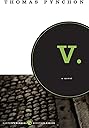
V.: A Novel (Perennial Classics)
Product ID: 1087084
Desertcart purchases this item on your behalf and handles shipping, customs, and support to Brazil.
"This work may well stand as one of the very best works of the century." — Atlantic Review Acclaimed writer Thomas Pynchon's wild, macabre tale of the twentieth century and of two men—one looking for something he has lost, the other with nothing much to lose—and "V.," the unknown woman of the title. Pynchon's debut novel follows discharged Navy sailor Benny Profane as he reconnects with an eclectic collection of artists in New York known as the "Whole Sick Crew" along with his sidekick Pig Bodine, and the plot of Herbert Stencil, looking to find the woman he knows only as she is described in his father's diary: "V." Brimming with madcap characters, the novel meanders from New York to Alexandria, Cairo, Paris, Florence, and Africa, and traverses generations. Time magazine raves, "Few books haunt the waking or the sleeping mind, but this is one." Review: Wonderful first novel - I finally got back to finishing this book. I think I started it twenty years ago, was overwhelmed by it, and just dropped it. So this time, I started from the beginning and tried again - much better experience, as it might have taken me only about one and a half months to finish. Anyway, it's a great book. I would give the book 4.5 stars if desertcart would let me, not because it isn't a 5 star book, but because I have decided to rate Pynchon books relative only to themselves. I just happen to think that Masonn and Dixon is Pynchon's greatest. Tthis book focuses on two main characters in Benny Profane and Herbert Stencil. Profane just kind of goes with the flow, while Stencil is in search of the mysterious woman known as V. Now, you'd have to be completely non-Pynchon to think that V is as simple as being just a woman that Stencil searches for - his whole identity counts on her (spoiler or not, I don't know, sorry if it is). These characters are wonderfully explored, Profane more from his emotional standpoint and Stencil from a driven perspective (he is, after all, searching for answers). Along the way, Profane and Stencil inhabit close proximity, but their stories don't merge until near the end of the book. Overall, I think the dichotomy offered by these two characters is the central theme of this book. The story... Basically, this story is about the two men mentioned above - Profane and Stencil. However, it manages to tell the stories of the two characters in parallel, since the characters don't interact until late in the book. Profane's life is pretty simple and non-committal, simply going with the flow. Stencil has studied many different documents to try to determine his mother's identity as well as, to some extent, his own. Stencil knows his father, but was very young when he last saw him, and he knows nothing of his mother. The chapters are evenly distributed among those devoted to Profane, and those of Stencil. In the end, I think the novel tied up strings fairly well - I pretty much felt closure with all the main characters. Stencil's story saddened me the most, while I think Profane's ended as expected. Along the way, Pynchon displays his talents for visually describing a scene (the best of anyone I've read - when I remember his novels, I do so visually), social commentary, technical and historical knowledge, and a variety other things. That this is the first novel of anyone seems hard to believe. To people who have a hard time with Pynchon, and I guess that means pretty much everyone, I have this advice - read it with someone. My fiance' and I read this book at the same time (not at the exact same time, but at the same pace), and we were able to discuss each chapter and, together, we were able to understand the book quite well (I think). She's not exactly a Pynchon fan, but she was willing to make the sacrifice for my benefit. While she liked the novel (4 out of 5 from her), and she recognizes Pynchon's skill as a writer, she felt that some of the stories dragged and also felt that some didn't have a real connection to the rest of the book (the end of one chapter seems to simply list disasters in August of 1956 - anyone who wants to comment to clarify is quite welcomed to do so). As with any other Pynchon book, I have felt a strong connection with the main characters, and I truly was sad to have to end the book. I believe that the meaning of entropy was most clearly explored here - Profane goes on and on almost as time does. Socially, every sequence seems to end in chaos or decay. To me, these were themes that I could grasp, but not in Pynchon's later works, and I think that I need this book to help me understand those later books. About 21 years ago, I read Gravity's Rainbow and I hardly understood it - there is no doubt that I will reread that one, but I have to convince my fiance' to read it with me (she'll be my wife by then). Review: Events seem to be ordered into an ominous logic. - V. is a difficult book. Which is appropriate, seeing as how I basically read it as practice for a forthcoming Gravity's Rainbow buddy read, also somewhat infamous for its difficulty, or at least for its experience and the commitment necessary to tackle it. In any case, it was difficult. Pynchon yanks you around like a yo-yo on a string, taking you through world-history you may or may not be familiar with, introducing you to characters you may or may not need to remember (and so many!), displaying the casual breadth of knowledge by which his stories are created. It's daunting at times. And to think that this was a debut novel, written by a twenty-five year old, is not just shocking but intimidating. And so while it was not the easiest read, it was also, more often than not, brilliant. I mean, who writes at this level from the beginning of their career? It's the type of stuff you could read five times and still scoff at the idea of "total comprehension". It's just full. Nothing is by accident. He plays with form and structure in ways that make you feel less pretentious about using the term postmodern, because reading this, and picturing someone reading it in 1963, one gets the sense that Pynchon was, and probably still is, in a league of his own. He relishes in mystery and grand conspiracy. Enigma. Obsession. He explores the entropic slide into decadence within society; within the human heart, and the inhuman as well. Recurrent mechanistic imagery. The Kingdom of Death, and of Life. Dream streets, and what lies beneath them. To pin him down thematically seems as fruitless as Stencil's "mad time-search" for the woman V., but you get the sense that each connection within the text is woven subtly, with care. There is so much here that it feels hard to even describe, or "review", because so much of the book is... So much of it is detailed foreign politics and espionage. It is art heists and Navy brawls. Small-skirmish military history and alligator hunts through the New York sewer system. There's late-nineteenth-century anarchism. There are plastic surgeons, soul-dentists, and war pilots. There are a multitude of projections, impersonations, and paranoia. It's just— It's weird! It's Pynchon, man. And is it without flaw? No. A debut novel is a debut novel, no matter how excellently crafted. And a modern reader will likely squirm at some of his writing of female characters. But it is a look inside the mind of someone who is responsible for some of the most compelling literature we can display.


| Best Sellers Rank | #52,298 in Books ( See Top 100 in Books ) #57 in Absurdist Fiction (Books) #203 in City Life Fiction (Books) #318 in Classic American Literature |
| Customer Reviews | 4.2 out of 5 stars 799 Reviews |
B**T
Wonderful first novel
I finally got back to finishing this book. I think I started it twenty years ago, was overwhelmed by it, and just dropped it. So this time, I started from the beginning and tried again - much better experience, as it might have taken me only about one and a half months to finish. Anyway, it's a great book. I would give the book 4.5 stars if Amazon would let me, not because it isn't a 5 star book, but because I have decided to rate Pynchon books relative only to themselves. I just happen to think that Masonn and Dixon is Pynchon's greatest. Tthis book focuses on two main characters in Benny Profane and Herbert Stencil. Profane just kind of goes with the flow, while Stencil is in search of the mysterious woman known as V. Now, you'd have to be completely non-Pynchon to think that V is as simple as being just a woman that Stencil searches for - his whole identity counts on her (spoiler or not, I don't know, sorry if it is). These characters are wonderfully explored, Profane more from his emotional standpoint and Stencil from a driven perspective (he is, after all, searching for answers). Along the way, Profane and Stencil inhabit close proximity, but their stories don't merge until near the end of the book. Overall, I think the dichotomy offered by these two characters is the central theme of this book. The story... Basically, this story is about the two men mentioned above - Profane and Stencil. However, it manages to tell the stories of the two characters in parallel, since the characters don't interact until late in the book. Profane's life is pretty simple and non-committal, simply going with the flow. Stencil has studied many different documents to try to determine his mother's identity as well as, to some extent, his own. Stencil knows his father, but was very young when he last saw him, and he knows nothing of his mother. The chapters are evenly distributed among those devoted to Profane, and those of Stencil. In the end, I think the novel tied up strings fairly well - I pretty much felt closure with all the main characters. Stencil's story saddened me the most, while I think Profane's ended as expected. Along the way, Pynchon displays his talents for visually describing a scene (the best of anyone I've read - when I remember his novels, I do so visually), social commentary, technical and historical knowledge, and a variety other things. That this is the first novel of anyone seems hard to believe. To people who have a hard time with Pynchon, and I guess that means pretty much everyone, I have this advice - read it with someone. My fiance' and I read this book at the same time (not at the exact same time, but at the same pace), and we were able to discuss each chapter and, together, we were able to understand the book quite well (I think). She's not exactly a Pynchon fan, but she was willing to make the sacrifice for my benefit. While she liked the novel (4 out of 5 from her), and she recognizes Pynchon's skill as a writer, she felt that some of the stories dragged and also felt that some didn't have a real connection to the rest of the book (the end of one chapter seems to simply list disasters in August of 1956 - anyone who wants to comment to clarify is quite welcomed to do so). As with any other Pynchon book, I have felt a strong connection with the main characters, and I truly was sad to have to end the book. I believe that the meaning of entropy was most clearly explored here - Profane goes on and on almost as time does. Socially, every sequence seems to end in chaos or decay. To me, these were themes that I could grasp, but not in Pynchon's later works, and I think that I need this book to help me understand those later books. About 21 years ago, I read Gravity's Rainbow and I hardly understood it - there is no doubt that I will reread that one, but I have to convince my fiance' to read it with me (she'll be my wife by then).
B**D
Events seem to be ordered into an ominous logic.
V. is a difficult book. Which is appropriate, seeing as how I basically read it as practice for a forthcoming Gravity's Rainbow buddy read, also somewhat infamous for its difficulty, or at least for its experience and the commitment necessary to tackle it. In any case, it was difficult. Pynchon yanks you around like a yo-yo on a string, taking you through world-history you may or may not be familiar with, introducing you to characters you may or may not need to remember (and so many!), displaying the casual breadth of knowledge by which his stories are created. It's daunting at times. And to think that this was a debut novel, written by a twenty-five year old, is not just shocking but intimidating. And so while it was not the easiest read, it was also, more often than not, brilliant. I mean, who writes at this level from the beginning of their career? It's the type of stuff you could read five times and still scoff at the idea of "total comprehension". It's just full. Nothing is by accident. He plays with form and structure in ways that make you feel less pretentious about using the term postmodern, because reading this, and picturing someone reading it in 1963, one gets the sense that Pynchon was, and probably still is, in a league of his own. He relishes in mystery and grand conspiracy. Enigma. Obsession. He explores the entropic slide into decadence within society; within the human heart, and the inhuman as well. Recurrent mechanistic imagery. The Kingdom of Death, and of Life. Dream streets, and what lies beneath them. To pin him down thematically seems as fruitless as Stencil's "mad time-search" for the woman V., but you get the sense that each connection within the text is woven subtly, with care. There is so much here that it feels hard to even describe, or "review", because so much of the book is... So much of it is detailed foreign politics and espionage. It is art heists and Navy brawls. Small-skirmish military history and alligator hunts through the New York sewer system. There's late-nineteenth-century anarchism. There are plastic surgeons, soul-dentists, and war pilots. There are a multitude of projections, impersonations, and paranoia. It's just— It's weird! It's Pynchon, man. And is it without flaw? No. A debut novel is a debut novel, no matter how excellently crafted. And a modern reader will likely squirm at some of his writing of female characters. But it is a look inside the mind of someone who is responsible for some of the most compelling literature we can display.
D**R
A Long Strange Trip, and the place to begin with Pynchon
I cannot disagree one whit with some of the previous three star reviews in terms of what you will be reading if you pick up this book. However, I would say that this being my second read through V (the first time in Santiago, Chile, when I was working for the CIA and doing some analysis of the Pinochet regime), the story is much clearer, and what Pynchon was going for seems much more approachable. As with my review of Against the Day, a MUCH more difficult book, I recommend that the reader consult the wiki that has been constructed for the book. Perhaps other reviewers have noted this here, but fully understanding the alternating structure of the book, like a V, coming together in Malta at the end, makes the story much more comprehensible. I'm probably very slow, and didn't understand that fully the first time I read the book. That said, keep in mind the reviewers who noted that this is really a very funny book are dead on. The situations are oftentiimes laugh out loud funny. A major weakness in the book is one that Pynchon himself notes in his essay introducing Slow Learner, when he laments his "bad ear" for dialogue. Finally, I would advise the reader interested in Pynchon to start here. Having read all his works now, I can truly say that this is a very approachable novel, if you start with the right attitude. Don't get bogged down in "meaning," because I don't think it's as highly symbolic as some would have us believe. Somewhere I believe I hear Pynchon saying "it's just a novel, for chrissakes...." But it is approachable and manageable (as is Inherent Vice, which I think is cut from this same cloth), and I think the best place to experiment with Pynchon (who, by the way, is not for everyone). And further, I'm glad I picked up the hardcover version, because I found it easier to read than my previous paperback version. That may be just a personal preference, though.
T**L
III. not V.
I realize most reviewers have given 4 or 5 stars, but really - 492 pages to tell what could have been told with the same literary tricks in half that. This is another book that proves the point that just because something can be done - it doesn't have to be done. I enjoyed the book a lot. The humor, history, characters, scenery, more characters all add up to a fun if challenging read. I just couldn't see the need for the droning endless descriptions that added nothing to the story. I'll read those he wrote later with anxious anticipation.
G**S
Settled in for a long and pleasurable ride...
The first thing about this book is that it reminded me of how long it has been since I have read a literary book as opposed to King, Koontz, Connelly, or Crais. Not that those authors are not good writers, but their books are not literature. While this book has an arc to the story, it is more like a maze. The characters are rich, and plentiful, and it was easy to get lost in their stories. The question of V, which drives the book, was deftly answered in the final pages. I highly recommend this book to anyone who wants to reconnect with the true definition of a "good book".
J**S
Pynchon's First Novel
This is the first novel by the American master, Thomas Pynchon. Like many first novels, there may be a bit of Thomas Pynchon in the novel. Benny Profane is a young man who bounces from job to job and woman to woman after exiting the Navy. He soon finds himself at the center of a conspiracy surrounding a mysterious woman named V. If you have never read a Thomas Pynchon novel, this is a good place to start. His style is rollicking, almost like music...hallucinatory...and he is a fierce critic of modernity and our modern consumer existences. I made the mistake of reading Gravity's Rainbow as my first foray into the works of Thomas Pynchon. I should have started with V. to get my feet wet before taking the plunge. Be warned, these novels take maximal concentration and you may find yourself getting a bit lost in the huge host of characters. Reading this novel with a notebook helps, just so you can write down a character and their background before they disappear and reappear several chapters later doing something completely unexpected. Pynchon shows us that in the world of men, nothing is as it seems. People have hidden motivations. They work for secret, hidden agendas. Benny Profane considers himself a schlemiel, an insignificant person. Even insignificant people have a majestic significance in the grand scheme of Pynchon's grandiosely twisted and beautiful visions.
T**T
Very nice facsimile reprint, BUT...
...the paper quality is weak, probably 24lb at the most. I've seen this a lot with current facsimile reprints, where they go to the trouble of restoring the entire look of the original edition, but they skimp on the paper quality. The same thing happened with Atlas Shrugged and The Crying of Lot 49. For a book this thick, it's very light-weight. I don't regret my purchase, but this edition has to be kept safer than most--especially moisture--as the paper isn't too durable.
E**N
Like getting a drink of water from a firehose
I had never read any Pynchon before. I had read that he was hard to follow, with hundreds of characters to keep track of. But I had recently finished DFW's Infinite Jest, so I figured I was ready. It took a hundred pages to pick up the rhythm of the book, but from then on it went smoothly. I did do a lot flipping back to see where a character was first mentioned. What is amazing to me is that a 24-year-old knew so much about the Navy (in which I served), could go on for pages describing a nose job in excruciating detail, the history of Namibia and Malta, and lots of other specific stuff. This book is not for every reader. It's not say, a James Paterson that can be ripped through on a beach weekend. But if you can persevere, you will have a unique literary experience unavailable from any author. Plus you will see how Pynchon influenced DFW and other post-modern authors. And you will be part of a secret society, like the Masons or Knights of Pythias. I have an OCD to read books in the order they were written in. The next two books, The Crying of Lot 49, and Gravity's Rainbow, have some of the same characters as V. Have fun!
I**B
Excelllent condition an unannotated too!
Took a long time to arrive from seller but in excellent condition . It wasu annotation free which was a surprise. It was one of my university texts and I always used to annotate. Thank you whoever you are!
F**F
Great debut by Pynchon
Amazing debut novel.
テ**ル
ダサい表紙の本が届いた
アマゾンで購入したら、表紙が商品説明のものとまったく違う、ひどくダサいものが届いた。残念だ。本当にダサい。そして、活字はかなりにじんでいる。
A**R
Five Stars
GREAT
M**.
Sehr schöner Nachdruck der Erstausgabe
Wie auch die HC-Ausgabe von CoL49 eine sehr schön verarbeitete Ausgabe. Sehr zu empfehlen. Fehlt nur noch die von GR.
Trustpilot
3 days ago
2 weeks ago