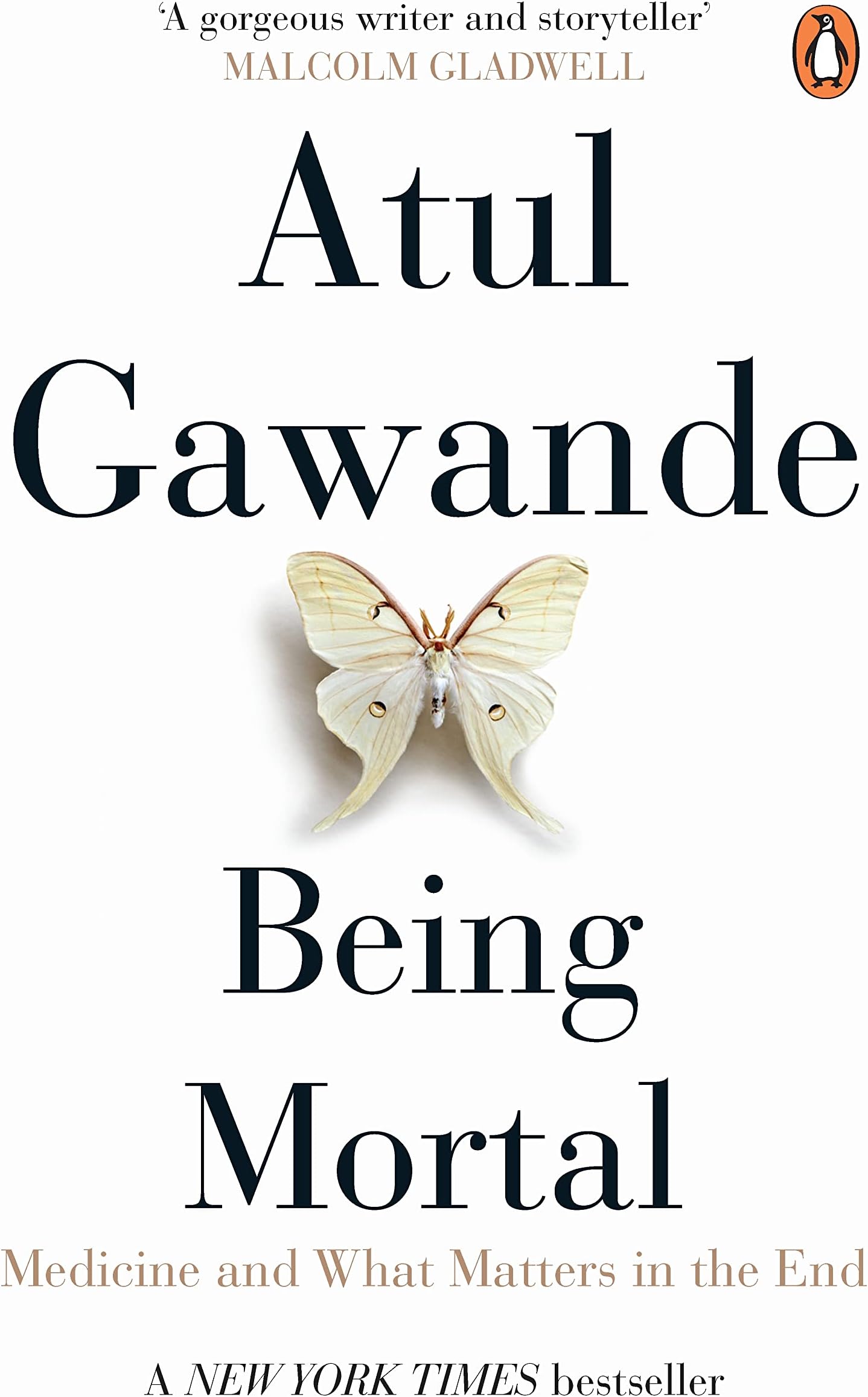
Being Mortal: Medicine and What Matters in the End
Product ID: 76057803
Buy anything from 5,000+ international stores. One checkout price. No surprise fees. Join 2M+ shoppers on Desertcart.
Desertcart purchases this item on your behalf and handles shipping, customs, and support to Brazil.
Doctors are trained to keep their patients alive as long as possible. But they are never taught how to prepare people to die. And yet for many patients, particularly the old and terminally ill, death is a question of when, not if. Should the medical profession rethink its approach to them? And in what way? With aging populations and hospital costs rising globally, these questions have become increasingly relevant. In his new book, Atul Gawande argues that an acceptance of mortality must lie at the center of the way we treat the dying. Using his experiences (and missteps) as a surgeon, comparing attitudes toward aging and death in the West and in India and drawing a powerful portrait of his father's final years-a doctor who chose how he should go-Gawande has produced a work that is not only an extraordinary account of loss but one whose ideas are truly important. Questioning, profound and deeply moving, Being Mortal is a masterpiece. Review: a modern approach to the final chapter of our lives - This book addresses the inescapable fact called death, how we can face this with dignity, how medical profession can help us in this regard.The author is a surgeon at Brigham and Women’s Hospital in Boston. He is also a successful writer on popular medicine. The book opens with an interesting statistic. In USA, till 1945, most deaths occurred at home. By the 1980s just 17% did. The rest died in hospitals. What is the reason behind this rather expensive ending? The answer ironically is the progress made in medical care. The author gives a scary description of ageing process. Teeth decay is most common. Jaw muscles lose about 40% of their mass and bones of the mandible lose about 20%. Ability to chew therefore declines. While our bones and teeth soften, rest of the body hardens. Blood vessels, joints, muscle and valves of the heart pick up substantial amounts of calcium and turn stiff. Since heart has to exert more to pump blood to these stiffened arteries, we all develop hyper tension. Lung capacity decreases. Even our brain shrinks and actually rattles inside making us vulnerable to cerebral bleeding even with minor head injuries. Eventually death becomes a question of when? Not If. Doctors are trained to keep patients alive as long as possible. They are never taught how to prepare people to die. They therefore subject you to all kinds of therapies and surgeries and prolong life. Should medical profession rethink its approach? Yes! Medical profession at least in developed countries have realized that longevity should be replaced with making life worth living even if it means shortening it. The author now gives various developments taking place and their shortcomings. Geriatrics specializes in Medicare for aged. Unfortunately this is not a glamorous branch like plastic surgery. Consequently doctors and institutions specializing in geriatrics are few in number. What can be a better option than a nursing home for the aged and debilitated? Comfortable bed, nursing care, timely medications, doctor on call and above all not being a burden on the children. On the face of it a nursing home appears ideal and several have come up to suit all budgets. The reality however is different. Old people hate nursing homes. The author explains why? Nursing home is two words. Not one. Besides nursing, it has to be home as well. Prisons, orphanages, mental hospitals and military barracks have striking similarities with nursing homes. It is a regimented life denying adults the much needed autonomy and self respect. Assisted living is a radical improvement over nursing homes. Inmates enjoy better autonomy. The group living concept helps in overcoming monotony. Management allows inmates to take certain risks. The underlying philosophy is happiness of the inmates rather than keeping them alive at any cost. Hospice is an institution that takes care of chronically or terminally ill. There are also hospices at home facilities. In USA it is legal to get consent of the inmate to these questions. Do you want to be rusticated if your heart stops? Do you want aggressive treatments such as intubation and mechanical ventilation? Do you want antibiotics? Do you want tube or intravenous feeding if you can’t eat on your own? The hospice also assists in framing a will and record last wishes of the patient. Hospice also provides palliative care to reduce pain and suffering by administering sedatives, pain killers, psychiatric drugs etc. There are approved procedures and WHO guidelines on palliative care. A modern trend that is gaining support is called physician assisted suicide (PAS). This should not be confused with euthanasia or mercy killing. In PAS the decision to die rests with the patient. The physician merely prescribes a lethal dose of barbiturates and the patient is free to take it whenever he desires. Assisted suicide is legal in the states of Oregon, Vermont and Washington in USA. The book ends on a philosophical note. Dr Gawande visits Varanasi to immerse ashes of his father in Holy Ganges. There is a saying in Hindi. “To attain Moksha, one has to die!” let us therefore accept that we are mortals and be happy about that fact. Being Mortal is good book. I strongly urge you to read it. Review: and he only need keep quiet and undergo treatment and something very good would result - BEING MORTAL –by Dr. Atul Gawande Medicine and What matters in the End “Being mortal is about the struggle to cope with the constraints of our biology, with the limits set by genes and cells and flesh and bone.” Dr. Atul Gawande in his path breaking book on Geriatrics and Palliative Care says “We have been wrong about what our job is in medicine. We think our job is to ensure health and survival. But really it is larger than that. It is to enable well-being. And well-being is about the reasons one wishes to be alive.” In what I consider as a deeply moving book, Gawande stresses on the need for a doctor to accept the reality of mortality and accordingly make it a focal point in the way he treats the dying. In the Introduction he says that he remembers discussing mortality during a seminar, spending more than hour on Leo Tolstoy’s classic ‘The Death of Ivan Ilyich’ (I have discussed this book in one of my earlier posts on ‘A Dignified Exit’). Gawande quotes Tolstoy “What tormented Ivan Ilyich most was the deception, the lie, which for some reason they all accepted, that he was not dying but was simply ill, and he only need keep quiet and undergo treatment and something very good would result.” He says that they as medical students saw it, the failure of those around Ivan Ilyich to offer comfort or to acknowledge what is happening to him, was a failure of character and culture. He admits that within a few years of surgical training and practice, he encountered patients forced to confront the realities of decline and mortality and that it did not take him long to realize how unready he was to help them. The book is replete with the author’s confrontation with terminally ill patients, the aging and dying. The book traces the slow development of palliative care from Nursing Homes to Hospices to Assisted living. This book disturbs you. It lays bare the reality of aging and increasing dependence. In the chapter ‘Dependence’ Gawande says “It is not death that the very old tell me they fear. It is what happens short of death – losing their hearing, their memory, their best friends, their way of life.” He says we do not think about the eventuality that most of us will spend significant periods of our lives too reduced and debilitated to live independently. As a result, most of us are unprepared for it. With the changes in the family structure gravitating towards splinter groups the isolation and dependence of the aged has become acute. Nursing Homes and Hospitals where doctors and nurses more bothered about continuing procedures to check whether there are means of extending life even when they know that the patients has passed beyond such a stage only end up in extending the suffering of the patient. Gawande, argues that quality of life is the desired goal for patients and families. He talks about more socially fulfilling models for assisting the infirm and dependent elderly. It is in this context that he outlines at various points in the book about hospice care to ensure that a person's last weeks or months may be rich and dignified. Hospice includes palliative care for the incurably ill given in such institutions as hospitals or nursing homes, but also care provided to those who would rather spend their last months and days of life in their own homes. He also describes Assisted Living as another fulfilling way of taking care of people with disabilities. Referring to a book ‘The Philosophy of Loyalty” written by a Harvard Philosopher Josiah Royce, Gawande says that Royce wanted to understand why simply existing – why being merely housed and fed and safe and alive – seems empty and meaningless to us. What more is it that we need in order to feel that life is worthwhile? The answer he believed is that we all seek a cause beyond ourselves. This was to him, an intrinsic human need. The cause could be large (family, country, principle) or small project or the care of a pet. The important thing was that in ascribing value to the cause and seeing it as worth making sacrifices for, we give meaning to our lives meaning. The book details about the efforts put in by individuals to find ways and means of improving the quality of life of the old and infirm, a number of them from their own experiences of tending to an aged parent or a spouse. But the most telling part of the book is Dr.Gawande’s own account of handling the final stages of his father. The ending part of the book where he describes his father’s final days is intense and moving. In the beginning of the book he talks about his grandfather who lived till the age of a hundred and ten years and ultimately passed away surrounded by a large family in the midst of the people he loved and in his home. He says “My father’s father had the kind of traditional old age that from a Western perspective, seems idyllic” He continues “But in my grandfather’s world, how he wanted to live was his choice, and the family’s role was to make it possible”. Despite having spent the entire part of his life in the US, born and bred up there, his father (a doctor himself) having migrated much earlier, Dr. Gawande comes to immerse the ashes of his father in the Ganges as per his wish – “It’s hard to raise a good Hindu in small town Ohio, no matter how much my parents tried. I was not much of a believer in the idea of gods controlling people’s fates and did not suppose that anything we were doing was going to offer my father a special place in any afterworld. The Ganges might have been sacred to one of the world’s largest religions, but to me, the doctor, it was more notable as one of the world’s most polluted rivers ------ Yet I was still intensely moved and grateful to have gotten to do my part. For one my father wanted it, and my mother and sister did, too.” Atul Gawande is a fantastic writer and has your attention till the end. More importantly he has touched on a subject that is the final anxiety of our existence.
| Best Sellers Rank | #4,771 in Books ( See Top 100 in Books ) #80 in Literary Theory, History & Criticism #90 in Health, Fitness & Nutrition #93 in Healthy Living & Wellness |
| Customer Reviews | 4.5 out of 5 stars 47,937 Reviews |
D**O
a modern approach to the final chapter of our lives
This book addresses the inescapable fact called death, how we can face this with dignity, how medical profession can help us in this regard.The author is a surgeon at Brigham and Women’s Hospital in Boston. He is also a successful writer on popular medicine. The book opens with an interesting statistic. In USA, till 1945, most deaths occurred at home. By the 1980s just 17% did. The rest died in hospitals. What is the reason behind this rather expensive ending? The answer ironically is the progress made in medical care. The author gives a scary description of ageing process. Teeth decay is most common. Jaw muscles lose about 40% of their mass and bones of the mandible lose about 20%. Ability to chew therefore declines. While our bones and teeth soften, rest of the body hardens. Blood vessels, joints, muscle and valves of the heart pick up substantial amounts of calcium and turn stiff. Since heart has to exert more to pump blood to these stiffened arteries, we all develop hyper tension. Lung capacity decreases. Even our brain shrinks and actually rattles inside making us vulnerable to cerebral bleeding even with minor head injuries. Eventually death becomes a question of when? Not If. Doctors are trained to keep patients alive as long as possible. They are never taught how to prepare people to die. They therefore subject you to all kinds of therapies and surgeries and prolong life. Should medical profession rethink its approach? Yes! Medical profession at least in developed countries have realized that longevity should be replaced with making life worth living even if it means shortening it. The author now gives various developments taking place and their shortcomings. Geriatrics specializes in Medicare for aged. Unfortunately this is not a glamorous branch like plastic surgery. Consequently doctors and institutions specializing in geriatrics are few in number. What can be a better option than a nursing home for the aged and debilitated? Comfortable bed, nursing care, timely medications, doctor on call and above all not being a burden on the children. On the face of it a nursing home appears ideal and several have come up to suit all budgets. The reality however is different. Old people hate nursing homes. The author explains why? Nursing home is two words. Not one. Besides nursing, it has to be home as well. Prisons, orphanages, mental hospitals and military barracks have striking similarities with nursing homes. It is a regimented life denying adults the much needed autonomy and self respect. Assisted living is a radical improvement over nursing homes. Inmates enjoy better autonomy. The group living concept helps in overcoming monotony. Management allows inmates to take certain risks. The underlying philosophy is happiness of the inmates rather than keeping them alive at any cost. Hospice is an institution that takes care of chronically or terminally ill. There are also hospices at home facilities. In USA it is legal to get consent of the inmate to these questions. Do you want to be rusticated if your heart stops? Do you want aggressive treatments such as intubation and mechanical ventilation? Do you want antibiotics? Do you want tube or intravenous feeding if you can’t eat on your own? The hospice also assists in framing a will and record last wishes of the patient. Hospice also provides palliative care to reduce pain and suffering by administering sedatives, pain killers, psychiatric drugs etc. There are approved procedures and WHO guidelines on palliative care. A modern trend that is gaining support is called physician assisted suicide (PAS). This should not be confused with euthanasia or mercy killing. In PAS the decision to die rests with the patient. The physician merely prescribes a lethal dose of barbiturates and the patient is free to take it whenever he desires. Assisted suicide is legal in the states of Oregon, Vermont and Washington in USA. The book ends on a philosophical note. Dr Gawande visits Varanasi to immerse ashes of his father in Holy Ganges. There is a saying in Hindi. “To attain Moksha, one has to die!” let us therefore accept that we are mortals and be happy about that fact. Being Mortal is good book. I strongly urge you to read it.
G**N
and he only need keep quiet and undergo treatment and something very good would result
BEING MORTAL –by Dr. Atul Gawande Medicine and What matters in the End “Being mortal is about the struggle to cope with the constraints of our biology, with the limits set by genes and cells and flesh and bone.” Dr. Atul Gawande in his path breaking book on Geriatrics and Palliative Care says “We have been wrong about what our job is in medicine. We think our job is to ensure health and survival. But really it is larger than that. It is to enable well-being. And well-being is about the reasons one wishes to be alive.” In what I consider as a deeply moving book, Gawande stresses on the need for a doctor to accept the reality of mortality and accordingly make it a focal point in the way he treats the dying. In the Introduction he says that he remembers discussing mortality during a seminar, spending more than hour on Leo Tolstoy’s classic ‘The Death of Ivan Ilyich’ (I have discussed this book in one of my earlier posts on ‘A Dignified Exit’). Gawande quotes Tolstoy “What tormented Ivan Ilyich most was the deception, the lie, which for some reason they all accepted, that he was not dying but was simply ill, and he only need keep quiet and undergo treatment and something very good would result.” He says that they as medical students saw it, the failure of those around Ivan Ilyich to offer comfort or to acknowledge what is happening to him, was a failure of character and culture. He admits that within a few years of surgical training and practice, he encountered patients forced to confront the realities of decline and mortality and that it did not take him long to realize how unready he was to help them. The book is replete with the author’s confrontation with terminally ill patients, the aging and dying. The book traces the slow development of palliative care from Nursing Homes to Hospices to Assisted living. This book disturbs you. It lays bare the reality of aging and increasing dependence. In the chapter ‘Dependence’ Gawande says “It is not death that the very old tell me they fear. It is what happens short of death – losing their hearing, their memory, their best friends, their way of life.” He says we do not think about the eventuality that most of us will spend significant periods of our lives too reduced and debilitated to live independently. As a result, most of us are unprepared for it. With the changes in the family structure gravitating towards splinter groups the isolation and dependence of the aged has become acute. Nursing Homes and Hospitals where doctors and nurses more bothered about continuing procedures to check whether there are means of extending life even when they know that the patients has passed beyond such a stage only end up in extending the suffering of the patient. Gawande, argues that quality of life is the desired goal for patients and families. He talks about more socially fulfilling models for assisting the infirm and dependent elderly. It is in this context that he outlines at various points in the book about hospice care to ensure that a person's last weeks or months may be rich and dignified. Hospice includes palliative care for the incurably ill given in such institutions as hospitals or nursing homes, but also care provided to those who would rather spend their last months and days of life in their own homes. He also describes Assisted Living as another fulfilling way of taking care of people with disabilities. Referring to a book ‘The Philosophy of Loyalty” written by a Harvard Philosopher Josiah Royce, Gawande says that Royce wanted to understand why simply existing – why being merely housed and fed and safe and alive – seems empty and meaningless to us. What more is it that we need in order to feel that life is worthwhile? The answer he believed is that we all seek a cause beyond ourselves. This was to him, an intrinsic human need. The cause could be large (family, country, principle) or small project or the care of a pet. The important thing was that in ascribing value to the cause and seeing it as worth making sacrifices for, we give meaning to our lives meaning. The book details about the efforts put in by individuals to find ways and means of improving the quality of life of the old and infirm, a number of them from their own experiences of tending to an aged parent or a spouse. But the most telling part of the book is Dr.Gawande’s own account of handling the final stages of his father. The ending part of the book where he describes his father’s final days is intense and moving. In the beginning of the book he talks about his grandfather who lived till the age of a hundred and ten years and ultimately passed away surrounded by a large family in the midst of the people he loved and in his home. He says “My father’s father had the kind of traditional old age that from a Western perspective, seems idyllic” He continues “But in my grandfather’s world, how he wanted to live was his choice, and the family’s role was to make it possible”. Despite having spent the entire part of his life in the US, born and bred up there, his father (a doctor himself) having migrated much earlier, Dr. Gawande comes to immerse the ashes of his father in the Ganges as per his wish – “It’s hard to raise a good Hindu in small town Ohio, no matter how much my parents tried. I was not much of a believer in the idea of gods controlling people’s fates and did not suppose that anything we were doing was going to offer my father a special place in any afterworld. The Ganges might have been sacred to one of the world’s largest religions, but to me, the doctor, it was more notable as one of the world’s most polluted rivers ------ Yet I was still intensely moved and grateful to have gotten to do my part. For one my father wanted it, and my mother and sister did, too.” Atul Gawande is a fantastic writer and has your attention till the end. More importantly he has touched on a subject that is the final anxiety of our existence.
A**A
Rationale reflections into mortality
It is rare for a person to excel in multiple disciplines at the same time, but Dr Atul Gawande has succeeded in both medicine and writing. . .This book explores one of my favourite topics - Mortality and how humans react to it. It courageously raises the fact that quality of life is more important than its length. . What is wrong in present medical guidelines; to keep heart pumping even if there is no meaningful existence attached to it. . Written beautifully in an engaging non complex prose, it defends and represents vital insights into our policies and perceptions about life and death. . . End of life care needs continuous scrutiny and updation. . . I have read ' Checklist manifesto' also and cannot wait to read his other works. . Nice book for all medicos and nonmedicos who want to read very good and meaningful writing.
A**N
Superbly written, tremendously useful for everyone
I must admit I approached this book with some trepidation -- this book has been hyped up quite a bit, is written by a practicing surgeon and is about aging and terminal illnesses, mundane topics. But was I incredibly and pleasantly surprised! This book is one of the most useful books that I have read and is remarkable from beginning to end. Gawande starts off by making the point that unlike in the past, when death was sudden, there is now a prolonged period of aging and the inexorable decay of the body and faculties. He wonders how we reached a situation where the only option for the elderly is to get "institutionalised" and lose control of their lives. The book essentially focuses on the issues with the current medical approach towards terminal illnesses, especially of older people, and towards aging. As Gawande puts it, this approach concentrates on repair of health, even if it means just slightly prolonging the inevitable and tremendously increasing the pain, rather than on the sustenance of the soul. And this sustenance may mean different things for different people -- as one of his patients says, "the best thing in your life is when you can go yourself to the bathroom". One of the things that I liked about the book was its prescriptive nature -- it does not stop at just laying out the trouble with modern medical care. With real examples, he details what medical practitioners can do to overcome the above issues, and more importantly, what individuals can and should do when grappling with their own aging or that of their loved ones. Ultimately, the job of medicine is not to ensure health and survival but to enable well-being. And in this context, it is important to have difficult conversations and also knowing when to let go. This is the first book that I have read of Gawande and found him to be an impressive writer. The book is a fascinating and easy read despite the seriousness of the subject, and he has filled the book with personal anecdotes that are immensely relatable to. His brave description of his father's last days, who himself was a medical practitioner, add to the credibility of his arguments and enhance our learnings too. Parts of the book can be a bit depressing given an element of morbidness but I would strongly recommend this to any reader, whether she is elderly herself, has aging parents, or even otherwise. Pros: Superbly written, tremendously useful for everyone Cons: Slightly depressing perhaps
P**R
Art of dying
The author,Dr. Atul Gawande, is a man on a mission. In his path breaking book, he has focused a powerful search light on the fault-lines of the modern health care system. Nobody can deny the tremendous advances made by medical science since the second world war. People are living longer and enjoying better health. But everything is not hunky dory with the health care system that prevails in present day America or elsewhere. The author,an eminent surgeon based in America, carefully dissects the system with his scalpel and exposes its soft underbelly. As the author so succinctly puts it, specialist doctors now-a-days are trained to 'fix' a particular problem. Elderly patients suffering from multiple ailments are brought to a hospital by their anxious relatives. Once inside the hospital complex, the patient is taken over by a regimented system. He loses his autonomy. Human warmth is in short supply and there is a certain chill in the atmosphere. Doctors do not have the time or inclination to have detailed discussion with the patient or his relatives. The system is heavily weighed in favour of the service provider, i.e., the hospital administration, doctors, pharmaceutical companies, insurance companies etc. The service seeker is left at the mercy of the heartless system. The title of the book reminds us that man is after all mortal. In many cases, hospitals prolong life unnecessarily, painfully and at an exorbitant cost. An old and infirm person prefers to spend his last days at a place that provides homely comfort and medical care at an affordable price. The author cites several innovative models being tried by people dedicated to the cause of alleviating human suffering. 'Being Mortal' had a profound impact on me partly because I happened to read it when I had not yet recovered from the shock of my eighty five old mother's painful death. She was quite healthy in body and spirit until she was eighty. Then she had a sudden fall and broke her hip bone. An operation was done on her and a metal plate was implanted. A walking stick enabled her to walk on the level ground with difficulty. Her confidence was shaken as she lost her mobility. She considered herself a burden on the family. She became morose. Members of the family had little time to waste on her. She spent the day sitting alone on a chair in a dimly lit room and looking vacantly at a T.V. set. She had become incontinent. She was afraid she might wet the bed. Having lost her autonomy, she slowly sank into an abyss of dreadful agony which was reflected in her melancholy eyes. She often asked me piteously, " How long have I to live like this?" I had no answer. One day she stopped talking and eating altogether. She was admitted to a hospital. Doctors diagnosed it was a case of aspiration pneumonia. The pneumonia was controlled. But she never regained her ability to talk, drink or eat. She was brought back home. She spent her last days confined to her bed with all sorts of tubes sticking out of her frail body. Early one morning death came as a relief to her pain and shame. A year has passed since my mother's death. Meanwhile I read 'Being Mortal'. The book's message rattled me. Nothing is more precious to a dying person than a smiling face or a loving gesture. Did my mother receive it in ample measure during the last phase of her life? Doubts linger.
A**A
A must read for anyone who wonders about mortality
‘Being Mortal’ is the second book which I recently purchased on the topic of our mortality. It is authored by Atul Gawande who is well-known and has 3 books already to his name. The topic by itself is not new, having drawn numerous thinkers, philosophers and the likes into its folds. It is a tricky topic to deal with and this book gives us a fresh perspective as the author is a surgeon and has done significant work in the field of public health. The book is divided into 8 chapters and the introduction tells us about Atul’s encounter with a gentleman suffering from metastatic prostate cancer and who lost his wife to lung cancer. He depicts the struggles of the treatment choices and the patient’s choices who refused to give up when presented with the odds. Through extensive research and interviews, Atul takes us on a journey to understand our mortality. The inevitable decline of our bodies, the origins of assisted living, hospices and the like are all discussed in an easy to understand fashion. He also deals with the most grey and difficult area of medicine – decision making. How does one deal with bad news? How does one convey it effectively to the patient? How does one present difficult choices to a patient? Is modern-day medicine providing useful life to end-stage patients or only prolonging their suffering? Atul tries to answer these and many other questions with real-life examples. The story of his own father’s struggle with a spinal cord tumour is very moving and beautifully written. He talks about the importance of the ‘dying role’ and how it’s been forgotten in this technological world. If we deny this role to our patients then are we really doing it right, he wonders. A must read book for every doctor, paramedic and anyone who wonders about mortality and the choices at life’s very end...
R**R
A Thoughtful Reflection on Being Mortal
Being Mortal is a thoughtful and deeply humane book that explores aging, illness, and the limits of modern medicine. Atul Gawande writes with clarity and compassion, showing that the goal of care is not only to extend life, but also to preserve dignity, choice, and meaning. The book is moving, insightful, and comforting, and it makes the reader reflect on what truly matters at the end of life
M**I
Beautiful!
A book everyone should read. It makes me wish we met more doctors as thoughtful and empathetic as the author.
K**M
Must Read
This is a thoughtful and meaningful book that really everyone should read, but especially health care professionals, those who are aging, or will be involved in the care of those who are aging. It’s an easy read, not medically pretentious or hard to follow. The writer weaves in stories, research, experience, views from other cultures and counties, and asks us to think about how we approach death and dying.
A**B
A passionate call to our better selves
As a Palliative Care physician of nearly 30 years experience, I have not read a better reasoned or more convincing argument for good palliative care integrated into all aspects of medicine. Sadly, I must agree with Dr Gawande that the continued need for my discipline to exist is a measure of failure, and that true success would see all health care systems capable of doing what palliative care now does as a specialty. This book, written from within medicine, and by a specialist in a discipline often seen as opposing, or at least failing to understand palliative care, is a far more powerful means to that end than any number of earnest lectures from the likes of me. It is so because it is beautifully written, deeply considered, erudite and above all deeply personal. EVERY medical student should read it, and be required to have as much skill and comfort in having difficult but crucial conversations as they do in naming muscles and writing prescriptions.
S**T
We can do this better, there is hope
Such a brilliant book written with such compassion and deep understanding.
L**A
Un libro que ayuda a perder el miedo a la muerte
Es un libro que está escrito desde un punto de vista muy humano, a la vez que realista, estos dos factores, unidos a una prosa sencilla y clara hacen del libro un antídoto contra el miedo a la muerte, al menos es el sentimiento que produjo en mí que ya tengo 85 años.
L**E
Lesen Sie es bevor es zu spät ist.
Wer sich - aus welchen Gründen auch immer - konkret mit Gebrechlichkeit, Alter, schwerer Krankheit oder Sterblichkeit auseinandersetzen muss, ist sehr gut beraten dieses Buch zu lesen: Der Autor ist kompetent, erfahren, reflektiert und schreibt einleuchtend, eindringlich und einfühlsam sowohl über die Mängel und die Ignoranz im professionellen Umgang mit dem Nahen des Todes als auch - an eigenem familiären Beispiel - über unsere unausgebildeten Emotionen und unsere Hilflosigkeit als Betroffene. Kurz: "Being Mortal" ist auf höchstem Niveau emphatisch, bewegend und informativ zugleich.
Trustpilot
1 week ago
4 days ago